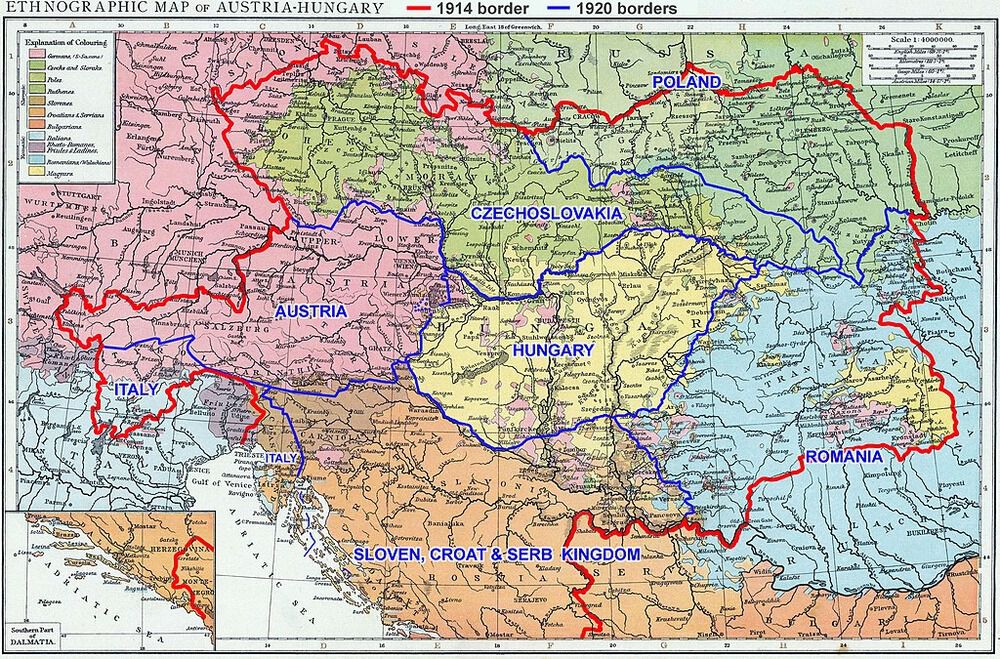

The collapse of the Habsburg Empire at the end of the First World War reshaped the entire organization of Central Europe. The so-called “national” states that emerged in its wake were confronted with this imperial legacy—and, in several cases, with other imperial legacies, namely Russian and Ottoman. The presentation begins with the territorial settlements made at the end of the Great War, exploring what they signified for the actors involved as a way to frame the relationship between nation and territory. It will then examine the various forms of identity construction linking territory and nation, as well as the successive challenges to these constructions.
The discussion will be structured around three main periods: the initial phase of state-building, the successive disruptions between 1938 and 1947, and the resurgence of territorial and national issues after 1989/91. How were identities shaped in these three periods? What are the main challenges of identity construction and territorial demarcations after the collapse of communism and creation of new states in East Central Europe? A special attention will be paid to Ukraine in the discussion of the tension between nation and state.
Etienne Boisserie is a professor of Modern and Contemporary Central European History at Inalco (Institut national des langues et civilisations orientales), Paris. His main research interest are First World War history, Cultural History, Economic History and European History.