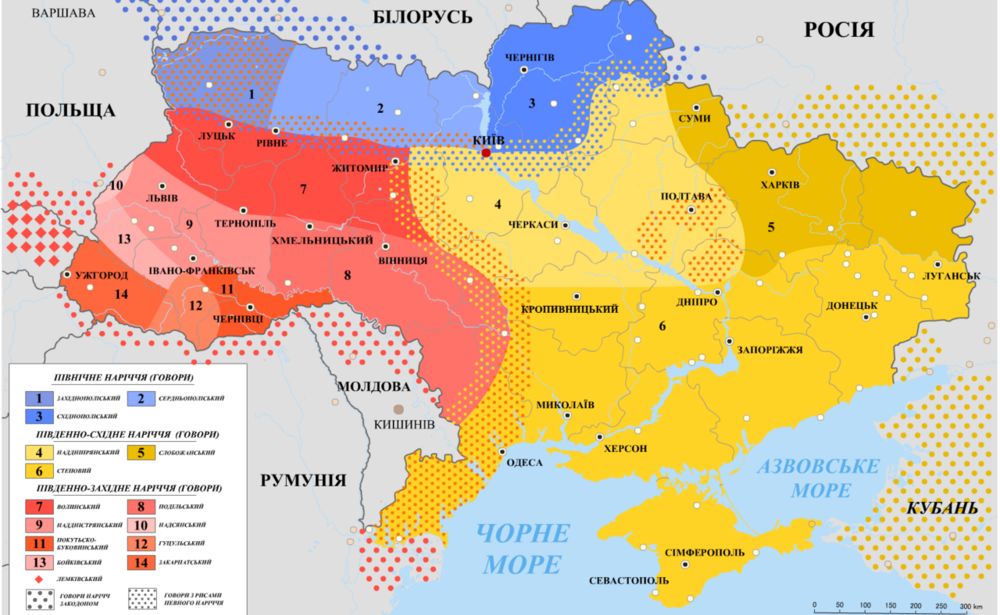

The author offers a survey of the historical varieties and subvarieties of modern Ukrainian based on the triangulation approach accounting for the diastratic (societal-political, diatopic (dialectal) and diachronic parameters. Regional varieties (and sub-varieties) of modern Ukrainian will be newly mapped out from the three standpoints: (1) its dialectal differentiation (2) chronological changes as reflected in the literary tradition and its dialectal base, and (3) the existence of regional and/or national cultural centers.
The current situation is characterized by a heavy influence of dialects upon the norms of standard Ukrainian accompanied by a slackening of the puristic tendency and loosening of norms. The hierarchical relations between varieties and sub-varieties will be analyzed in tandem with some prognostic insights into the current state of the normalization and pluricentricity of Ukrainian.
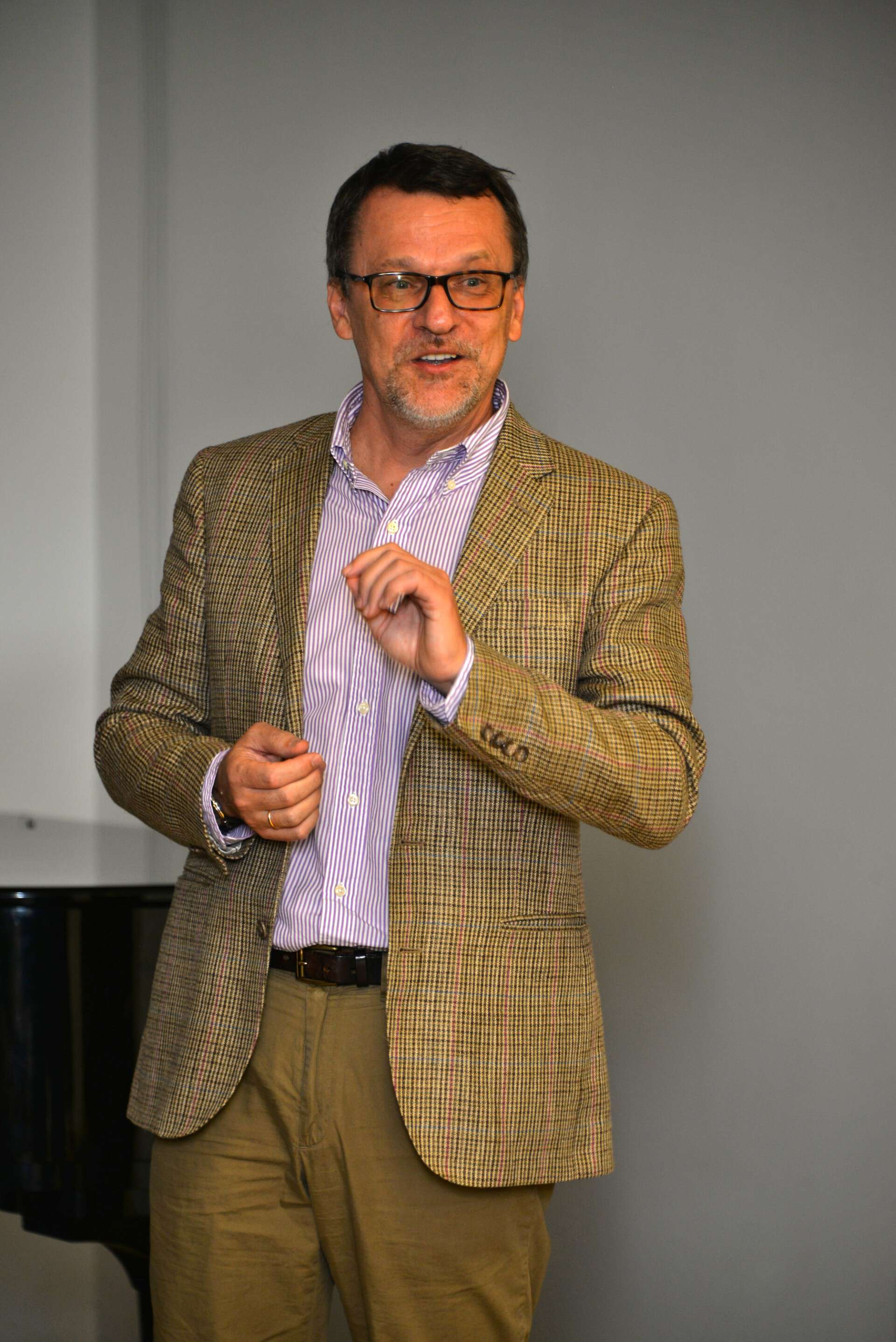
Andriy Danylenko is a Ukrainian-American professor at Pace University, New York, and holds an honorary professorship at the National University of “Kyiv-Mohyla Academy” in Ukraine. He is the author and editor of a dozen books on Slavic linguistics, with a particular focus on the Ukrainian language.
The lecture is sponsored by The US-Norway Fulbright Foundation.