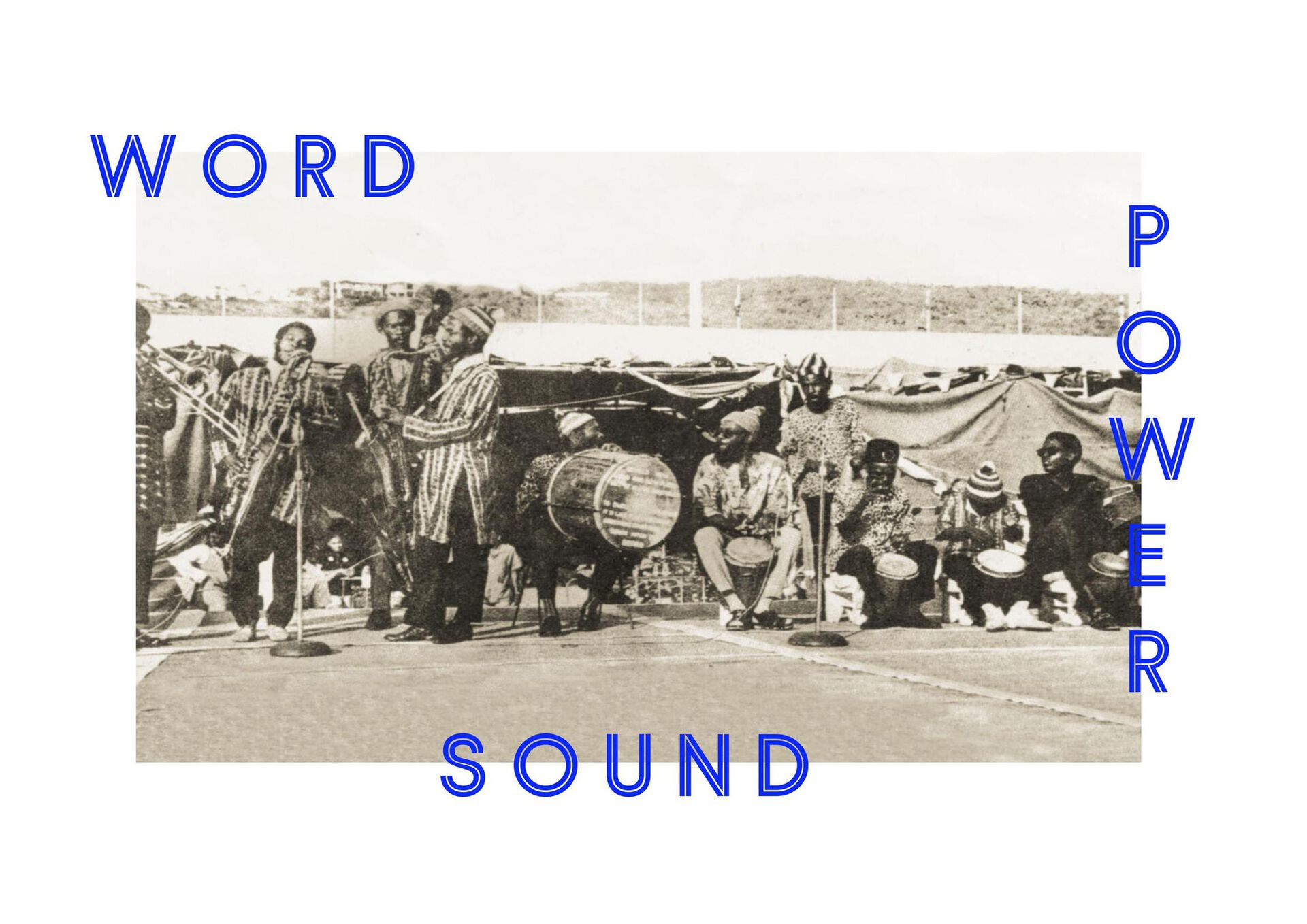
The three words “word”, “sound” and “power” circulate in titles, art exhibitions, books and documentaries from different parts of the African Diaspora. There are many uses and interpretations of this concept, but in our usage “word” refers to the literary, “sound” to the musical and “power” to the ideological aspect of the texts, songs, or performances we will be studying and how these different aspects interact. The concept is a good example of the kind of Afrodiasporic aesthetic theory we will be analysing and using during this project, and it is included in the project’s title because it allows us to describe how aesthetic experiences make something happen. Lyrical experiments can be politically powerful because they make, change, alter, shape, and rearrange how we perceive ourselves and the society we live in.
Word, sound and power is a concept used in Rastafari reasoning to describe how the vibrations of words and sounds; the lyrical, the musical and the rhythmic, can have a powerful political, spiritual and intellectual impact. Word, Sound and Power was for example the name of the backing band of Peter Tosh. The concept also figures in song titles such as “Word, Sound & Power” by Max Romeo, “Word Sound & Power” by Knowledge and “Word, Sound and Power” by Macka B. The concept has a particularly strong presence in reggae culture, but the word “power” on its own also plays an important role in soul, rap music and in the black radical tradition. This is an example of how ideas and cultural concepts travel, creolize and help to bind together and construct black diasporic identities. Being half Jamaican, and born in Norway, the title of the project is also a more personal homage to Caribbean voices who have produced theories of aesthetics that have been historically overlooked and silenced by research in the humanities. These aesthetic theories are often created outside of classical Western and Enlightenment aesthetic frameworks, but they have nonetheless helped to shape Modernity and contemporary understandings of what literature and the lyrical is.
Louisa Olufsen Layne
Project leader (PI)
Word, Sound and Power: The Lyrical Making of African Diaspora Futures


