
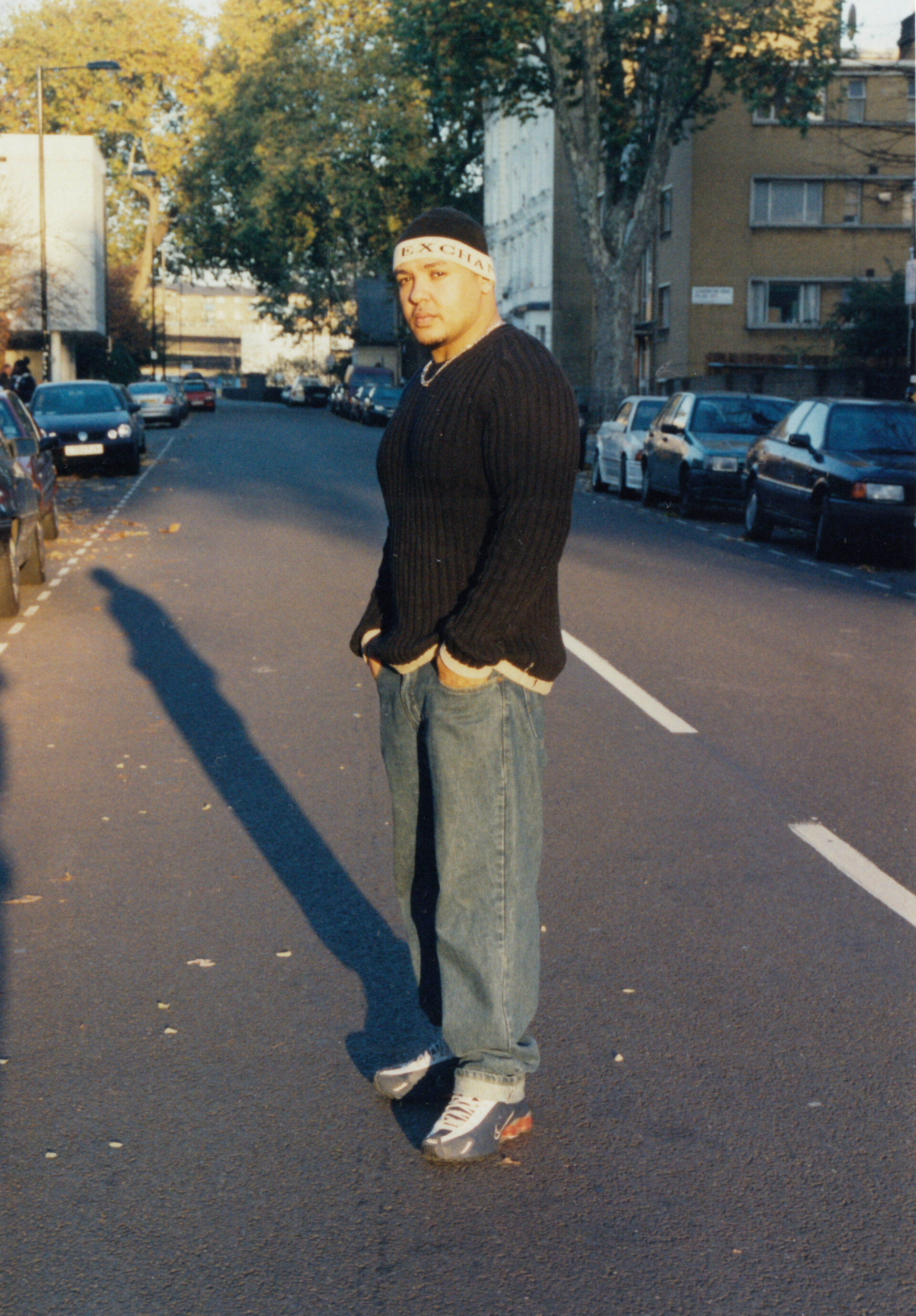
Originally a renowned street artist, Jon E Cash’s first forays into music were as part of John Peel supported Britcore outfit Construction, emerging at the turn of the 90s when his West London neighbours Renegade Soundwave and J. Saul Kane were also inadvertently helping lay the foundations for UK Bass music. As a result of healthy skepticism toward the media and industry at large, Cash—like Kane (now sadly departed) and Sheffield's Rob Gordon—is often left out of Hardcore Continuum narratives despite being highly revered by producers, DJs and vinyl collectors alike.
A compilation of Jon E Cash’s influential Sublow recording period is released by Sneaker Social Club on 21/11/25. Somewhat confusingly, the artwork depicts Jon during his teenage Hip Hop years suggesting a complete retrospect and making the occlusion of Construction’s material feel a massively wasted opportunity. Nevertheless it’s a crucial primer into a fearsome discography.
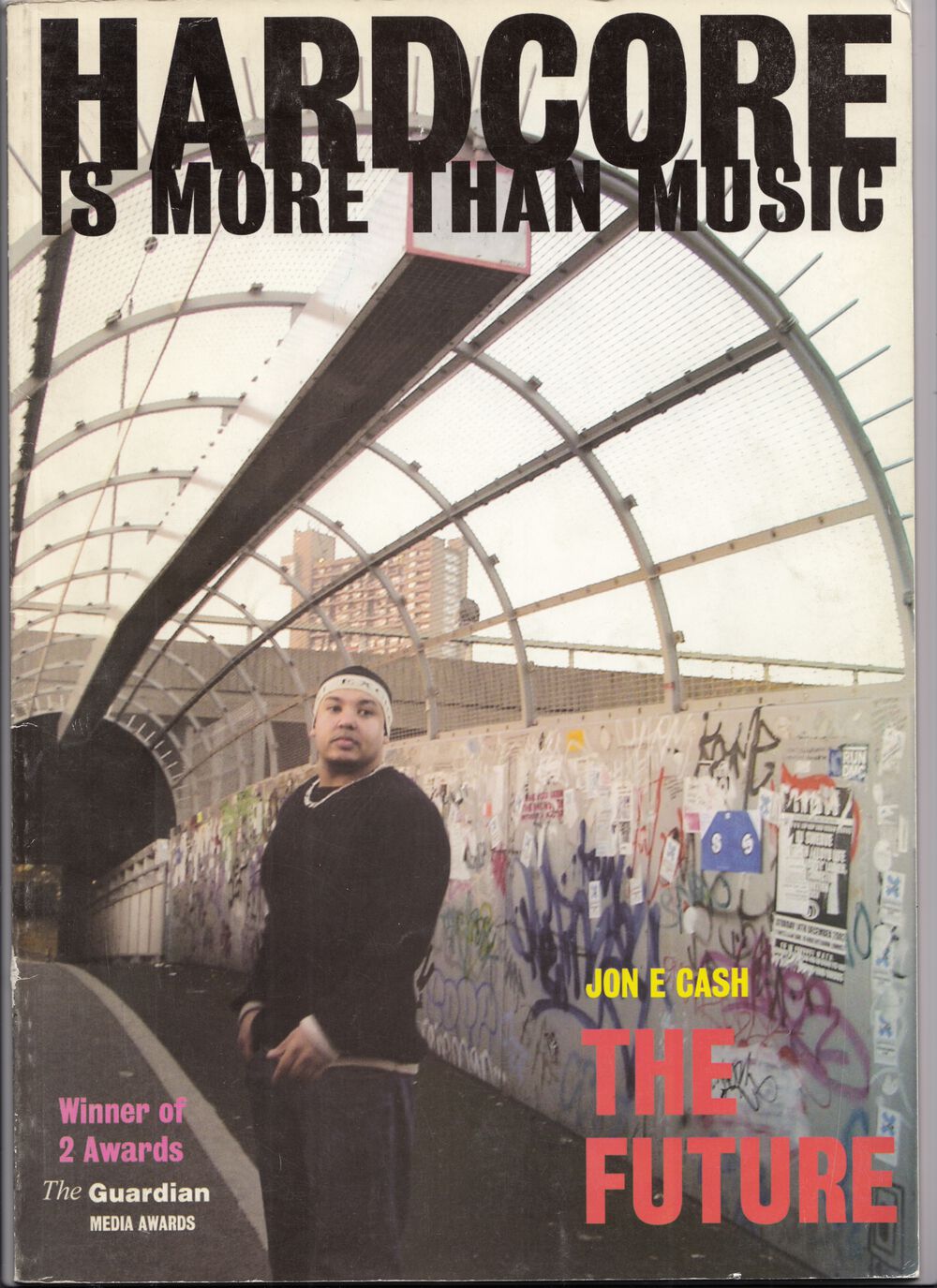
What follows is a 2003 Jon E Cash interview conducted for then Chelsea College of Art Students, Nina Manandhar and Nendie Pinto-Duchinsky’s cult subculture fanzine Hardcore Is More Than Music, following the release of Slimzee Rinse FM staple War. Despite its topical title (with the contemporaneous invasion of Iraq) and sonic redolence of a Shock & Awe payload, the UK music press during this period was hailing the return of “real musicians” performing “real music”.
SUBLOW
The release of The Strokes debut album “Is This It?” last year was the musical 9/11: Just like the Bush Administration, this was the music industry’s opportunity to settle old scores and begin a new crusade, its axis of evil being that old enemy of conformity, club culture.
The rave scene of the late 80s suddenly meant anyone could now run a recording studio or label and distribute their own product. Plus pirate radio stations like London’s gangland-run Sunrise and Centreforce began hi-jacking FM frequencies polluting the airwaves with nascent British Hardcore, Detroit Techno and high BPM Hip Hop, besides anyone with a large enough space and loud enough sound system becoming promoters. This of course was all akin to terrorism for the traditional music industry, eventually spelling the closure of hundreds of recording studios, venues and distribution plants before mass redundancies in A&R and marketing departments:
“Whenever a new underground dance scene pops up like with Drum & Bass or garage, what the majors will do is find the biggest act and sign them up so they control it,” reckons West London underground garage producer Jon E Cash. “So Solid is an obvious example - The negative coverage is good to [rival labels] cos it means the whole scene gets a negative image…already everyone’s talking about UK Garage being dead and none of the pirates will touch So Solid stuff.”
The new dawn of pretty-boy Rock n Roll spearheaded by The Strokes, White Stripes, The Darkness et al, means the rusted cogs of a dying industry have begun to turn again: Magazines have friendly white faces to put on their covers, recordings studios people to record, producers bands to produce… “Rollover DJ” yell terrible Australian hopefuls Jet taking a swipe at dance culture with a chorus of industry interns behind them and the distinct echo of the 70s Disco Sucks movement. But what they and their “Future Rock n Roll” peers fail to recognise (or choose to ignore) is that the classic rock acts they try so desperately to imitate, embraced not eschewed degenerate black music, be they John Lennon or Lydon.
Yet most of today’s rock acts rarely make concessions to urban music and if so nothing recorded in the last 20 years. And at best, they’ll namecheck acts that are non too abrasive and not likely to cause offence like Anti Pop Consortium or Jurassic 5.
The media’s compliance with this wilful ignorance is all very reminiscent of the advent of political rap in the 80s when writers like John McCready, Steven Wells and Stuart Cosgrove at NME were proclaiming Hip Hop as the new punk or Rock n Roll. One 1987 issue even bore only the Def Jam as its front cover. Naturally the older higher echelons at IPC did not share their hip writers viewpoint, so the inclusion in a subsequent issue of a Dead Kennedys poster featuring a pierced penis gave them their excuse to sack most of the editorial staff and give NME a thorough ethnic cleanse.
Nowadays if you’re a platinum selling rap act then you might just get a feature but if you’re a homegrown producer whose ideas are regularly pilfered by your cousins across the pond (Outkast taking inspiration from Jungle for B.O.B being just one example) then you can forget it:
“The Americans have always been into our shit!” States Cash, “The problem is people in the UK are the biggest sheep - As soon as an underground act gets signed, they change format and decide they wanna copy the US and do straight RnB or Hip Hop.”
It’s true. You only have to look at Ms. Dynamite, Craig David or DnB maverick turned ‘Urban’ producer Adam F as artists who were at the forefront of a uniquely British sound who subsequently chose to make more FM compatible material.
“The majors don’t want a new street sound to become massive…It’s what happened with Hip Hop but now they control it, but they don’t want to see that happen again.”
This is why Dizzee’s such a rascal. Boy In Da Corner winning the Mercury Prize must have been as much an unexpected blow to the industry as David Kelly’s tragic suicide was to the Blair Government. Lyrically, I luv U came on like The Buzzcocks’ punk channeled through the conduit of a black estate kid from Bow but its minimal brooding sub-bass rhythm track is typical of an emerging UK Garage sub-genre that Jon E Cash chooses to call Sublow. Its sonic relation to Garage, can be compared to how Dub is the more stripped down, experimental form of Reggae:
“UK Garage is like our RnB and Sublow is the Hip Hop,” is how he puts it.
Perhaps if Warp Records had continued in the same vein after early releases like Nightmares On Wax’s “Dextrous” and LFO’s eponymous debut before realising they could sell less black appealing techno to white students by putting spliff smoking robots on their record sleeves, then they’d be releasing Sublow speaker blowers like Wiley’s “Eskimo” and Jon E Cash’s devastating “War”.
Sublow sometimes mirrors the Futurist beats of Neptunes and Swizz Beatz and low-end funkadelia of dancehall’s Lenky and Scare Dem Crew, yet the diversity of its producers and higher tempo make it unique to the melting pot that is London:
“In the States with Hip Hop, New York, LA, Dirty-South all have their own sound,” says Cash. “I want to be able to take the Sublow sound over there and say this is OUR Hip Hop.”
Producers like Beatfreaks, Wiley, Geeneus (Wizzbit) and labels such as Heatseeker, Dump Valve Recordings and Jon E Cash’s Black Ops have been releasing consistently brilliant inventive dance-floor electronica that you can almost guarantee the likes of Four Tet, Luke Vibert and their twee counterparts will be mining for ideas in the near future. Nevertheless, thanks to independent visionaries like Jon E Cash, Sublow will exist and continue to thrive with or without the major labels, press or radio. And that makes it the realest Future Rock n Roll.
SUBLOW 10
JON E CASH - War (Black Ops)
AGENT X - Decoy (Heatseeker)
MENTA - Soundz Ov Da Future RMX (Bingo)
HAZARD - Kilahertz (Heatseeker)
WILEY - Eskimo (White)
DIZZEE RASCAL - Ho (Dirtee Stank)
BEATFREAKS - Wipeout (White)
STICKY - Golly Gosh (Social Circles)
WIZZBIT - Jam Hot (Dump Valve)
SNAKE CHARMER - Menta (Road)
Tony F Wilson is a British-Jamaican musician and writer based in Oslo. His writing career began in 1991, contributing to Record Mirror and rave culture publication Clubland, progressing in subsequent years to publications including I-D, Melody Maker, Vice, The Quietus, Frieze and Lime Lizard. As a recording artist he has recorded in projects with Neil Halstead of Slowdive, Thurston Moore of Sonic Youth, Sarah Peacock of Seefeel and Anjali Bhatia of Voodoo Queens, in addition to DJing shows for Stereolab, Public Enemy, Tortoise and GZA amongst others.


