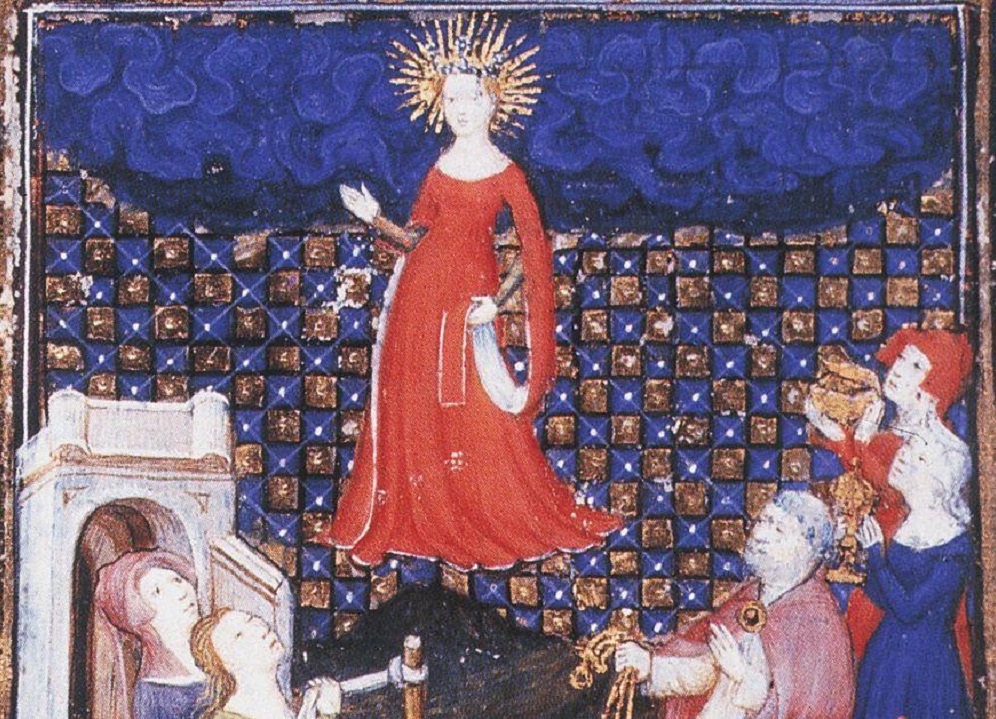
Sunniva Berger is enrolled in the MA programme in History at the University of Oslo, and is currently in Rome to write her thesis on reception studies and Boccaccio with support from The Norwegian Institute in Rome (fagstipend).
In a selection of his Latin works, Giovanni Boccaccio displays an odd combination of opinions on the ancient Greeks and Romans. On the one hand, he speaks of antiquity as the cradle of human virtue, while on the other he dismisses the ancients as ignorant fools and/or deeply disturbed on account of their pagan beliefs. In the middle of this disparity is Boccaccio’s reception of the ancient gods – he adapts them to accept them into his Christian worldview, but in doing so he displays an arguably pseudo-religious reverence for classical antiquity.
-------------------------------------------------------------------------------------------------------------------
Victoria Frivik has recevied a grant from Ella og Eystein Magnus' legat for a research stay in Rome, and will present her MA-project "Ancient Ghosts in Mussolini's Rome: The Creation of Memory in an Urban Landscape"
Since archaeology was established as an academic discipline in the 19th century, a period marked by the rise of nationalism, the study of the past has been greatly influenced by the creation of nation-states in Europe. Nations used different pasts to craft their own identities and heritage. Under Fascism in Italy, it was primarily the memory of the ancient Romans that was emphasized and used. Benito Mussolini’s regime used the ancient monuments both to highlight its powerful past and to create a new era in Italian history often referred to as “the third Rome”.
-------------------------------------------------------------------------------------------------------------------
Kindly register here if you wish to participate at the seminar.