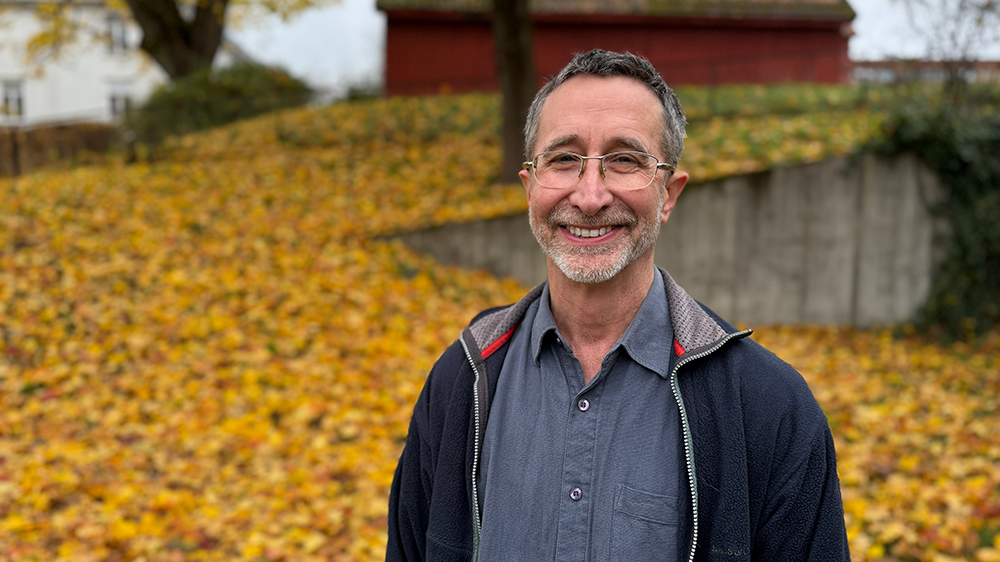
David Keith Wright and his partners have been awarded twelve million euros from the European Research Council for the project "Ecological Archaeologies of the Afrotropics (EcoArch)."
“This is a fantastic opportunity for us to conduct groundbreaking research on landscapes and climate systems. No one has done such research on a scale like this before”, says Wright.
The goal of the project is, among other things, to test new and more detailed climate models that will provide farmers with greater predictability and better opportunities to determine which crops they should focus on.
“Sixty percent of Africa's population produces food for their own use. If we can create more accurate climate models, this could potentially give millions of people better conditions for growing food”, says Wright.
Advanced methods
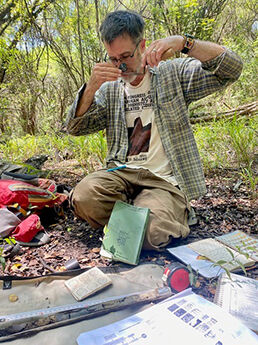
They hope to achieve this by reconstructing past environmental conditions.
The researchers will use methods such as high-throughput carbon dating, DNA analytics of sediments and artificial intelligence to analyze pollen that is thousands of years old.
The results will be used to validate and adjust climate models.
“Pollen is significantly influenced by the climate and reflects the vegetation and environment it comes from very well. By dating the pollen, we can learn much about how the climate was at that time”, says Wright.
They will also investigate how agriculture has shaped and transformed landscapes and ecosystems.
Wright aspires for this research to yield fresh insights into the impacts of climate change and human activities, as well as their future implications.
Prestigious grant
The grant is an "ERC Synergy Grant" (erc.europa.eu), which is one of the largest research grants available in Europe. This year, 66 out of 712 applicants were selected for funding.
In Norway, only 21 researchers have received such a grant previously.
The funds are awarded to projects that work across borders and disciplines and have such ambitious goals that they cannot be driven by a single research team alone.
“In total, there will be more than 15 different teams involved in this project, most of which will be Africa and Arabia-based. They will conduct fieldwork in up to 20 different locations across the region. This will provide us with a unique amount of data”, says Wright.
Wright will lead the project together with Sanne Boessenkool from the University of Oslo, Sarah Ivory (ems.psu.edu) from Penn State University, and Sandy Harrison (reading.ac.uk) from the University of Reading.
They will collaborate with several educational and research institutions in Africa, including the National Museums of Kenya.
“Our goal is for the institutions and teams to continue working together even after the project is finished – that this will create a long-lasting collaboration”, says Wright.
Proud and impressed
The Pro-Dean of research at the Faculty of Humanities, Ada Nissen, believes the award demonstrates that the humanities are relevant to the major challenges of our time and that researchers at HF are at the forefront by succeeding in fierce international competition.
“This is fantastic news! I am proud and impressed. The EU Synergy Grant is highly prestigious, and the fact that HF has achieved success with two out of four applications that progressed to interviews from UiO clearly shows the high quality of our research”, says Nissen.
“David's project is creative and innovative, linking digital methods to studies of the climate impact on ecosystems, a theme that is highly relevant to the challenges we face today”, Nissen adds.