Abstract
This presentation introduces the concept of the “Language Singularity,” a theoretical juncture where advancements in AI technology fundamentally alter our understanding of language, communication, and, by extension, language teaching and learning. I argue that we are already witnessing the beginnings of a singularity in which a shared human/machine agency becomes a commonplace feature of certain multilingual encounters (e.g., business, healthcare, law, government services, and education). This shared agency aligns with a language-as-assemblage ontology, which views language as a dynamic, fluid, and relational construct, in contrast to a language-as-object ontology that views language as a bounded entity that can be recorded, systematized, and codified. To develop the concept of the Language Singularity, I use posthumanist theory (Pennycook, 2018; Wee, 2021) to (re)consider concepts such as nativeness, authenticity, languaging, and agency within a borderless, hybrid assemblage that integrates humans and technology into co-evolving, interdependent entities (Kadlecová & Krbec, 2020). While the locus of enunciation for theorizing the Language Singularity originates from Western applied linguistics traditions and the field of English language teaching, the implications are rhizomatic, extending into other areas of language teaching and learning as well as language arts more broadly. The presentation underscores the urgency and necessity for future-oriented perspectives that allow language teaching and learning to develop and flourish alongside AI and the broader educational landscape.
References
Kadlecová, J., & Krbec, J. (2020). Umwelt Extended: Toward New Approaches in the Study of the Technologically Modified Body. Journal of Posthuman Studies, 4(2), 178–194. https://doi.org/10.5325/jpoststud.4.2.0178
Pennycook, A. (2018). Posthumanist Applied Linguistics. Routledge.
Wee, L. (2021). Posthumanist World Englishes. Cambridge University Press. https://doi.org/10.1017/9781108990615
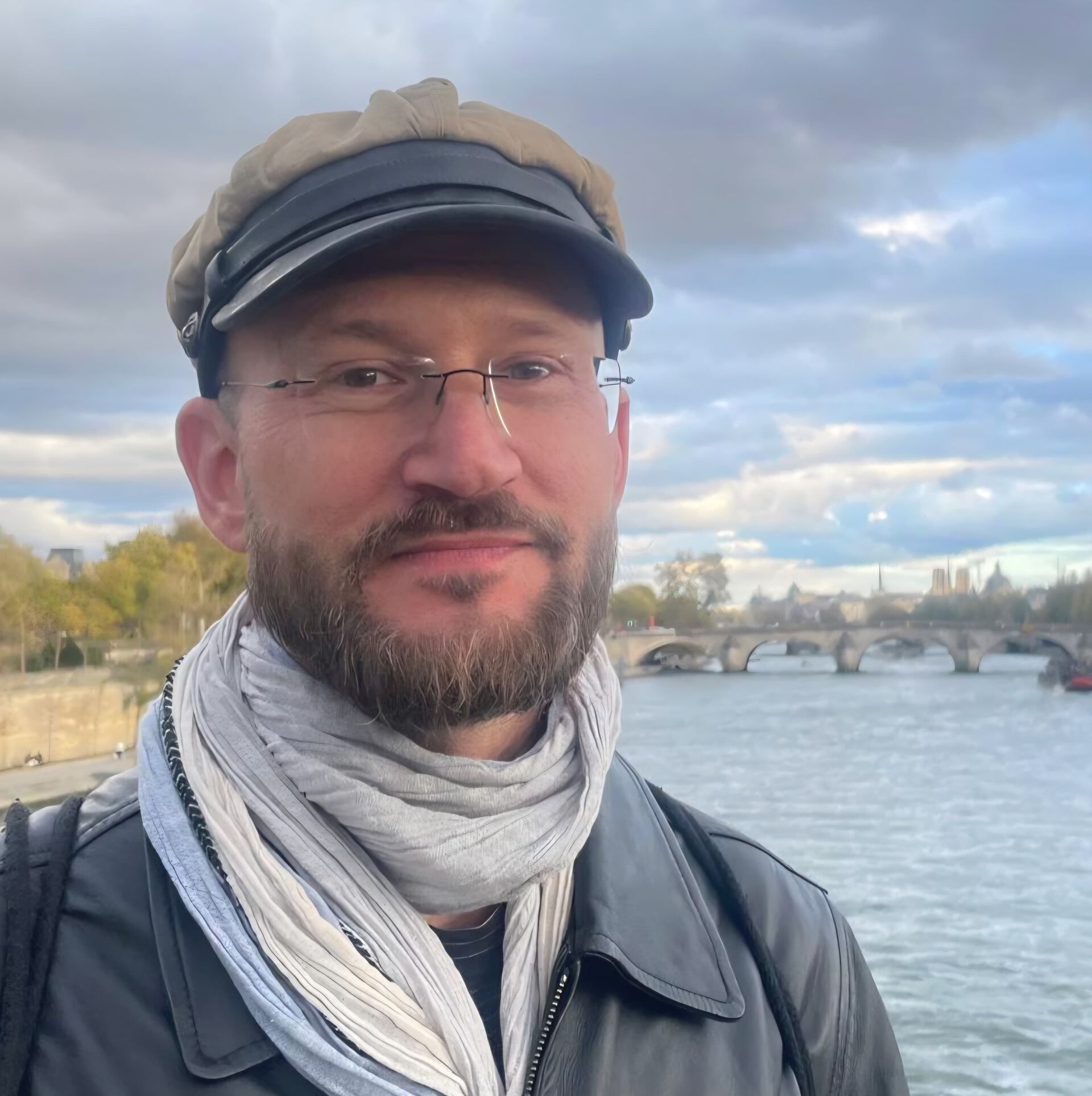
Jason Litzenberg has over 25 years of experience as an English language teacher, applied linguist, and language program administrator. He has a PhD in Applied Linguistics and English as a Second Language (ESL) from Georgia State University (United States). His research interests include language teaching and learning, teacher education, decolonial linguistics, linguistic landscapes, curriculum design, and pedagogical technology. He has contributed articles to publications such as Applied Linguistics, TESOL Quarterly, ELT Journal, and European Journal of Applied Linguistics. Dr. Litzenberg is currently Affiliated Researcher at University of Oslo (Oslo, Norway).
Bio:
Jason Litzenberg has over 25 years of experience as an English language teacher, applied linguist, and language program administrator. He has a PhD in Applied Linguistics and English as a Second Language (ESL) from Georgia State University (United States). His research interests include language teaching and learning, teacher education, decolonial linguistics, linguistic landscapes, curriculum design, and pedagogical technology. He has contributed articles to publications such as Applied Linguistics, TESOL Quarterly, ELT Journal, and European Journal of Applied Linguistics. Dr. Litzenberg is currently Affiliated Researcher at University of Oslo (Oslo, Norway).