This is a hybrid event. The presenter will join via Zoom, and the link will be included in the email announcement. If you haven’t received the link, please email Alexandra Bogoyavlenskaya.
Abstract
Parental speech input plays an important role in children’s early language acquisition. One way to study this is by recording speech in the home, where interactions occur naturally during everyday activities. However, day-long recordings produce many hours of audio, often in noisy home environments with overlapping speech and background sounds and processing them manually is extremely time-consuming and tedious.
The HindiBabyNet project addresses this challenge using recordings collected from 45 Hindi-speaking families in India with infants between 6 and 18 months of age. Each family contributed extended recordings captured during normal daily routines. These recordings provide detailed examples of caregiver–child interaction but also result in a very large audio collection.
To make analysis feasible, a processing pipeline was developed for the HindiBabyNet dataset. The pipeline begins with raw audio recordings and automatically detects segments that contain speech. It then groups segments by speaker and labels them as the male caregiver, the female caregiver, the child, or background sound.
The system relies on several components, including voice activity detection, speaker diarization, and a speaker-type classifier trained with XGBoostAfter processing, the pipeline outputs separate audio files for each speaker along with Praat-compatible TextGrid annotations, enabling manual inspection and correction when needed. The pipeline is designed for long recordings typical of home-environment studies. It supports multi-file datasets for each participant, uses GPU acceleration for faster processing, and preserves intermediate outputs so that analyses can be reproduced.
The project is currently in an active development stage and is continuously improving. The code is available at: github.com/arunps12/HindiBabyNet
Bio
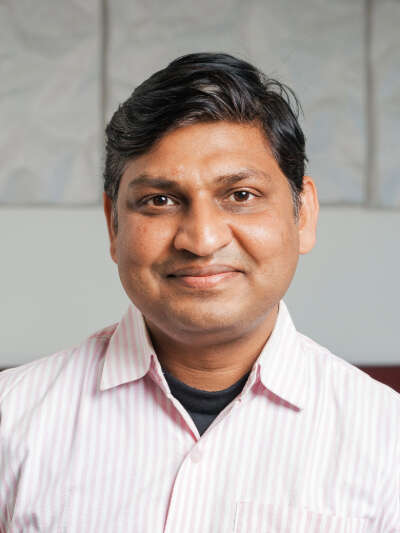
Arun Prakash Singh has a PhD from the Acoustic lab at IIT Kanpur, India, where he worked on source localization strategies for audible frequencies. He has completed Bachelor and Master's degree in Electronics and Communication Engineering. Arun is currently working as a Marie Curie Researcher on the Hindi-BabyNet project with Prof. Natalia Kartushina.