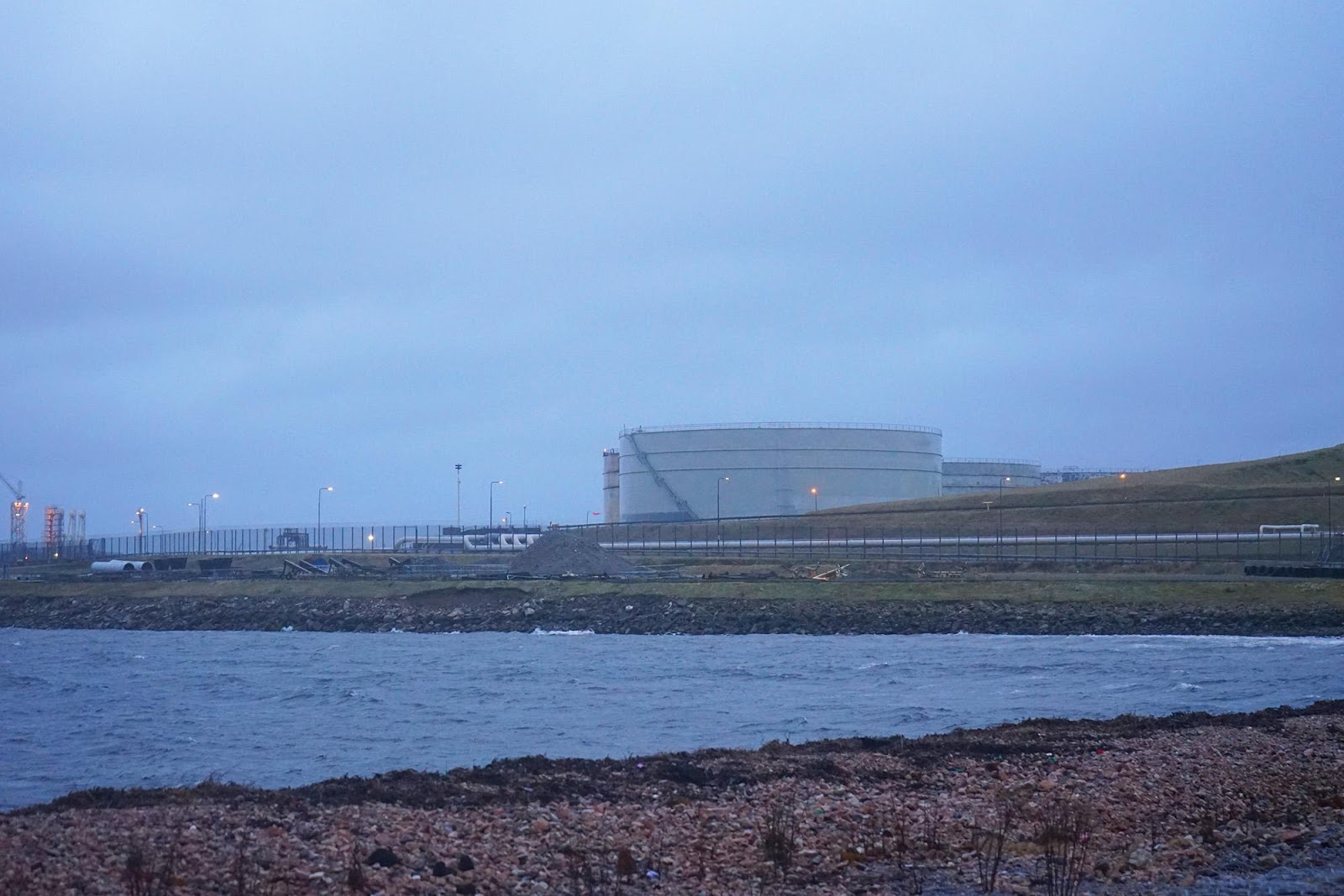
The diary entries I wrote in Shetland back in January 2024 were inspired by a fieldwork method proposed by cultural anthropologist Clifford Geertz in 1973. The method requires taking “thick descriptions”, which means noting extremely detailed and personal descriptions of ethnographic fieldwork. So in the form of a diary, I kept track of people I met that worked in the oil (or other energy) industries in the islands, as well as other oil-related conversations and experiences. Here are some glimpses of my oil encounter travel log:
January 18th, 2024: The Journey to Shetland Begins
At 04.00 a.m. on a snowy Thursday morning, I wake up to the winter darkness that surrounds Oslo. It’s the day of my trip to Shetland. I quickly get out of bed and make my way through the meter-high snow that filled the city the day before. A long journey to an island in the North Sea begins; a trip including two planes, multiple buses and trains, and a 14-hour overnight ferry.
On my second flight, from Amsterdam to Aberdeen, I meet a Scot who used to train people in the oil and gas industry in Shetland. He is excited to hear about my Ph.D. project on the island, since he has been to Shetland many times himself. Many of his employees came from far and wide but ended up staying in Shetland because they fell in love with the island’s way of life. We talk for about three hours, about how he got into the fossil fuel industry (because of a thesis on correlation and metal pipes that brought him into the technical aspects of the industry), and how he later left the oil sector on the islands to work in renewable wind energy.
When the plane lands, I comment on how small Aberdeen airport is. “Sure, but Aberdeen has one of the biggest heliports in Europe!”, my fellow passenger responds proudly, and follows up with, “I am so happy I don’t need to take that bloody helicopter over the North Sea any more”.
Inside Aberdeen airport, a person in front of me is questioned by border force officers as to why he came to the UK. He says that he wants to work in the oil and gas industry, after which he is taken to a small back room for further questioning. A big commercial image of oil platforms and smiling oil workers welcomes me at arrivals. Outside, the sound of the choppers overwrites all other background noises. A new group of oil workers sets off from the roof of the airport to the platforms in the North Sea, and I make my way down to the harbour to take the ferry to Shetland.
On my way through Aberdeen, I am stopped by an environmental campaigner. He is collecting signatures for an onshore windmill project and asks for my cooperation against “the oil giants that want to control the wind sector”. I sign the form and take his flyer with me to read further about the project. According to him and his campaign group, onshore wind-farming provides more community-control over energy production than offshore wind parks, which are often in the hands of “big and somewhat shady international corporations”. I read the flyer and put it in my notebook.
As I walk into the NorthLink Ferries terminal and onto the ferry that will continue my journey to the Shetland Isles, I am advised to prepare for a rough crossing. The Metropolitan weather office has announced 5-meter-high swells on the North Sea that night. My cabin lies next to the ship engine. I sleep on and off to the sounds and oily smells of the massive engine, waking up when it tries to navigate a big wave and falling into a shallow sleep when it runs low on calmer waters. The room came at a discount rate, and I now know why. The oily fumes and smells coming from the motor make me even more seasick.
January 19th, 2024: Docking into Lerwick harbour
At 06.00 a.m., I wake up after a rough night of rolling back and forth in my bunk bed. At the main desk, I ask where we are, still sleep drunk. “Nowhere yet, we are still in the middle of the North Sea” the receptionist answers. He gives me a folder with information about the nautical miles between the ferry stops, which tells me nothing. Outside on deck, I record the sound of the boat and try to capture the ship lights in the dark ocean, which could well also be oil platforms in the distance. It is very cold on the sea that night. Next to me, there are only a handful of travellers still on board. At 07.30 a.m., and after a hearty Scottish breakfast, we moor at the Lerwick harbour, and I make my way through the muddy snow to the guest house. The sun is not up yet.
January 20th, 2024: Second Full Day on the Islands
In the water at Bain’s Beach, right in the centre of the small town of Lerwick, I see a woman swimming alone quite far out. Her dog is waiting at the beach, howling and being visibly agitated by the incoming waves taking the small stretch of beach he is standing on. The woman eventually gets out, dresses, and I stop her for a quick chat about the water temperature and the sea conditions that day, since I had also planned to go swimming. She introduces herself as my neighbour and invites me for a coffee at her place. We talk in her beautiful Victorian home about the local folk festival Up Helly Aa.
Soon, we start talking about the oil industry in relation to the Viking-themed festival. For many retired oil men, making their money in the high tides of the 1970s oil boom on the islands, Up Helly Aa was the chosen way into the island culture – making them part of the local island community. Their skills in welding iron and knowing their way around wood and rope could be put to good use in the building of the Viking galleys and the costumes. Many of them learned to sew in addition to the more masculine skills they acquired in the oil industry. I think about stories of coal-miners, learning how to sew in fabric factories after the coal-mines closed down in Limburg, the part of the Netherlands where I am from. Rough fingers getting stuck in fine linen. What did the workers struggle with when applying their oil-related skills to a new hobby?
Due to some misbehaviour caused in the 70s and 80s, the Lerwick Up Helly Aa festival came up with a new rule, designed especially for the temporary oil workers on the island. The temporary workers were, and still are, banned from participating in the festival in Lerwick. Instead, they participate in another version of the festival taking place up north, next to the Sullom Voe oil terminal in Unst. To participate in the Up Helly Aa in Lerwick, one must have a residency permit of at least five years on the islands – a rule that is however easily surpassed by many temporary oil workers by simply getting a second address on the islands.
During my meeting with the neighbour, I also learn that Up Helly Aa is heavily sponsored by the local oil industry. But that is not strange, because so is everything else here: the island’s infrastructure, local schools, community halls, swimming pools, leisure centres, and healthcare.
This is unlike many other places in the United Kingdom, where this money comes primarily from the state. The state is weirdly absent in this part of the North Sea, and the oil industry is omnipresent – providing the Shetlanders with an almost untouchable position.
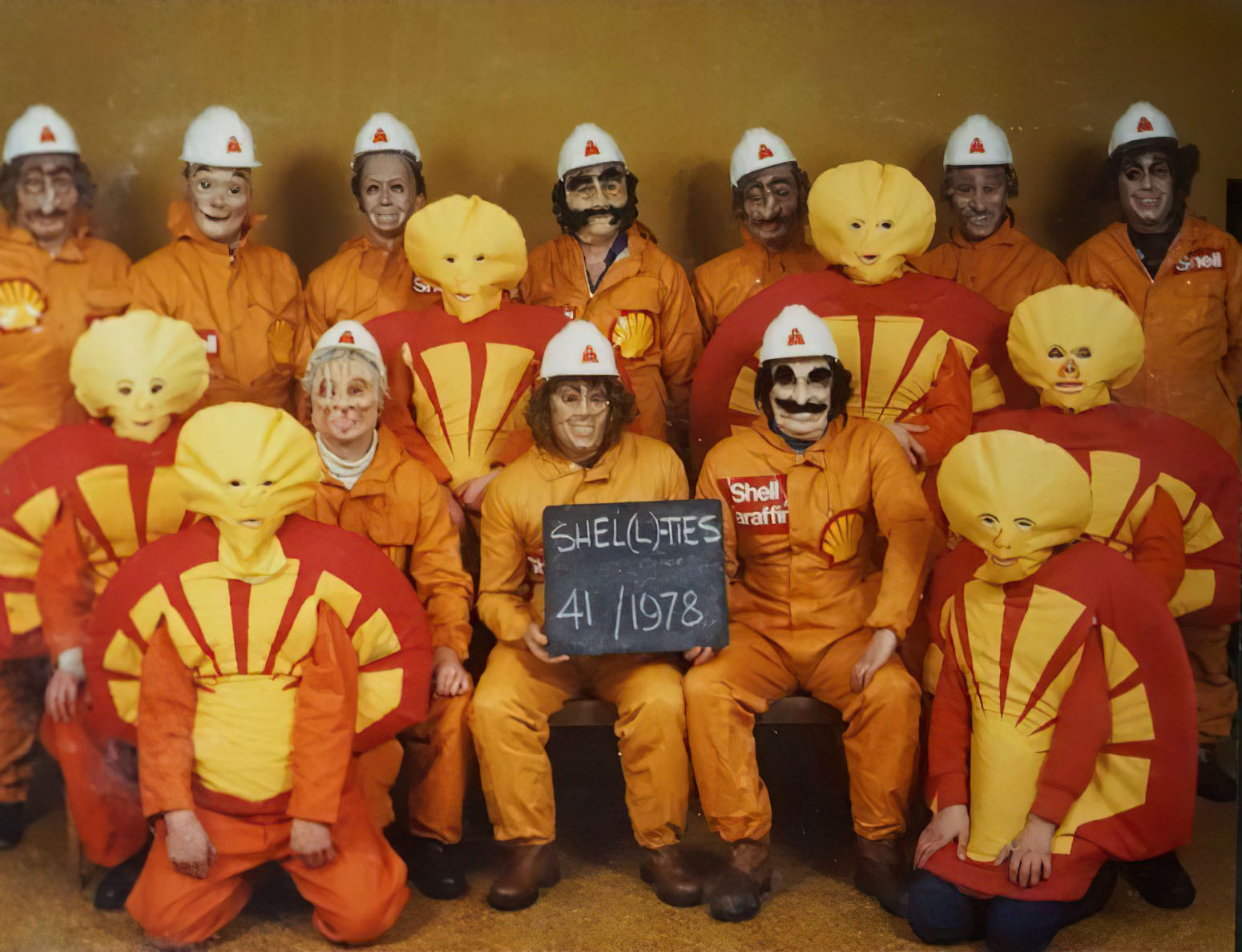
Criticizing the oil industry through the banter and satire of the festival would therefore be like “biting the hand that feeds you”. Since every squat also has at least one oil or other energy worker in their midst, it would be quite a touchy subject to perform, or so my neighbour thinks. She tells me how they suspect that there might be some form of local critique this year, since the wind and oil sector has been national news in Scotland because of the new Viking windmill park and the planned opening of the Rosebank oil field west of the islands. Maybe this year there will be someone mocking the industry – although we will only know at the start of the festival, since the different groups keep their chosen storyline secret.
Note: later in the archives, found many acts about oil- and other forms of energy production, ranging from 1972 to 2024.
January 22nd, 2024: Viking Tour of the Islands
It's time for my Viking and oil tour over the islands. Before coming here, I arranged with a local guide (who is also an archaeologist) to take me all over the archipelago to show me different oil and Viking sites, so that I could see how – and if – they were connected.
Right next to the airport, we park in front of Jarlshof, the most famous archaeology site on the islands. Here, a complex flat town of stones awaits us, tugged away under soft layers of moss – displaying the remnants of former houses of Vikings and later North Sea island inhabitants. While we try to stay on our two feet in the extreme wind coming from the open sea and sweeping over the south side of the islands, my guide tells me about the Vikings, kings, and earls that once lived here. The site is being threatened by a rockslide that turns straight down into the sea on one side and has been discovered completely by accident.
“After a stormy day like this, someone saw a piece of wall sticking out of the earth next to the sea. They started digging and a whole Viking village turned out to lie underneath. When you look down on the beach, you probably see some ancient construction stones that were just here some months ago and fell down. The entire site will be taken by the sea in a few centuries or even decades due to climate change, but when the Vikings started building here, they were still about 400 meters away from the coast”, he explains. “This is what they call rescue archaeology”.
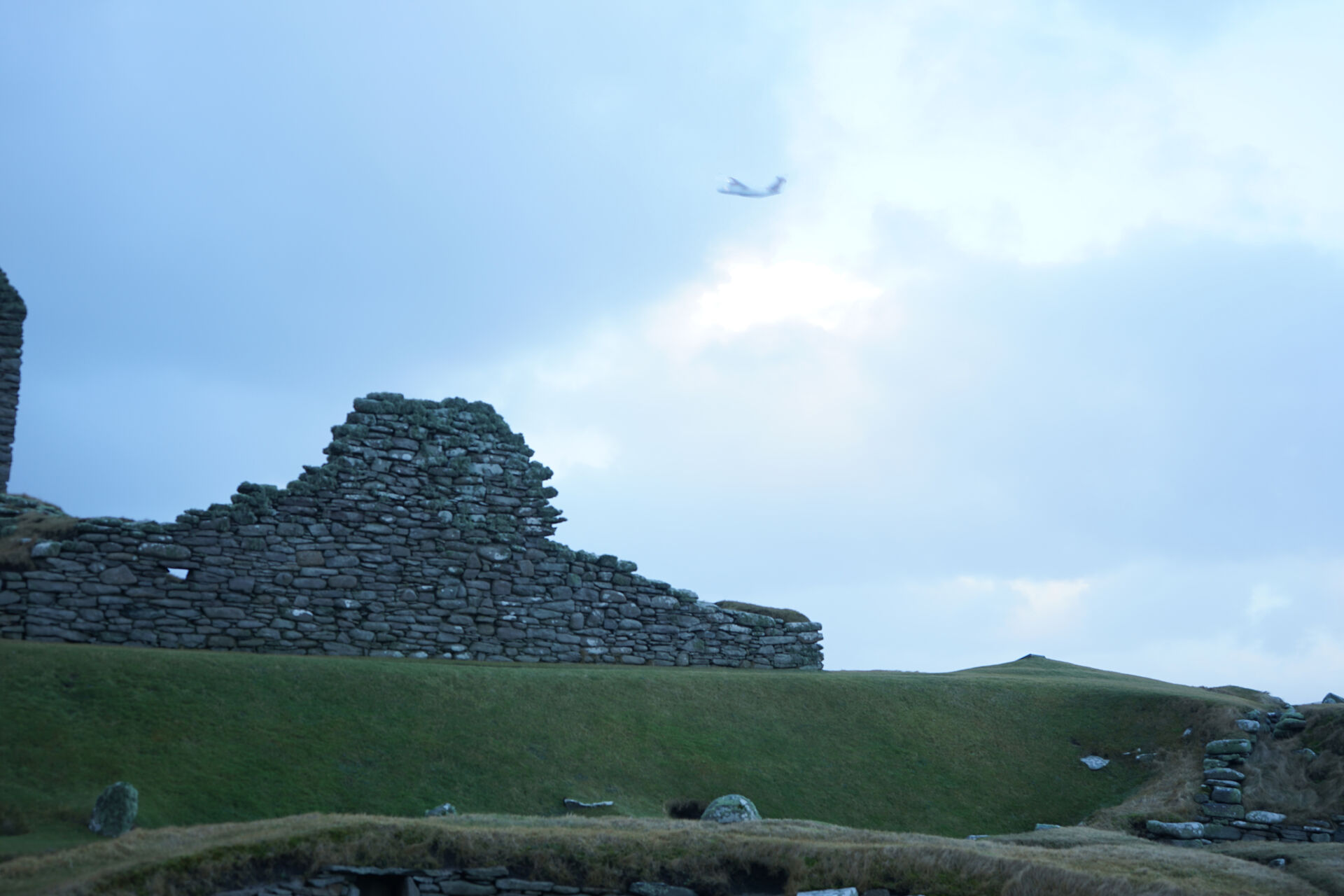
The archaeological site is threatened from two sides: the rising sea on one and the Sumburgh airport developments on the other. While we bend our heads over the stones and other ancient Viking relics, aeroplanes fly over our heads, mingling firmly with the ancient experience we are trying to access.
“When they found oil in the North Sea, this airport needed to be built quickly and dirty”, my guide tells me. “They found some evidence of an archaeological site while constructing the airport road on the other side of Old Scatness, and of course, they were not very happy about that find. So, they just moved the road a few meters more to the left, but of course, there must have been relics there too which they probably just dismissed. There is no doubt that the whole airport lies on an ancient burial site, but no one would excavate here anymore, because it's too destroyed now. Rules in the 1970s regarding the preservation of historical artefacts must have been really different”.
Those landing in Shetland now, land on the bones of Vikings, and probably also on the remnants of earlier Shetland inhabitants from the Stone and Iron Age.
January 23rd, 2024: Second day of the Viking tour
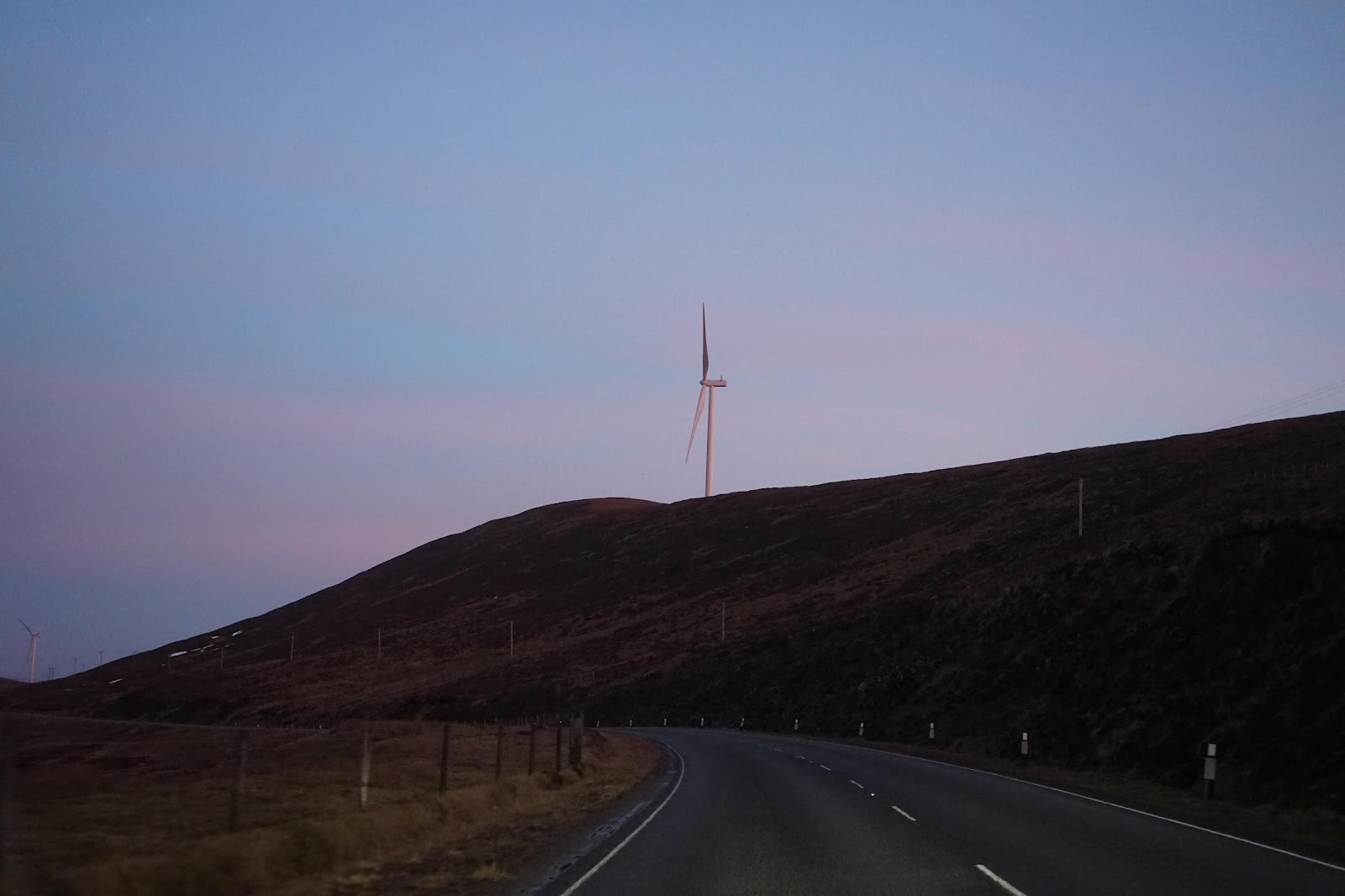
It’s the second day of my islands tour, and today we will go to the north of the archipelago, visiting the islands of Unst, Yell, and the oil terminal of Sullom Voe. After taking my seasickness medicine during breakfast, my guide picks me up, and we drive against the sunrise to the north of the island group. On the way, we see wind farms in the peat landscapes and the sky around us colours in a dark, satisfying orange and pink. As we arrive at the first ferry to Yell, the sea is as blank as a mirror, and I feel bad for taking the tablets, which already start to make me slightly sleepy and dizzy.
After a very short trip on the ferry, followed by a slightly longer one on the second boat to Unst, we arrive at the northernmost island of the archipelago. My guide stops his car at a crofter’s house in front of a distant beach, and we start to walk through the heath landscape. I am reminded of my time in the Hebrides: the beach opens wide in front of us, and in the distance, we see some otters playing in the water.
Our goal for today’s trip is to visit a couple of stone houses built by the Vikings, which are severely threatened by the rising sea levels. They are standing on the beach and are all being swept out into the sea while we look at them. As a result, there is no caution to be taken at all in relation to the precious archaeology we are encountering: stones of the house are already lying in the water, and the sea is opening the site more and more to us as we stand there. I also think about this as an oil-encounter, although in a different, zoomed-out kind of way: Viking houses being swept out into the sea, caused by man-induced climate change for which the fossil fuel industry is largely responsible.
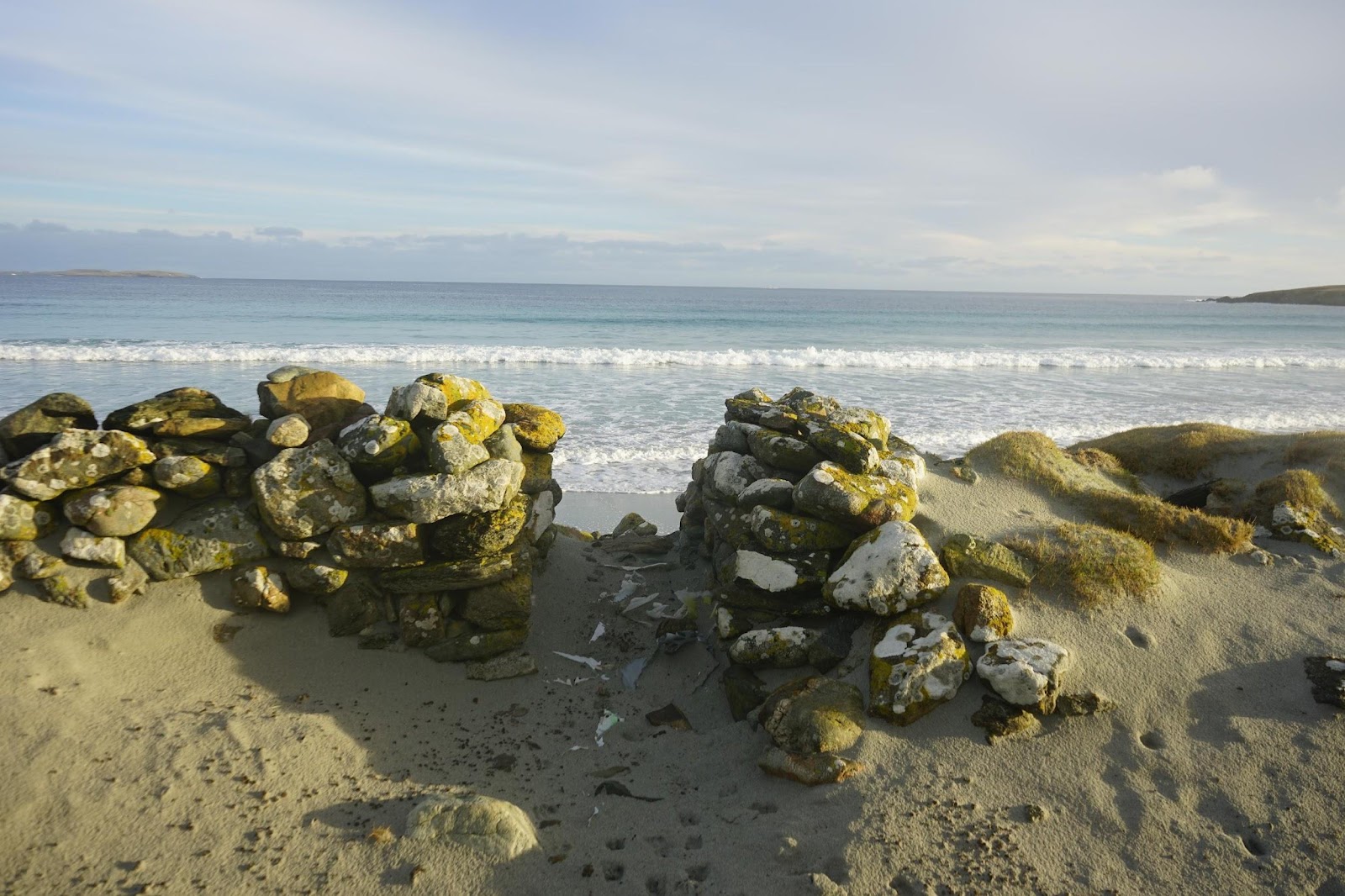
I think about the possibility of seeing a shining comb or other Viking relic suddenly lying in front of me, and how strange it would be to find something like this under the given situation. “Some years ago, I excavated these houses, after some funding for coastal rescue archaeology was secured by the island council” my guide tells me, and I wonder how much of it can still be rescued. Then he continues, “When I arrived, a bucket was standing next to the excavation site, and this guy instructed me to not move it because there was a pair of feet in them. I looked inside and there truly was a set of Viking feet in the bucket! And we found the entire skeleton after we started to dig, a male between 15–20 years old with the most beautiful set of teeth I have ever seen. The skeleton was buried with a bronze plaque next to his head, probably a gift to the afterlife of some sorts. A very polished piece of bronze, it was after all these centuries still shining like a mirror”.
We walk further along the coast towards the edge of the landscape. Around the corner we find a graveyard where people recently buried are lying next to ancient Viking graves. In the middle are the remnants of a Viking chapel, with a stone table in the middle. All the gravestones are taken over by lichen, and the influence of the sea is felt deeply in this place. It must be one of the most northern graveyards in the United Kingdom, so right on the border of the Atlantic and completely at the mercy of the rising sea levels and the harsh winter storms. One day, in the not so far future, this graveyard too will be swept out into the sea.
After a long walk back to the car, we drive up to the space station of Unst, a strange place called SaxaVord spaceport that has been established by a rich entrepreneur (also known as a local swindler, according to my guide). He tells me the story of Saxa the giant, after which the spaceport is named:
“One day, Saxa was fighting another giant, and they had a competition in throwing rocks over the sea. The island you see there is named after this game they played, representing the stones they threw into the sea. A mermaid was sitting on the stone, combing her hair and singing a beautiful song. The two giants fell madly in love with her, and would stalk her every day, not leaving her alone. The mermaid was very diplomatic about it. I cannot marry either of you! She told them, and they kept fighting over her, to the great despair of the mermaid. One day, the mermaid came up with a game of herself. “You two must race to the North Pole, and whoever gets there first, is allowed to marry me” she ordered the giants, and off they went, smashing into the wild water. But both giants forgot that they could not swim, and so the mermaid got rid of them, as they drowned in front of this beach”.
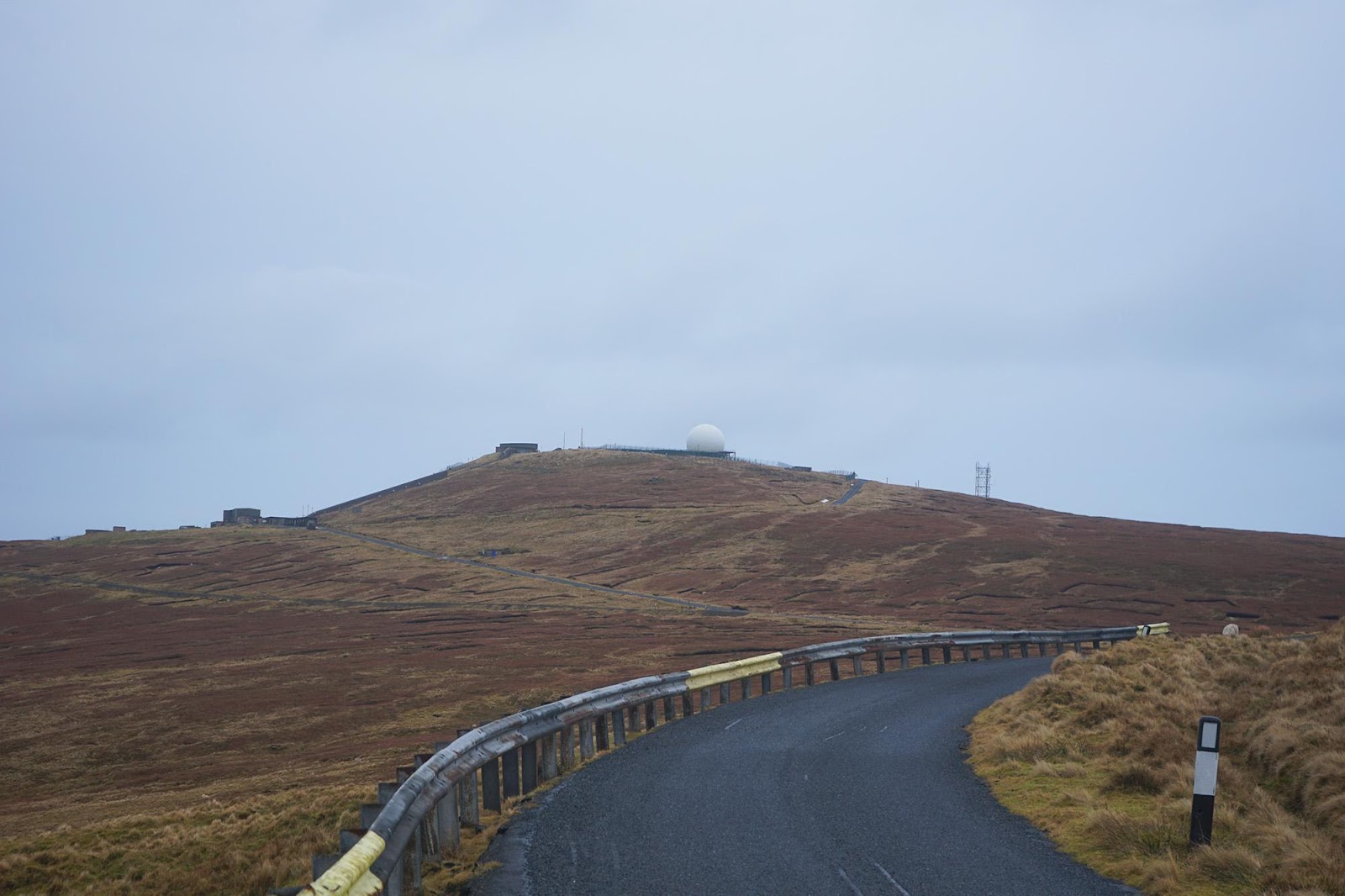
It’s a strange place, this windy cliff located in the far north of the United Kingdom, from which space engineers shoot ultra-modern oil-fueled rockets into the sky, telling each other mythical tales. This is also an oil-encounter.
Our last stop of the day is the Sullom Voe oil terminal, glistening like a planetary system in the fog on the water. Driving past the fences with burning flames behind them, we get the profound feeling that we’re not supposed to be here. “Last stop: we arrived in Mordor!” My guide jokes, and looks nervously at the security guards that now turn their attention to us, while we cruise seemingly aimlessly over the car park of the oil terminal. We make our way back to the south side of the islands, and I fall asleep in the car as the sky grows dark and the harsh North Sea winds make driving difficult.