About the project
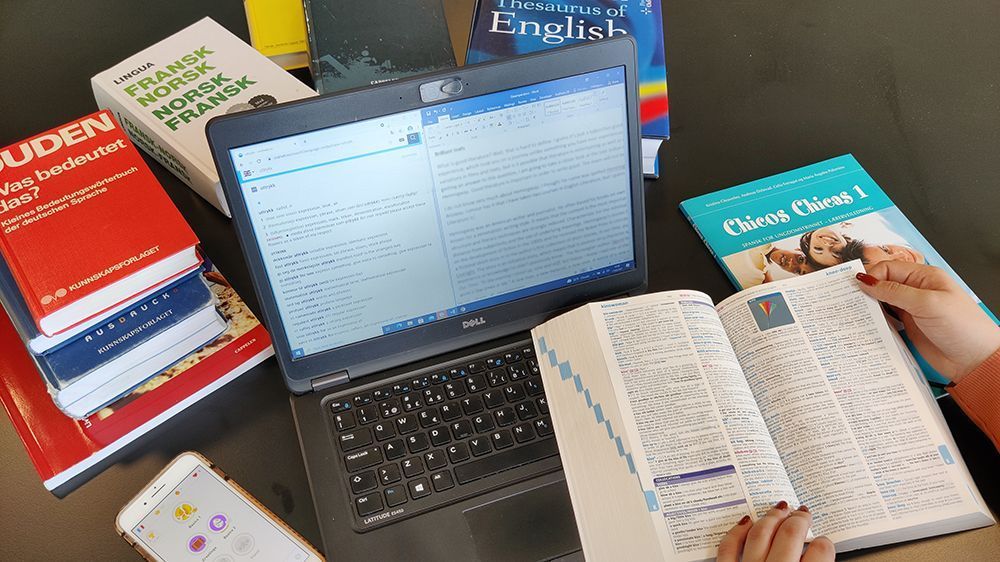
The project “MULTIWRITE – Interactions Between First, Second and Third Languages” investigates students' writing development, feedback from the teachers and teacher collaboration across language subjects.
Writing development in the first, second and third language
The project group have collected texts that 133 students have written in the language classes they take in the course of the first year of upper secondary school. From 57 of these students, we have received texts in all three languages: Norwegian, English and their third language of choice (French, German or Spanish).
The texts are investigated in order to find out how the students construct sentences and texts, and what interactions we can find between the languages of an individual. Although the students’ proficiency in the third languages is lower than in Norwegian and English, they seem to develop fast with respect to complex sentence structures, which may be due to a later starting age and the fact that they already know at least two languages from before. We find similarities in the way that individuals use cohesive devices across their more proficient languages, Norwegian and English, suggesting that they draw on a shared writing competence in the two languages.
Feedback from the teachers
The teachers’ comments on the texts are analysed with respect to both content and form. The purpose is to generate new knowledge about what teachers consider central aspects of writing in the differen language subjects, and about similarities and differences between the subjects in the way that language and writing are described.
The analysis reveals considerable differences between the feedback given in the three language subjects, which may have an effect on the students’ opportunities to transfer skills from one language to another.
Collaboration across language subjects
The project group have interviewed teachers about their thoughts on teacher collaboration across the language subjects to support the students’ multilingualism, and we have worked together with teachers to try out different kinds of cross-curricular collaboration. Teachers show strong interest in such collaboration, but success depends on many factors, such as support from the school leaders, knowledge about each others’ curricula and the depth of the collaboration. The students are also positive to teachers collaborating across subjects, and they develop a stronger multilingual identity as a result of such collaboration.
Based on the results from this part of the project, we are developing a model showing how cross-curricular collaboration can contribute to better language instruction.