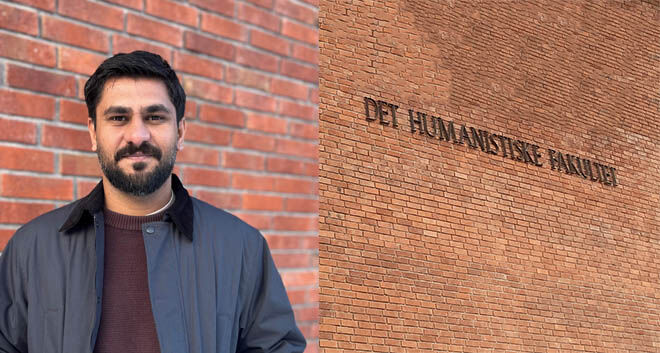
Malik’s PhD dissertation, Manufacturing Utopia: Refugees, Labour, and the Making of the New Industrial Township Faridabad, 1947-1960, examines the planned industrial township of Faridabad, developed after the 1947 Partition of India, as a postcolonial project of urban development and refugee resettlement. Conceived amid mass displacement and political instability, the township aimed to provide employment and housing to refugees while demonstrating a peaceful and cooperative path to modernisation. In the early Cold War context, Faridabad was promoted as an alternative to both capitalist and socialist development models, emphasising state planning, cooperatives, and social harmony.
Tracing Faridabad’s transformation from refugee camp to industrial town, the study analyses how the project was shaped by global and domestic planners, state authorities, architects, humanitarian and voluntary organisations, private firms, and refugees themselves. It situates the township within wider currents of postwar planning, international development thinking, and Cold War geopolitics, showing how Faridabad functioned not only as a domestic response to displacement but also as a symbol of India’s developmental ambitions for international audiences.
The dissertation argues that while cooperative ideals, self-help, and community participation were central to Faridabad’s public narrative, these principles were unevenly realised in practice. The township operated as a space of labour regulation and political control, where refugees were mobilised into new forms of work while remaining largely excluded from meaningful decision-making. At the same time, refugees were not passive subjects of planning. Through protest, mobilisation, and everyday forms of resistance, they challenged unmet promises and asserted claims over housing, work, and rights.
By foregrounding these tensions, the dissertation highlights the limits of state-led developmental visions that sought to engineer social consensus through planning alone. Faridabad’s history reveals how postcolonial cities were shaped not only by official plans and global ideas, but also by conflict, violence, and the collective agency of those who lived and worked within them.
Trial lecture
Designated topic: Failed Utopias? The Global New-Town Movement of the 20th Century.
Nikhil Malik successfully defended his thesis on 23 January 2026.
Evaluation committee
- Professor Christoph Kalter, Universitetet i Agder (first opponent)
- Professor Maria Framke, Universität Erfurt (second opponent)
- Professor Lucia Carminati, University of Oslo (committee administrator)
Chair of the defence
Supervisors
- Professor Daniel Roger Maul, University of Oslo
- Professor Kim Christian Priemel, University of Oslo