Programme:
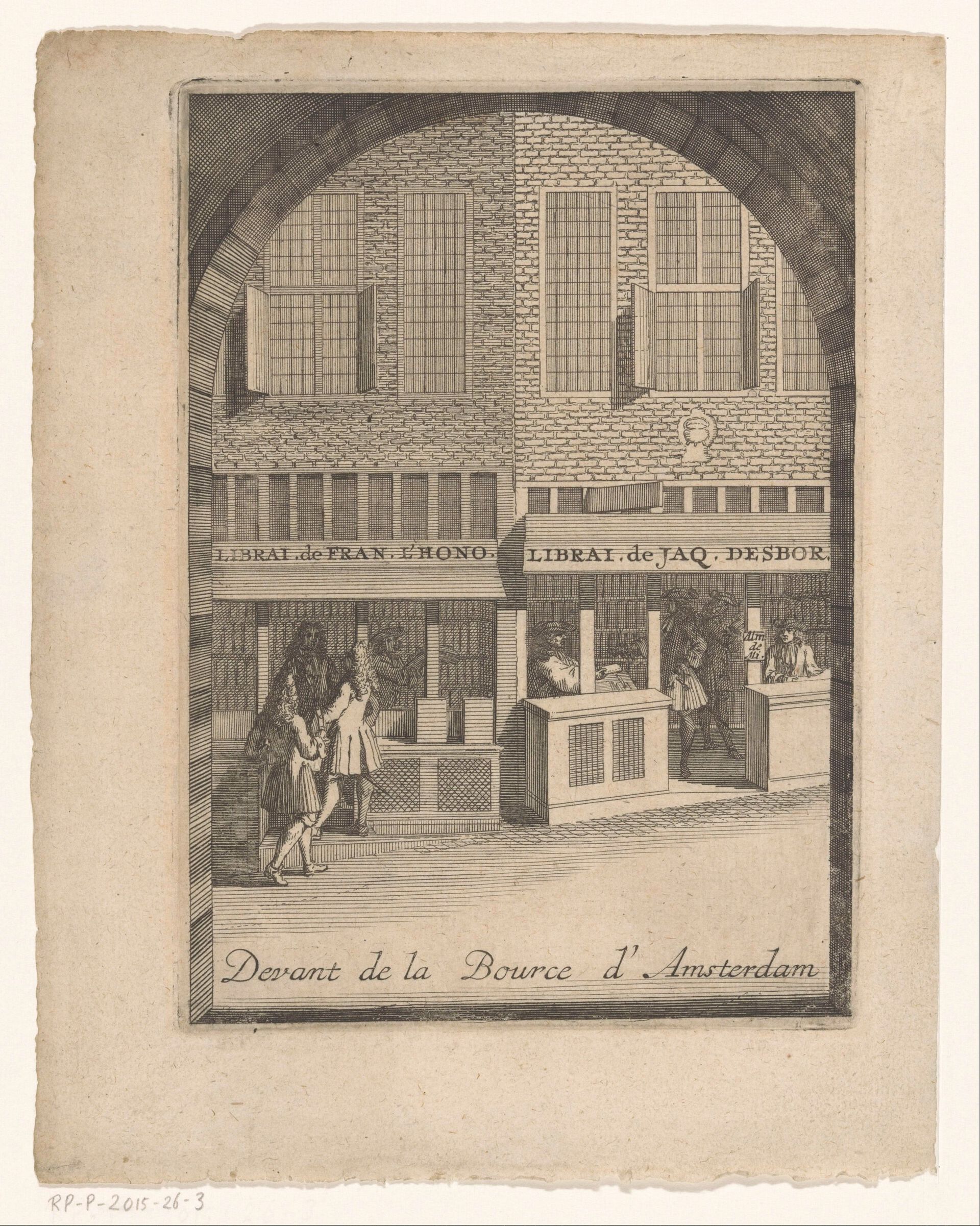
13:00-14:15: Bookselling: writing the history of a restless trade
Andrew Pettegree (University of St Andrews)
14:15-14:30: Break
14:30-15:45: Communicating the Law in Early Modern Europe
Arthur der Weduwen (University of St Andrews)
15:45-16:00: Break
16:00-17:15: Printing privileges in the Prince-Bishopric of Liège (16th – 17th centuries)
Renaud Adam (University of Liège)
ABSTRACTS
Bookselling: writing the history of a restless trade
Andrew Pettegree, University of St Andrews
For a text to make its way into the hands of the reader requires the intervention of many different professional groups: most importantly the publisher (who pays for the book to be created), the printer and the bookseller. Of these three, it turns out that the bookseller is by far the most elusive. From the first age of print, the printer was required to be identified in the title-page or colophon of a book and the publisher too was often named. Booksellers only appears when they are financing the publication: the booksellers we know from the sixteenth and seventeenth centuries were mostly those at the top of the market who commissioned books from printers. Those who merely traded in books, from a shop or market stall, often leave little impact on the historical record.
Many in the book-trade performed multiple roles: it was only relatively recently that publishers ceased printing, and printers stopped selling books direct from their workshops. It is only in the twentieth century that the bookselling hierarchy with which we are familiar, selling antiquarian, second-hand or new books became fully established.
My study tells the story of the emergence of the book trade from the invention of printing to the internet, with a glance back to the Roman Empire and mediaeval manuscript trade. We examine the slow progress of booksellers to becoming shopkeepers, and the crucial importance of the often despised itinerant trader. We examine the specialist bookshops that flourished in the twentieth century, and the new roles that were created as books began to reach a global mass market: the wholesaler, the runner, the agent, the trade rep. We chart the development of the antiquarian and second-hard trades, the extent to which censorship impacted on booksellers, and how a technologically obsolete trade has survived the internet.
Communicating the Law in Early Modern Europe
Arthur der Weduwen, University of St Andrews
This paper will examine how law was communicated in early modern Europe (c. 1500-1750), and reflect on what impact this had on European society. In early modern Europe, laws were issued and promulgated by a great variety of political authorities. Most of these authorities – monarchs, Parliaments, princes, town councils – relied on an inherited system of communication that required laws to be read out (proclaimed) and distributed in handwritten or printed forms. In an era in which most people had limited or no formal involvement in the making of law and no influence in the election of their rulers, these rituals of communication were essential to the maintenance of the bond between rulers and their subjects, and to the practical administration of everyday commerce, taxation and public order. Based on the work of a new ERC-selected project at the University of St Andrews (COMLAWEU), this paper will discuss the most common strategies of state communication, ranging from formal proclamations in squares or churches, to the affixing of printed placards and the publication of laws in newspapers. This paper will assess the extent to which these strategies were used across Europe, and how they changed over the course of the early modern period. Finally, it will also examine the commercialisation of legal communication, and the ways in which copies of laws were recirculated and appropriated by the subjects to whom the law was supposed to apply.
Printing privilege in the Prince-Bishopric of Liège during the Early Modern Period (16th – 17th centuries)
Renaud Adam, University of Liège
This contribution aims to study the system of printing privilege in the prince-bishopric of Liège during the 16th and 17th centuries. Several themes will be addressed during this intervention: the birth of this legislation related to the arrival of the first printers in the middle of the 16th century and its evolution over time, the problem of monopolies and attempts at dynastic recoveries, the court printers, the conflicts between printers, identities of issuing authorities and individuals asking for privilege, the question of regulating the book market, the monitoring of the application of legislation on printing privilege, and the censorship.
This historical and legal presentation will aid in gaining a better understanding of the relationship between printers and the various authorities of the prince-bishopric of Liège during the early modern period. It will also allow a better knowledge of the strategies developed by these artisans to protect their trade, to attract secure incomes through obtaining monopolies on certain types of publications, and their attempt to transfer these monopolies to their heirs. Studying the delivery of printing privilege in an ecclesial principality, such as Liège, also allows questioning the problematic of the superiority or not of religious power over secular power.
SPEAKERS:
Andrew Pettegree, CBE, FBA, is Professor of Modern History at the University of St Andrews and Founding Director of the Universal Short Title Catalogue (an online bibliography of all books published in the first age of print, 1450-1700). He is the author of sixteen books in the fields of Reformation history and the history of communication including Reformation and the Culture of Persuasion (Cambridge University Press, 2005), The Book in the Renaissance (Yale University Press, 2010), The Invention of News (Yale University Press, 2014), Brand Luther (Penguin, 2015), The Bookshop of the World. Making and Trading Books in the Dutch Golden Age (Yale University Press, 2019) and The Library: A Fragile History (Profile, 2021), co-authored with Arthur der Weduwen. His latest book, The Book at War, was published in autumn 2023. He is a Fellow of the British Academy and was appointed CBE in the recent New Year Honours for services to literature.
Arthur der Weduwen is Lecturer in Modern History at the University of St Andrews and Co-Director and Project Manager of the Universal Short Title Catalogue. He specialises in the history of communication, printing and the book trade, early modern politics, and the history of the Netherlands. He is the author of six books, including Dutch and Flemish Newspapers of the Seventeenth Century (2 vols., Brill, 2017), The Bookshop of the World. Making and Trading Books in the Dutch Golden Age (co-authored with Andrew Pettegree, Yale University Press, 2019), The Library, A Fragile History (also with Andrew Pettegree, Profile, 2021) and State Communication and Public Politics in the Dutch Golden Age (Oxford UP, 2023). At present he is also the Principal Investigator of the COMLAWEU (Communicating the Law in Europe, 1500-1750) project at St Andrews (2024-2028).
Renaud Adam is historian of early modern books. He runs the digitization unit of ULiege Library. He is also a scientific collaborator in the Modern History Department at the University of Liège and member of the Gabriel Naudé centre in Lyon. Adam works on the book ecosystem in the former Low Countries (15th-17th centuries), with particular attention to socioeconomic issues, cultural transfers and the reception of Italian culture. He has addressed these themes in several books, including Vivre et imprimer dans les Pays-Bas méridionaux (des origines à la Réforme) (Brepols, 2018) - awarded by the 2022 ILAB Breslauer Prize for Bibliography (3rd prize). For several years now, he has also been interested in questions of censorship and the ways in which it is expressed, notably in the essay Le théâtre de la censure (XVIe et XXIe siècles). De l'ère typographique à l'ère numérique (Royal Academy of Belgium, 2020).