This paper asks in what way current territorial rights theories would need to change were they to acknowledge 1) our deep interdependence with and through nature and 2) the agency nature possesses and that shows especially in human experiences with the elemental forces of nature. The paper argues that traditional theories have unduly focused on territorial rights as a form of property rights that delineate spheres on non-interference. As a result, they struggle to account for the actual interconnections and dependencies that collectives have with nature but also with each other through their impact on a shared nature. In contrast, many (North-American) Indigenous concepts of good governance and self-determination already incorporate the role of mutual interdependence in securing collective autonomy.
Going beyond a pure compare-and-contrast approach, however, the paper then asks what it would mean for territorial rights theories to not just acknowledge the interdependence of human collectives through the shared nature but to also recognize nature as a (collective) actor with its own intrinsic value and agency. The paper suggests that rights to self-determination might survive, though in a changed form, whereas property rights to land might not. To arrive at this conclusion, it will look deeper into the notion of agency that serves as a justificatory ground for autonomy claims in traditional rights theories but also features prominently in some Indigenous theories of nature. Using our experiences of elemental natural forces, the paper explores how such experiences make a notion of nature as an agent more graspable by highlighting not the internal features of, but rather our experiences and relation with a specific agent. If we see relational features as a decisive factor in determining agency, it allows a deeper understanding of how non-human natural entities might not just have agency but also claims to self-determination that must be incorporated into a framework for collective self-determination and governance.
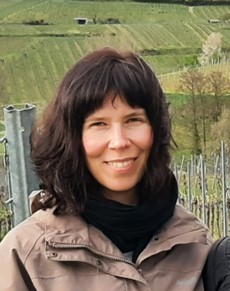
Kerstin Reibold is postdoctoral research fellow at the Arctic University of Norway.

'DynamiTE lunchtime seminars' are a part of the project 'Dynamic Territories'. This project has received funding from the European Research Council (ERC) under the European Union’s Horizon 2020 research and innovation programme (grant agreement No 948964).
A link will distributed in the Dynamic Territory list to those interested in attending this event digitally, to join the list contact alejandra.mancilla[at]ifikk.uio.no.