The course takes a particular focus on economic and financial relations, infrastructure and logistics, and technology and standards as material interactions that reshape the geographies of power. Expanding classic understandings of geopolitics, the course analyzes how these relations and infrastructures serve as ways of expanding power and influence across borders that are not necessarily military but still deliberate and tangible. These means range from logistics corridors, production networks, and overseas innovation hubs to data infrastructures, exported professional education and training, and financial architectures. They also offer concrete entry points to analyze whether and how powers such as China participate in the ongoing reconfiguration of the so called ‘liberal’ or ‘rules based’ international order that dominated global discourse after the Second World War.
While the course primarily analyzes China’s evolving role in world politics from a geopolitical perspective, we also invite projects on other world regions or historical periods that help illuminate similar formations of power. This includes work on the use of trade, finance, infrastructure building, technological regimes, or standard setting to reorder spaces, territories, and relations.
Possible contributions to the course include, for example:
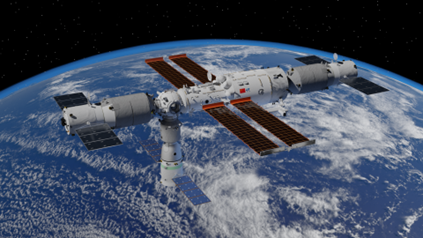
- Analyses of critical infrastructure projects (ports, railways, energy grids, digital networks, mining and refinement sites, etc.) as tools to shape trade routes, resource and information flows, and strategic access, such as China’s space and satellite cooperation with states in the Global South as part of the Belt and Road Initiative.
- Studies of the relocation and reconfiguration of production and supply chains – including Chinese manufacturing and investment in Southeast Asia and ‘China+1’ strategies – and if and how official China is aiming to (and succeed in) increase the country’s autonomy and redistribute vulnerabilities and leverage across regions, and how other actors respond to these dynamics.
- Research on financial statecraft, from development finance and new financial institutions to sanctions regimes, currency internationalization, and alternative payment systems, and their territorial and geopolitical effects.
- Projects on technological competition and standards setting, including techno-nationalism and securitization, in fields such as AI, semiconductors, green technologies, or data and digital governance (areas in which China has recently become a world leader), and how these regimes carve out new geographical spheres of influence and dependence.
- Studies examining potential tensions between the Chinese (and other) leadership’s grand visions to reorder spaces, territories, and relations through material interventions and the ways in which actors ‘on the ground’ tasked with implementing these visions comply with, reinterpret, or strategically reshape them in practice. For example, what kinds of agency do Chinese companies operating in Latin America, Africa, Southeast Asia, or Europe display in interaction with their local environments and the international rules and regimes that apply to them? Can similar dynamics be observed for globally operating companies and institutions from other emerging powers (such as other BRICS countries)?
- Historical and comparative investigations, as well as theoretical work, on formations and strategies of power in which technology, infrastructures, control over resources, and economic regimes have been used to reorganize space and hierarchy (for example in the British and Ottoman Empires or in Cold War blocs), and which help us contextualize material relations shaping current geopolitics and develop typologies of the contemporary configuration of world order involving China and other powers.
The course uses a broad and interdisciplinary understanding of “geopolitics/geopolitical,” bringing together perspectives from, for example, China and Asian studies, political science, sociology, anthropology, geography, history, international law, media and cultural studies, and related fields. It is designed as an intensive, workshop style format: participants pre-circulate a work in progress paper, deliver a presentation, and engage in discussion and feedback on each other’s work, complemented by invited lectures by senior researchers in the field and plenary conversations about methodology.
Guest Lecturers (confirmed so far; more information to follow later):
- Wendy Leutert - PhD, Associate Professor and GLP-Ming Z. Mei Chair of Chinese Economics and Trade, Indiana University
- Laura Trajber Waisbich - PhD, Deputy Director of Research, Igarapé Institute, Rio de Janeiro/São Paolo
- Members of the Norwegian Centre for Geopolitics
This PhD course is a collaboration between the China Studies section of the Department of Culture, Religion, Asian and Middle Eastern Studies (IKOS) at the University of Oslo and the Norwegian Centre for Geopolitics – a research network headed by the Norwegian Institute of International Affairs (NUPI) and funded by the Norwegian Research Council. For more information please see: https://www.nupi.no/en/projects-centres/norwegian-centre-for-geopolitics
Practical information
- Convenor: Anna L. Ahlers
- Fee: There is no course/tuition fee.
- Working language: English
- Format and program: The intensive three-day program will consist of paper presentations by PhD researchers (paper draft of 5,000–6,000 words; 20 minutes presentation, 25 minutes discussion), contributions from invited speakers, discussions of texts from the reading list, and a short excursion.
- Meals: Coffee/tea and a light lunch will be provided each day. A group dinner will also be organized.
- Travel and accommodation: Participants are expected to cover their own travel and accommodation expenses. A limited number of travel stipends is available for participants from ODA listed countries.
- Reading list: A reading list will be circulated by email before the course, including required and further readings and links to online resources.
- Open and closed sections: Panels and lectures will be open to students and researchers from UiO and other external participants. The paper discussion sessions and the excursion will only be accessible for registered course participants.
Application procedure, requirements and credits
- If you would like to participate in the PhD course, please apply via this link: https://nettskjema.no/a/628868. You will be asked to submit a short abstract of your paper (max. 300 words) and a short CV.
- Deadline for application as participant: 15 June 2026
- Notification of acceptance: ca. 22 June 2026
- Deadline for submission of draft papers: 30 August 2026
Credits: Participation in the course, preparation of the required reading, and drafting and presenting a paper equal 3 ECTS. Submitting a revised and extended version of the paper (around 7,500 words) after the course will yield an additional 2 ECTS. You will receive a certificate of participation stating the number of ECTS obtained. NB: If you are not enrolled at UiO, your home institution is responsible for the formal accreditation of your participation in this course.