There has always been a stirring. Not a thing or a creature, exactly, but more a thickening in the terrain once you come to a standstill.
Nematodes writhe in the soil in uncountable numbers, yet few of us have ever sensed them. To our instruments they are neither pests nor specimens, but sometimes they act as modes of interference. Inconsistencies are recorded, grids get muddied, samples return with an excess or lack of presence, variables or data. This is when murmurs replace silence and time starts to pool unevenly; our diagrams blur into veil and our fieldwork into invocation.
The soil does not reward our search for clarity, but has registered our attempt.
Excerpt from Jærtegn

Project Overview
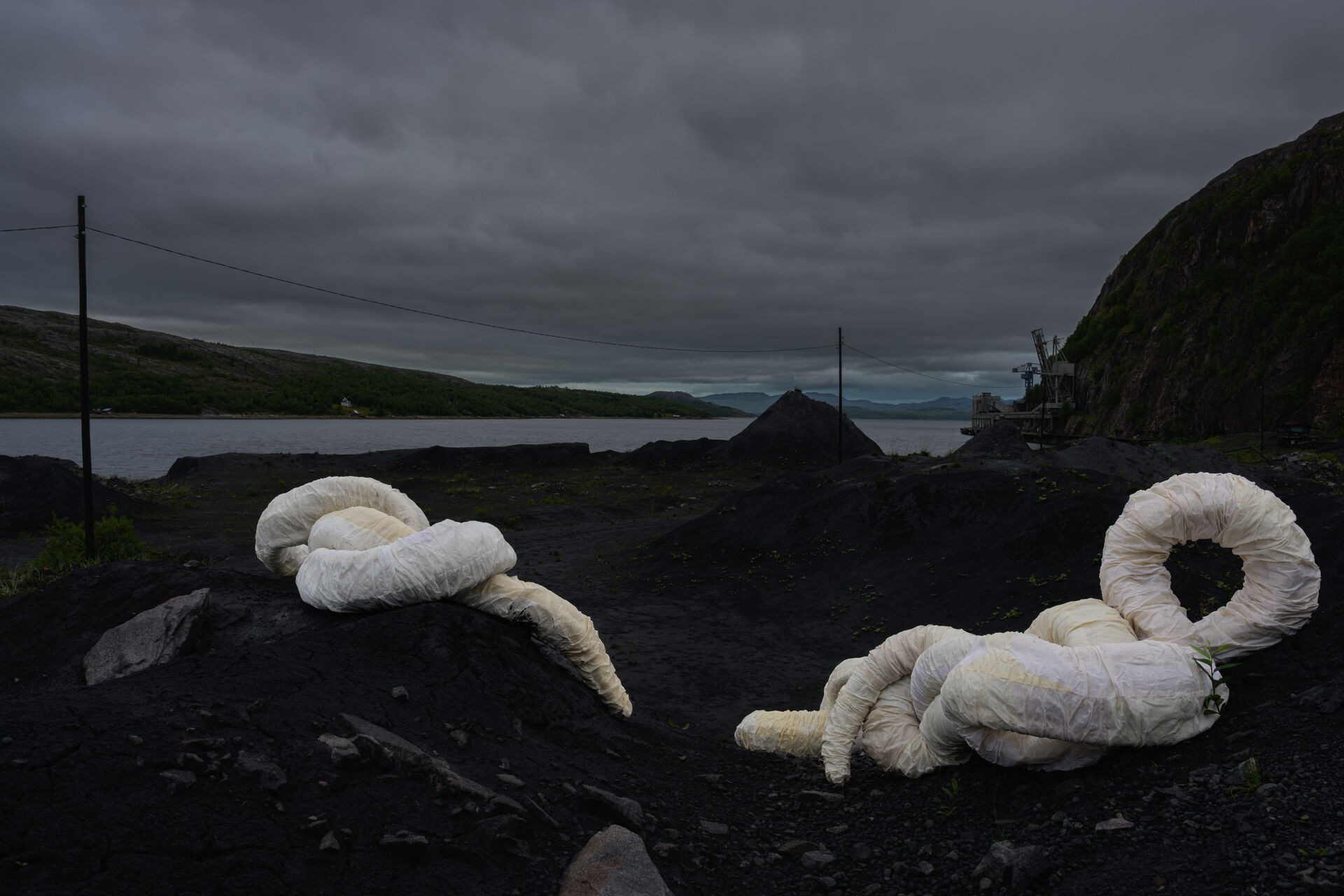
Jærtegn (15–23.08.25) is an artwork by Annike Flo unfolding in three parts: a roaming textile installation, and a video work and zine that together haunt the printers and screens of the Library in Kirkenes.
Jærtegn is inspired by NIBIO Svanhovd’s research on nematodes in Arctic soil, and how these small microscopic worms continually evade standardized classification and sampling methods. Where the natural sciences tend to see nematodes as indicators of soil health, and are drawn to the vast number of unregistered species, Jærtegn follows these roundworms as unruly, unknowable guides into different relations between humans and soil.
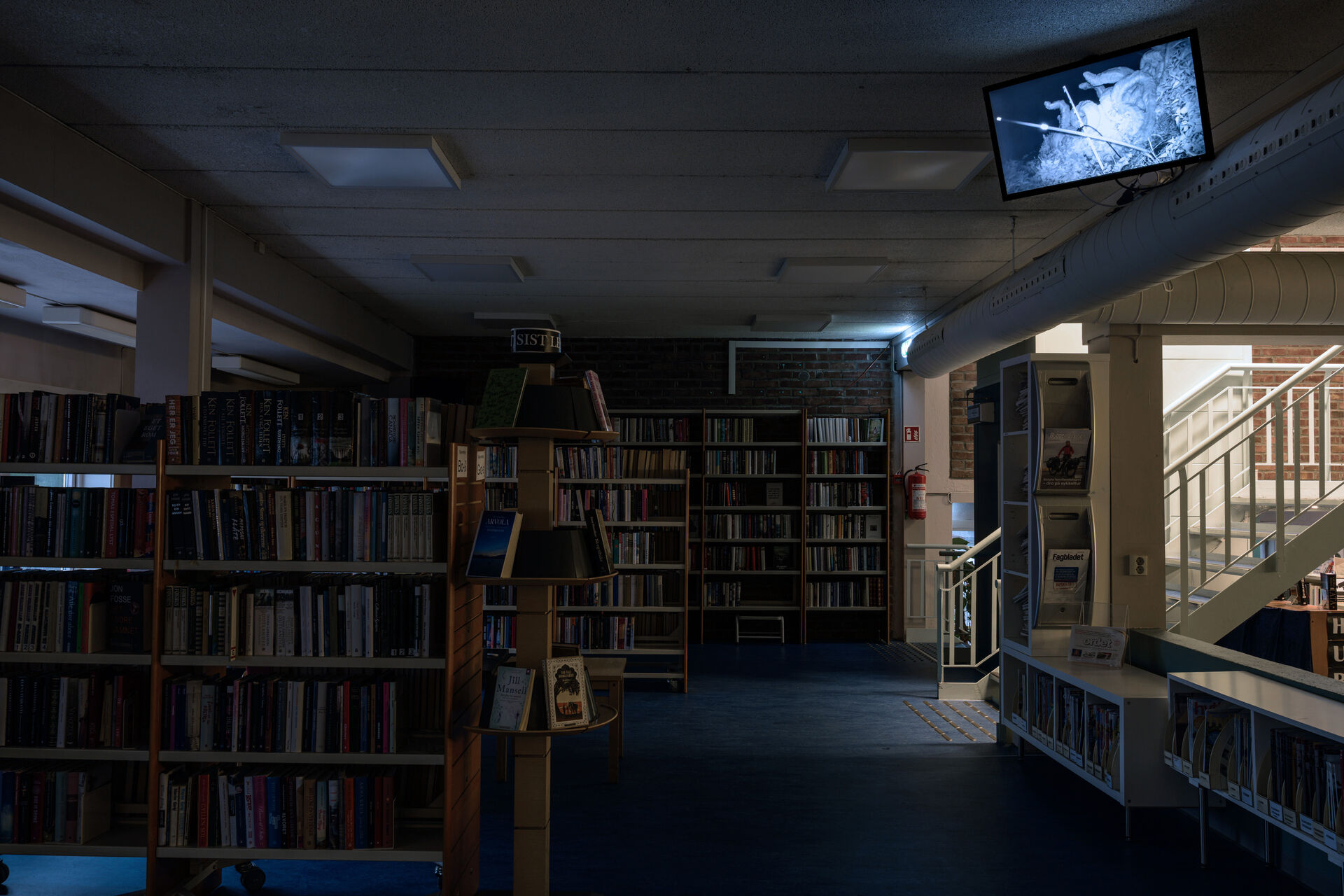
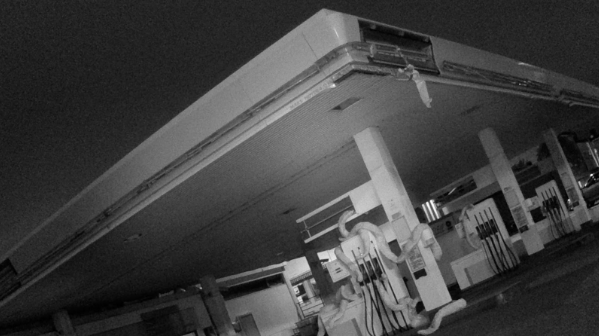
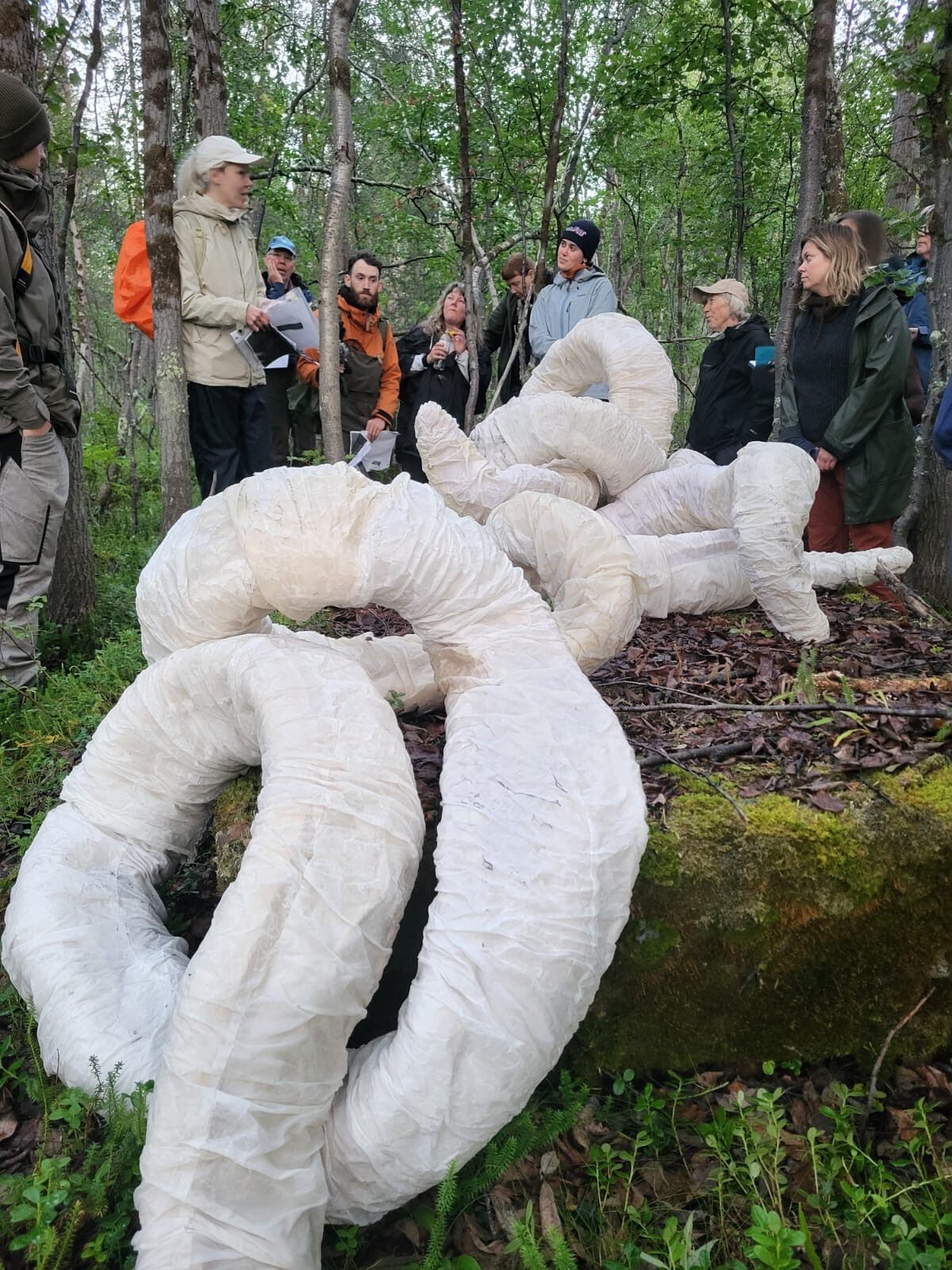
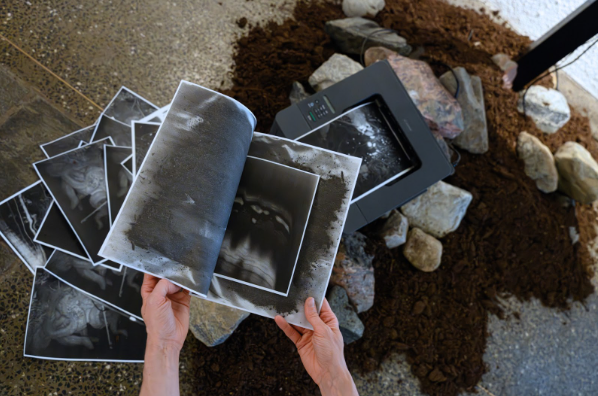
A travelling installation of entangled textile nematodes, blown up to a human scale, haunts nine places in Sør-Varanger over nine nights; mythical places, agricultural ditches, sites of mining waste, mires, gardens, petrol stations and more. Simultaneously, the local library’s space and technology are appropriated: soil spreads across the floor, while a nightvision video haunts the information screens, and a printer continuously produces a zine, both responding to the nightly movement of the textile nematodes. The video work uses a trail camera’s night vision, framing scientific observation as staged ritual, shaped and obscured by our subjective, human perspective. The zine operates as a speculative counterpoint, tracing a personal and devotional encounter with soil and nematodes.
In Jærtegn, haunting is used as a device to establish contact with soil as a medium, one that is inseparable from human influence, and that renders new connections between time, space, and scale legible. Microscopy, history, politics, science, and magic freely intertwine, as the work insists on giving visibility to soil and nematodes, uncharismatic yet indispensable agents, in order to unsettle our usual ideas of value, knowledge, and control.
A version of Jærtegn will be shown at The Anthropogenic Soils exhibition at Norwegian BioArt Arena in 2027.
Artist Biography
Annike Flo’s practice is interdisciplinary, merging a focus on living beings and materials with video, photography and writing. Drawing from scenography, science, and occult perspectives, Flo explores how humans co-manipulate matter, time, and space with other entities, living or otherwise. Emerging through fieldwork, site-specific responses, speculation, and interdisciplinary collaboration her work dwell in the encounters between species, systems, and the unseen.
Flo has exhibited at venues including The Smallest Gallery in Soho (UK), Galleri Format (NO), Tokyo Museum of Contemporary Art (JP), RUCKA (LV), Galleri 69 (NO), Meta.Morf (NO), and Atelier Nord (NO). She is also a member of the theatre collective Verdensteatret, with recent performances at REWIRE (NL), Alfred ve Dvoře (CZ), and the former Munch Museum in Oslo. Flo holds an MA in Scenography from the Norwegian Theatre Academy and a BA in Costume for Performance from London College of Fashion, University of the Arts London.
Collaboration and Support
Jærtegn is a work by Annike Flo, with contributions from Anna Leijonhielm and Hedda Virik (video consultation and post-production), and Espen Sommer Eide (sound for video).
Research sources and experts: Cornelya Klutsch (NIBIO Svanhovd), Oleksandr Holovachov (Swedish Museum of Natural History, Stockholm), researchers from Anthropogenic Soils (2022–2028): Susanne Bauer, Nora S. Vaage, Ursula Münster, and Marianne E. Lien; Anatolijs Venovcevs (Svalbard Museum) and the Skolt Sámi Museum.
Jærtegn is part of TRE TRE TRE, curated by Hilde Methi, and the research project Anthropogenic Soils (2022–2028) at the University of Oslo and Norwegian BioArt Arena (NOBA), in collaboration with Sør-Varanger Library and NIBIO Svanhovd. The work will also be shown at NOBA in Ås in 2027.
Støttespillere og samarbeidspartnere
Barentskult, Billedkunstnersnes Hjelpefond, Forskningsrådet, Fond for Lyd og Bilde, Kulturrådet, Nordnorsk Kunstsenter, NIBIO Svanhovd, Biblioteket i Sør-Varanger, Universitetet i Oulo, Statens Kunstnerstipend, Universitetet i Oslo