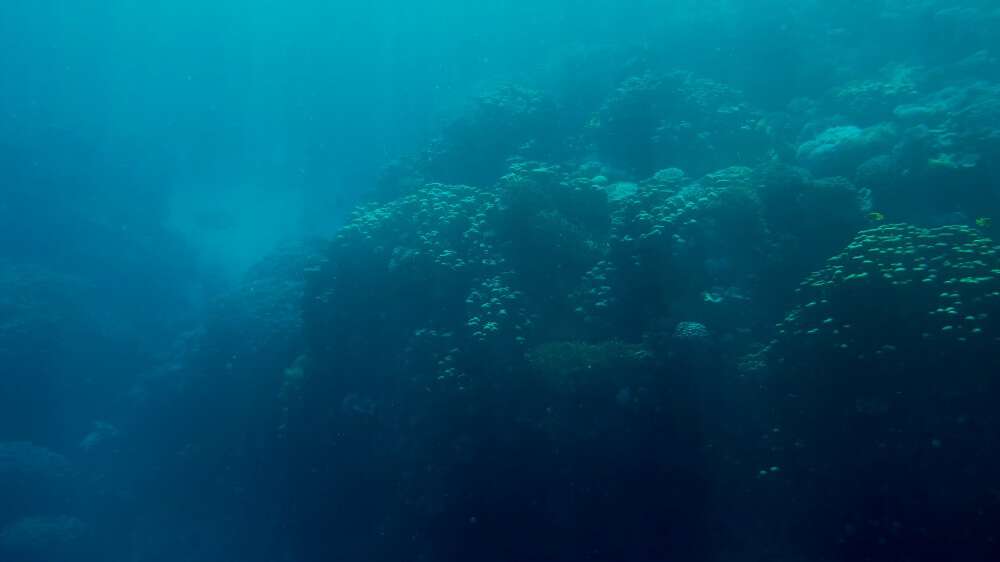
In this session of the Anthropogenic Soils reading group, Jeanne Féaux de la Croix will present ongoing collaborative work with Yu Sang and Zora Ritz on how seabed knowledge is produced, mediated, and made meaningful across different settings.
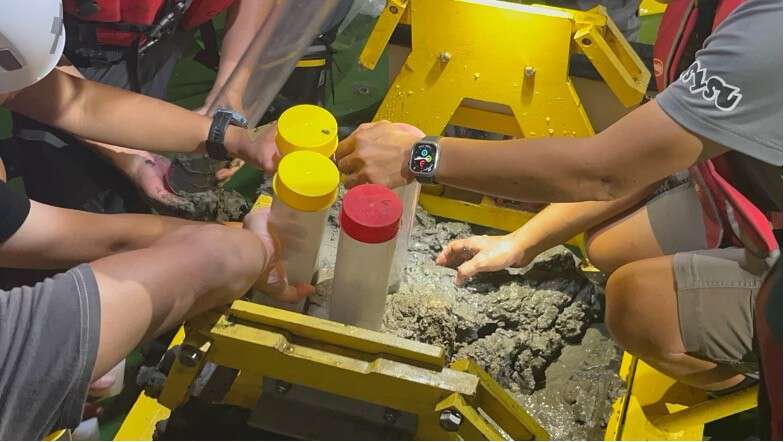
What is the seabed? How does it matter whether we come to know it as meat stones hauled up in lobster traps, oceanographic models of sediment shifts, or as divers admiring endangered coral reefs? This paper contends that, compared to other forms of human experience of “the ground”, seafloor knowledge is heavily mediated through a techno-scientific lens, often associated with extractivist projects such as seabed mining.

Drawing on ethnographic work aboard a Taiwanese research vessel, with fisherfolk in Atlantic Canada, and diving in the Red Sea, the paper asks: What assumptions travel with the design of knowledge production on mud and silt? Is the seabed imagined as fragile or robust? What are the analytical consequences of isolating the seabed as a matter of concern from other oceanic phenomena, or from terrestrial processes? By analyzing a broad range of conditions for knowledge production and distribution, the paper explores the interpretative power of such environmental data.
Please register to receive the paper in advance.
The paper will be circulated only to registered participants. Please do not quote or circulate it without explicit permission from the authors.
Join online
If you wish to participate in the event online, please join us on Zoom: https://uio.zoom.us/j/62124578133?pwd=lA2nxkjBFkbzAH3D1gB32cRUlj3Dpa.1
Meeting ID: 621 2457 8133, Passcode: 324339
Bios
Jeanne Féaux de la Croix currently leads research on Social Ocean Energy, exploring environmental justice issues in relation to new marine energy infrastructures.
Yu Sang is a PhD student in Social Anthropology at the University of Bern. Her doctoral research focuses on energy ethics and environmental justice during the negotiation, implementation, and development of marine renewable infrastructures in Taiwan. Her master’s research explored more-than-human relations and deep-time mediation in Chinese ecological development through the lens of water. Her research interests lie at the intersection of science and technology studies, blue humanities, and energy anthropology.
Zora Ritz conducts artistic and ethnographic research at the intersection of visual, environmental, and digital anthropology. Through experimental audiovisual research practices, Zora explores (post-)human agencies and relationalities.