Scholarly debates on environmental justice have pointed to the role of race in structuring environmental benefits and shaping ecological harm. It has been shown that racialized communities, especially Black communities in the Unites States, have experienced unequal exposure to environmental pollution, toxic sites, and unequal access to clean water. Yet, the question of how environmental inequalities are structured in contexts different from that of the West or the United States deserves further attention.
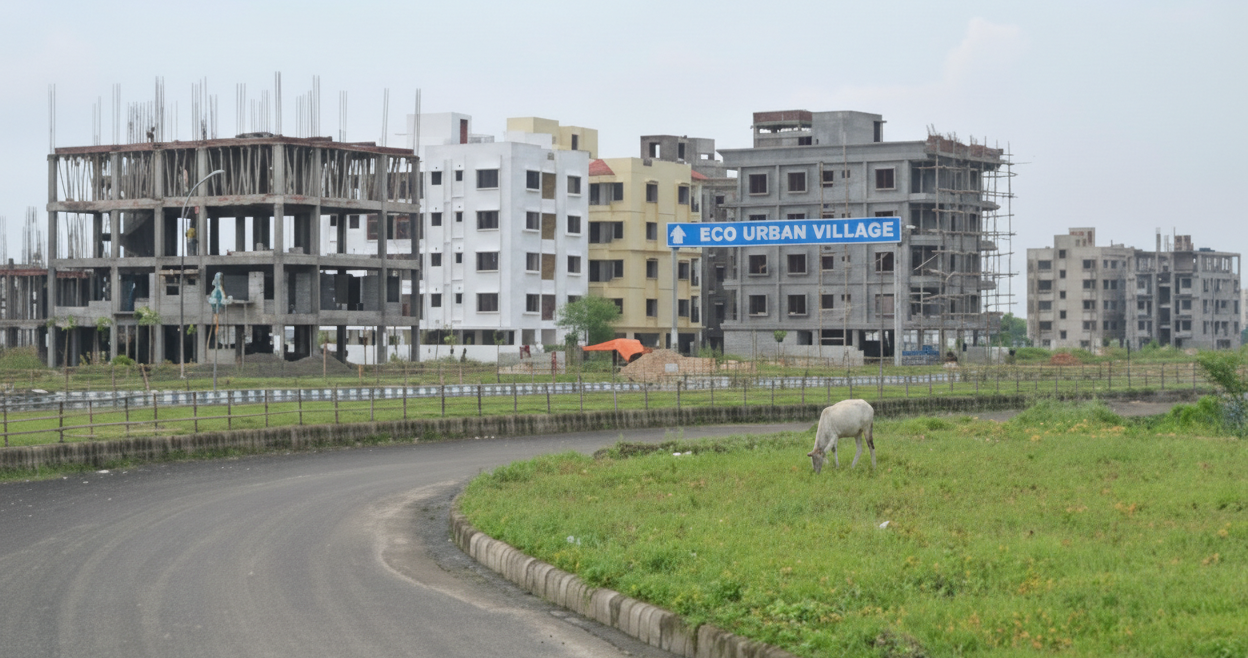
In this lecture, Chiara Arnavas argues that religion, in this case Islam, is an overlooked marker of environmental inequalities. Focusing on her in-depth ethnographic fieldwork in the Indian state of West Bengal, Arnavas engages with debates on racial capitalism in the Global South, to advance the role of eco-religious inequalities to understand post-colonial environmental politics in India today. She addresses the question of how capitalist forms of profit accumulation intersect with longer histories of ecological inequalities and religious difference. She analyses the environmental politics behind the construction of a green sustainable city in the periphery of Kolkata. She foregrounds how this environmental politics builds on uneven geographies of colonial and capitalist development that have conjured Muslim communities as the symbolic ecological pollutants that the city, and the whole nation, continue to excrete and exclude.
Chiara Arnavas recently defended her PhD dissertation at the Department of Culture, Religion, Middle Eastern and Asian Studies. This lecture is based on an article she is preparing for the journal Antipode, as part of a special issue on Muslim urban segregation in India.
The presentation will be in English.