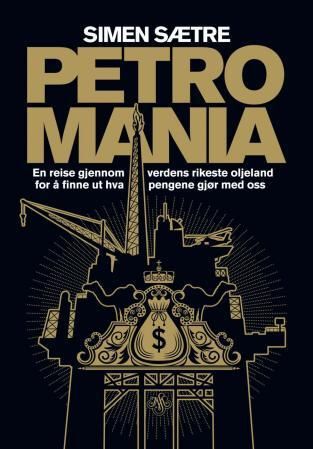
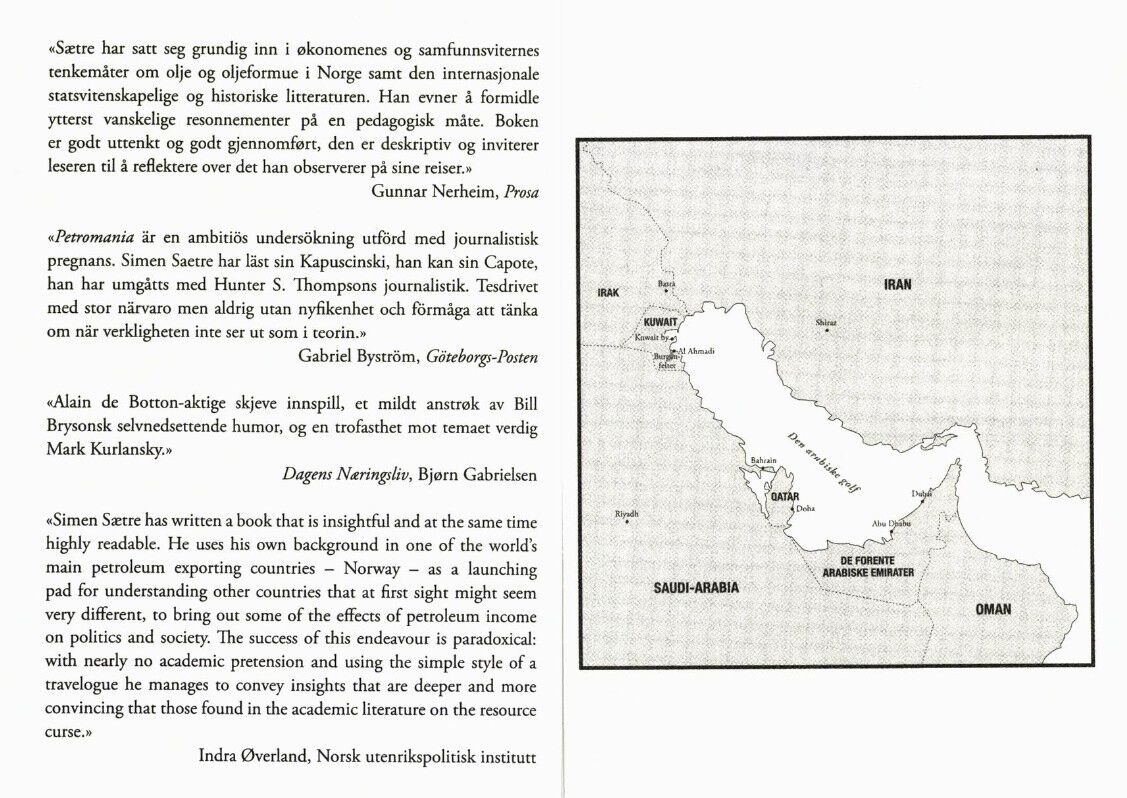
In 2009, Simen Sætre published a remarkable travelogue titled Petromania. The book describes a six-month journey through some of richest oil countries in the world: Kuwait, Qatar, the Emirates Abu Dhabi and Dubai, Iran, Angola, Turkmenistan, and Venezuela. Inspired by New Journalism and Terry Lynn Karl’s The Paradox of Plenty, the Norwegian writer explores a peculiar form of madness allegedly typical for oil-exporting countries.
Petromania is defined as “a state of euphoria/ megalomania/ lack of restraint with an unconscious change in personality/ mentality/ thought patterns and loss of perspective/ self-insight/ power of judgement as a result of extraordinary hydrocarbon profits, associated with booming petrostates”. According to Sætre, Protestant Norway is no exception.
The book interrogates what it means to be a petrostate, focusing on the transformative power of oil money. Petromania also warns against national exceptionalism.
The research project Translatability of Oil (TOIL) has encouraged Simen Sætre to revisit his now sixteen-year-old book. Scholars of various nationalities and disciplines are eager to hear about Sætre’s oil-globetrotting during the winter of 2007–2008. Among the questions we would like to raise are: to what extent is it meaningful to translate insights from one petrostate to another? What are the gains, and what might the losses be? Is national exceptionalism a problem even in scholarly works on oil? Could Petromania have been written today?
Join us for an informal conversation about oil, travel and writing!
Other books by Simen Sætre: Den lille stygge sjokoladeboka (2004), Hugo (2006), Fjordman (2013), Tolken (co-writer, 2017), and Den nye fisken (co-written with Kjetil Østli, 2021). In 2023, The New Fish: The Truth about Farmed Salmon and the Consequences We Can No Longer Ignore was published in English.