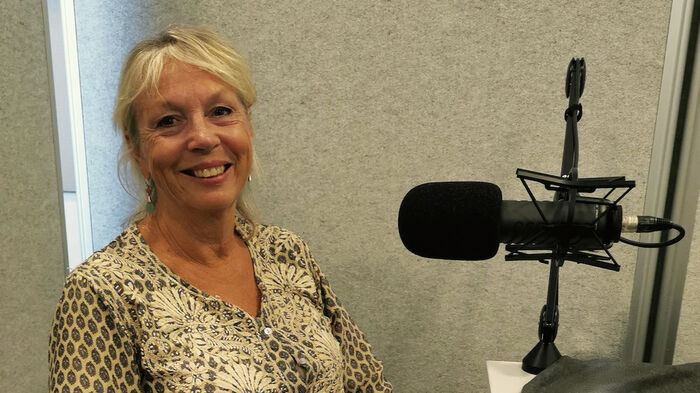
What do Old Norse manuscripts have to do with climate crises? Listen to this episode, in which Stefka Eriksen, Research Professor at the Norwegian Institute for Cultural Heritage Research, introduces her work on manuscripts and the sagas.
News - Page 2
LCE congratulates convener Karin Kukkonen on receiving an ERC Consolidator Grant for research on the emergence of the novel.
How do 19th-century novels let us explore the limits of our sympathy? In this episode, Tone Selboe, Professor of Comparative literature, presents her research on how feelings are conveyed and challenged in George Eliot, Dickens and Tolstoy.
What are the alternative storyworlds of the bible, developed by early Christian communities? Listen to this episode, in which Hugo Lundhaug, Professor of Biblical Reception and Early Christian Literature, introduces his work on Coptic Apocrypha.
What ideas do we have about the act of reading, and how do they differ from its actual nature? In this episode, Sarah Bro Trasmundi, Researcher at LCE and Associate Professor in Cognitive Etnography at SDU, shares her findings on the ideal reader.
New research suggests that short breaks help you think more critically and creatively about what you are reading.
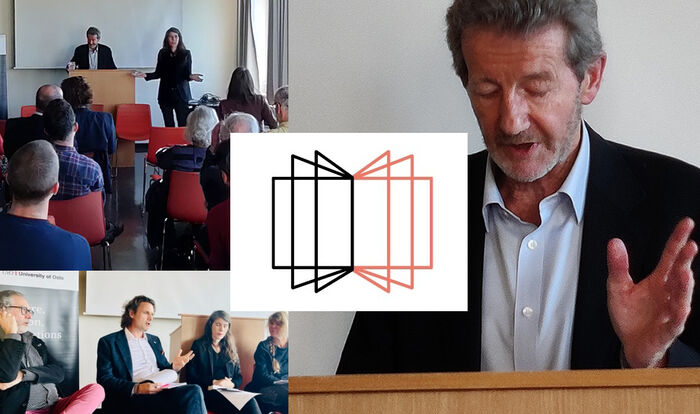
Stefan Collini: "Beauty and the footnote: the place of 'literature' as an academic discipline" – A report from the recent LCE Annual Lecture 2022 and its connected events.
What happens when a text encourages certain reader's expectations – and then challenges these later on? In the final episode of this season of the LCE Podcast, Karin Kukkonen, Professor in Comparative literature and convener of LCE, presents her research on Probability Designs.
Does fiction hold the power to change the life of its reader? In this episode, Affiliated Researcher at LCE and Postdoctoral Researcher at Huyghens-ING/KNAW, Olivia Fialho, presents her research on transformative reading.
Do we read the same text differently if we take it to be fiction, autobiography, or something in between? In this episode of the LCE Podcast, Post Doctoral Research Fellow at UiO, Alexandra Effe, presents her research on autofiction from a cognitive perspective.
How do material properties of texts influence our experience as readers? In this episode of the LCE Podcast, Natalia Igl, Associate Researcher at LCE, shares her research on multimodality.
When heroines write poetry in dangerous situations, are they just caught up in feelings or do they claim agency? In this episode, Yasemin Hacıoğlu, Senior Lecturer at NTNU, shares her research on Gothic heroines' poetry with the LCE podcast.
Sarah Bro Trasmundi has joined the LCE team in February 2022, and she will be working with LCE until the end of 2024.
Is your MA thesis about literature and its cognitive and emotional dimensions? Then you can apply for a stipend.
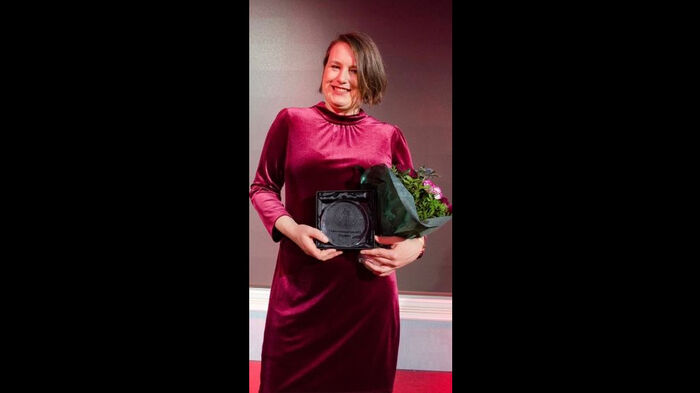
LCE congratulates Ylva Østby on winning the Teaching Prize of the UiO Psychology Department.
All literature students probably ask themselves this question: Why do I read? Why and how does literature affect me? In courses offered by the LCE study programme, we aim to illuminate reading experiences through cognitive approaches and to provide insights into how literary texts are built to actually affect our thoughts and feelings.
Novellas, emotions and encounters between East and West – LCE members participate in the Novellember festival.
Mats Haraldsen and Marlene Andresen have previously been assistants at LCE. Now started their fellowships as doctoral students at ILOS. In this article, they talk about their upcoming projects.
When you read texts that challenge the boundaries between reality and fiction, it may lead you to reflect on truths about yourself and the world you live in.
Is your MA thesis about literature and its cognitive and emotional dimensions? Then you can apply for a stipend.
The power of reading fiction has been scientifically proven. Art can change your perception of yourself and others.
How do readers develop “critical feeling”? Professor Rolf Reber joins the Literature, Cognition and Emotions Podcast to talk about how we understand literary works from a cognitive perspective.
Professor Stephan Guth takes us to the Arab world in the fifth episode of the Literature, Cognition and Emotions Podcast.
Associate Professor Stijn Vervaet talks about the role of literature in relation to cultural memory in the fourth episode of the Literature, Cognition and Emotions Podcast.
Listen to Professor Beate Seibt talk about the feeling of ‘being moved’ and its relation to literature in the third episode of the Literature, Cognition and Emotions Podcast.