
Han Lamers and Anne Nicolaysen constitute the institute’s leadership: Han is the institute’s scientific director, while Anne is the head of the administration. Together they are responsible for the annual reports.
A Busy House on the Gianicolo
In 2025, DNIR was anything but quiet. Fourteen courses brought almost 250 students to the Institute, many of them staying for extended periods and treating the palazzo as their academic home in Rome. Three new history courses made it possible to spend a full spring semester in the city—an arrangement so successful that it is being repeated in 2026.
The house was equally full of researchers. DNIR hosted scholars from Norwegian and international institutions, offering offices, library access and a place to work. The institute’s two researcher apartments accommodated 28 teachers and researchers from partner institutions, while fellowships enabled seven MA students to carry out 4–8‑week research stays in Rome.
All this activity rested on a compact staff of eight, four in academic positions, supported by affiliated researchers, emeriti, project staff, and student interns working with logistics, communication, teaching, and the library.
Research with Rome at the Centre
DNIR’s academic profile is shaped by its researchers, postdocs and fellows, with Rome and its heritage at the core.
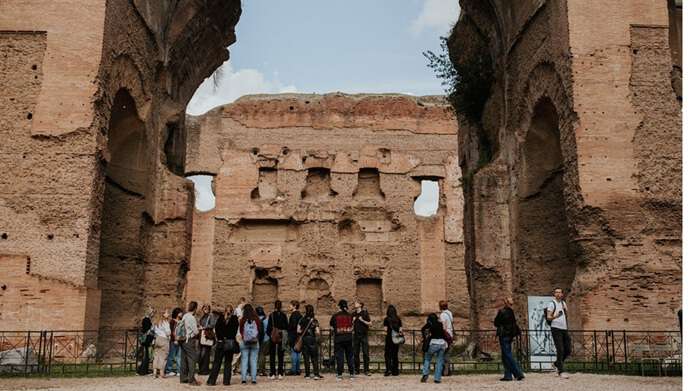
In 2025, projects ranged from liturgy in Roman churches and Rome’s role in twelfth‑century Scandinavia to Roman burial practices, the Etruscan city of Vulci, Latin inscriptions in post‑classical Rome, Grand Tour travelogues and their emotional impact, and the political uses of Rome’s ancient language.
DNIR’s scholars published monographs, edited volumes, articles and book chapters, and contributed digital resources such as the Fascist Latin Texts project. They also travelled—on site and online—to present their work at conferences from Leeds and Reykjavík to Nicosia, Cork, Brno and Wrocław.
A new affiliated‑researcher programme brought Italian Rome‑based scholars into closer contact with the Institute, strengthened ties to Italian research milieus, and culminated in the first joint conference just last week.
A Full Calendar
Seminars and lectures lie at the core of DNIR’s academic life. In 2025, the Institute hosted 21 Tuesday seminars and 6 Evening Lectures and co-organized 6 meetings of the Circolo Gianicolense, a collaboration with the American Academy in Rome and the Finnish Institute.
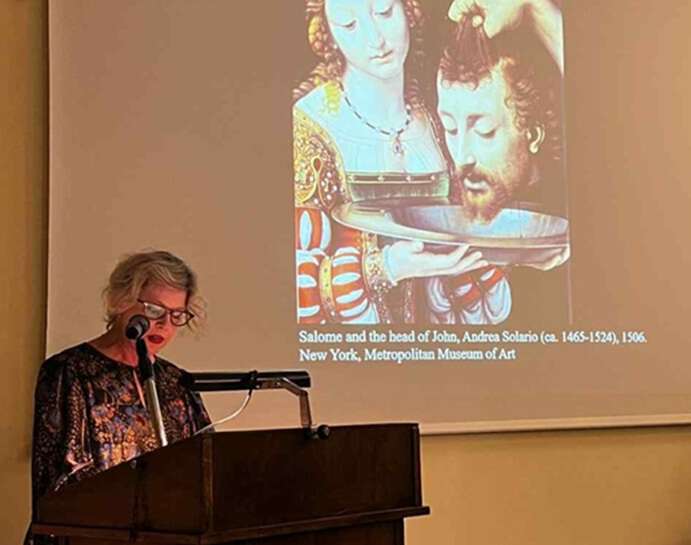
Many of the talks were given by MA students and PhD candidates, who presented their work—sometimes for the very first time—to an international audience gathered in our seminar rooms.
Alongside the long‑standing H. P. L’Orange Lecture (Prof. Barbara Baert) and P. A. Munch Lecture (Prof. Rosamund McKitterick), a new joint series, “Encounters”, organised with the Norwegian Institute at Athens, was launched in October. (The second installment will take place in Athens this week!)
DNIR’s Collections
The library is the Institute’s academic heart. It offers a quiet workplace for students and researchers, is open to external users by appointment, and in 2025 had 635 registered users, in addition to DNIR students and guest researchers with offices in the building.

The collections hold over 26,000 monographs, more than 30,000 items in total and 478 journals, plus thousands of offprints and e‑resources. In 2025, some 350 new acquisitions further strengthened key areas such as late antique and medieval art, Fascist Rome, and classical reception studies. The library has also been expanding its collection of translations of major texts, including 28 volumes of the indispensable I Tatti Renaissance Library.
The collections are not only tools for research but also research material. A Faculty of Humanities-funded project is exploring the library and archive as historical sources and financed a library assistant to work on this in 2025.
A Donation from the Astrup Foundation
Much of DNIR’s recent strategic development has been enabled by a NOK 2.5 million grant from the Hans Rasmus Astrup Foundation for 2023–2028.
In 2025, these funds supported archival work and a photo‑sharing platform, giving DNIR an infrastructure for digitising its historical archive and creating virtual exhibitions, including one on the development of Via Latina inside the Aurelian walls.
The donation also funded a full‑time postdoctoral position with special responsibility for dissemination. It furthermore supported the continuation of the Via Latina project, developed in collaboration with the British School at Rome, focusing on the first mile of the ancient road and involving the Royal Embassy of Norway (part of the site runs beneath the Ambassador’s residence…).
Finally, the donation made it possible to establish the Hans Rasmus Astrup Rome Prize for outstanding student work, awarded annually at the Astrup Fearnly Museum in Oslo.
Social Media and Public Outreach
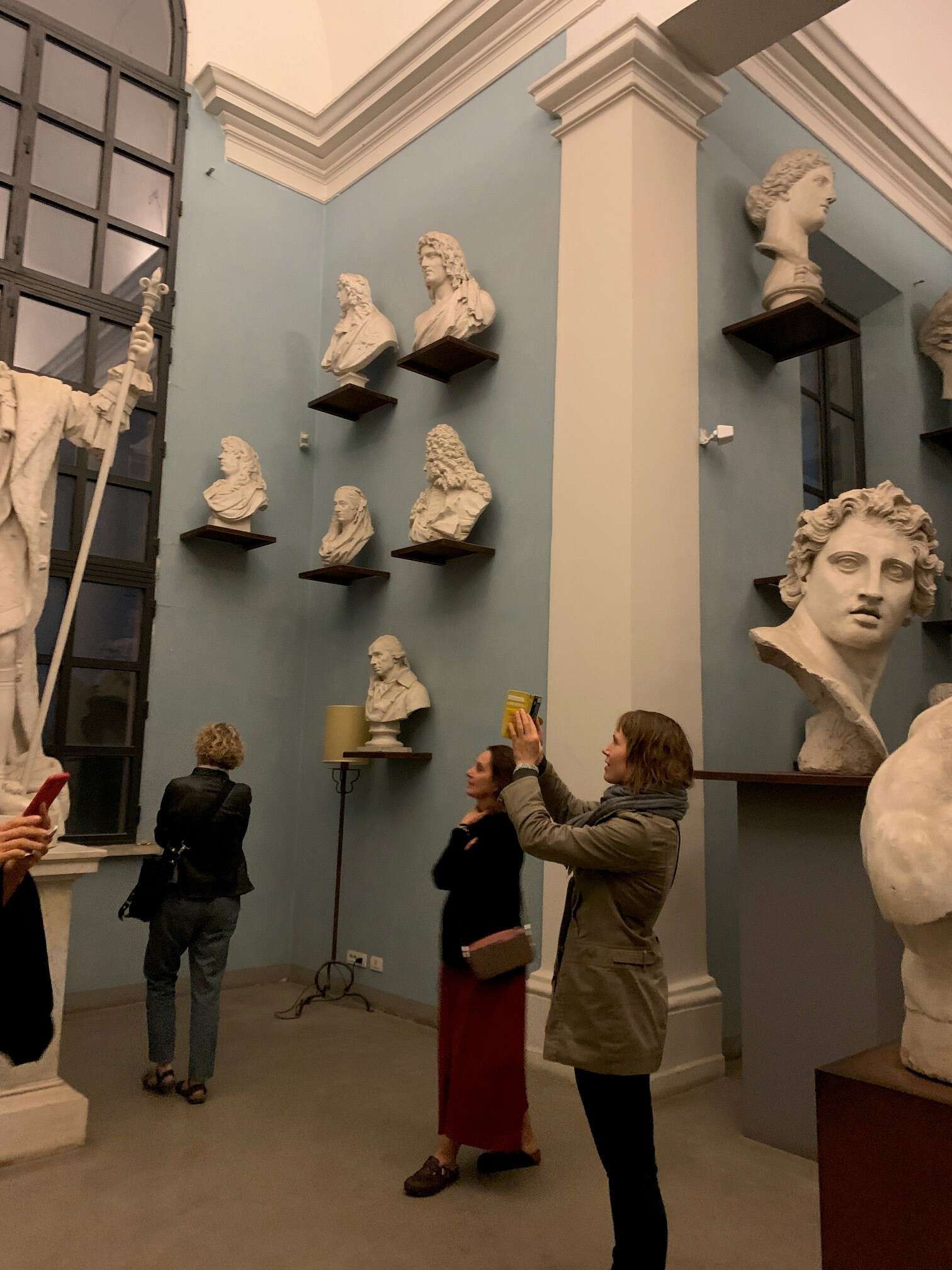
The Institute used its website and social media actively in 2025 and launched a LinkedIn profile in March. Project funding allowed the hiring of a communications consultant to increase visibility, particularly among younger audiences and prospective students. The result was a marked increase in reach, both nationally and internationally.
Outreach also meant public events. DNIR continued its collaboration with its Nordic partners in Rome on “Novembre Nordico”, welcoming Italian and international audiences to lectures, exhibitions, and concerts showcasing Nordic culture. In 2025 DNIR hosted two such events, including a book launch for the Livia’s Room project. This project also resulted in a new textile artwork now hanging in the Institute’s renovated third floor.
Staff further contributed to the dissemination of knowledge through interviews and articles on forskning.no and in Klassekampen, as well as through public lectures.
Why it Matters
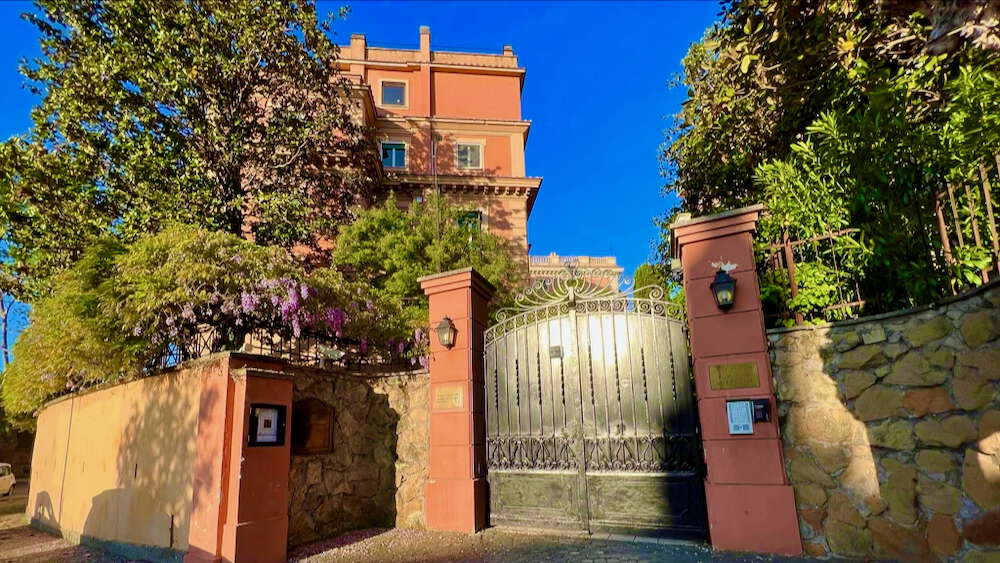
From the street, DNIR may look like just another villa on the Gianicolo. From within, however, 2025 reveals something else: a dense network of people—students discovering Rome for the first time, postdocs developing new research projects in collaboration with Italian partners, Norwegian researchers working in Roman archives, and a library and archive that continue to spark interest among users from Norway and abroad.
For those without time to read the full annual report, the short version is this: the Institute is doing what it was created to do—connecting Norwegian humanities internationally through research, teaching and public engagement—and 2025 shows that this mission is very much alive.


