Published
Oct. 8, 2026 10:25 AM
In the world’s most authoritarian region, football terraces have become an important arena for criticism of those in power, and for the struggle for freedom.
In the world’s most authoritarian region, football terraces have become an important arena for criticism of those in power, and for the struggle for freedom.
But when the music professor moved to Norway, he could no longer rely on his sense of pitch. The explanation may lie in sounds that most of us barely notice.
She trains AI models to answer far more complex questions than before. “It’s completely new, and it could open many doors,” music professor says.
A sense of rhythm is invaluable to your brain—whether you can dance in time or not.
Bálint Laczkó has developed the software tool Pixasonics, which turns images into sound. It may be a small step on the way towards new treatments for diseases such as cancer and Parkinson’s.
Psychology student Skage Christensen Ekelund is well underway with his summer project. He is one of 50 students who receive a scholarship from UiO:Life Science to take part in a research project for six weeks this summer. We have been invited into the Socio-Cognitive laboratory in the Henrik Wergeland building at Blindern to gain insight into the tasks he will be doing.
Norwegian emigrants to America were motivated by the Harmonists, a Pietist movement that practised communal ownership, lived in celibacy, and became the wealthiest community in North America.
New research is turning to the animal kingdom for inspiration while experimenting with new ways of making music using AI.
Today, music creators can do virtually everything themselves, yet many feel ambivalent and under constant pressure to keep learning new skills.
Displaced people in Africa must find creative solutions when they arrive in a new place. In these situations, women’s craftsmanship and knowledge are crucial.
When words fade due to dementia, talking to the people you love becomes more difficult. Fortunately, support is available.
In April 2026, we had the pleasure of hosting Oslo-based artist Jenny Berger Myhre as one of the very first Artist@IMV residencies. During her stay, Jenny built a pipe organ instrument entirely from found materials. We interviewed Jenny about her time at IMV.
Public authorities should focus on regulating algorithms and imposing stricter controls on data collection instead, argues researcher.
April 2026 marked the end of the very first edition of IMV's new artist-in-residence programme, Artist@IMV. Colombian (Island-based) artist María Gabriela Rubio Hernández was the first to test the waters. We interviewed Maria about her time at IMV.
By chance, researchers from the University of Oslo have discovered 90 previously unknown ancient Greek sayings in a library in Orléans, France.
“I didn’t realize how tense I was until the birds started, and then I immediately relaxed.” This was how one study participant described his experience when birdsong filled his workplace.
They share stories about their love lives, offer advice on radio shows, and post playful clips with cats. In doing so, some of Asia’s most powerful leaders are winning people’s votes.
It is not only in social media that we express our opinions. Meeting face to face in order to protest may be more important than ever, says rhetorician Kristian Bjørkdahl.
You hear music every time you watch a film or TV series, and it shapes you more than you might think.
Humans are remarkably well equipped to meet the unknown – and not just because of our brains, new research suggests.
Guilherme Schmidt Câmara has received NOK 10 million to investigate why certain combinations of rhythms are experienced as physically and socially unifying.
Fake news generated by AI is often perceived as more credible than texts written by humans. That worries linguist Silje Susanne Alvestad.
Each time you have an experience that defies your expectations, your brain becomes slightly more fine-tuned.
Media professor believes it is meaningless to pit ‘true’ photographs against ‘fake’ AI images and calls for a more nuanced debate.
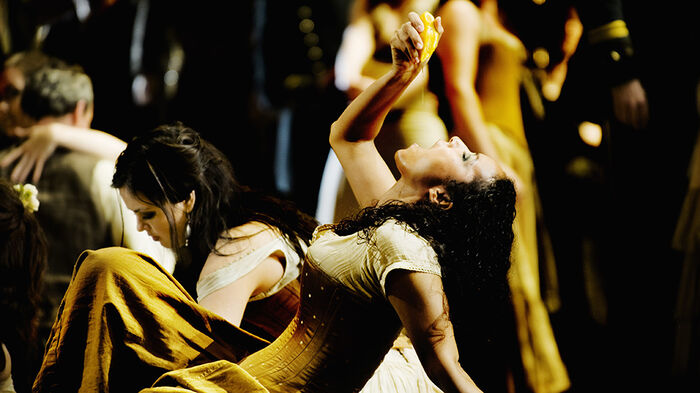
When opera singers aren’t forced into stereotypes but are allowed to express what feels natural, something new emerges, says researcher.