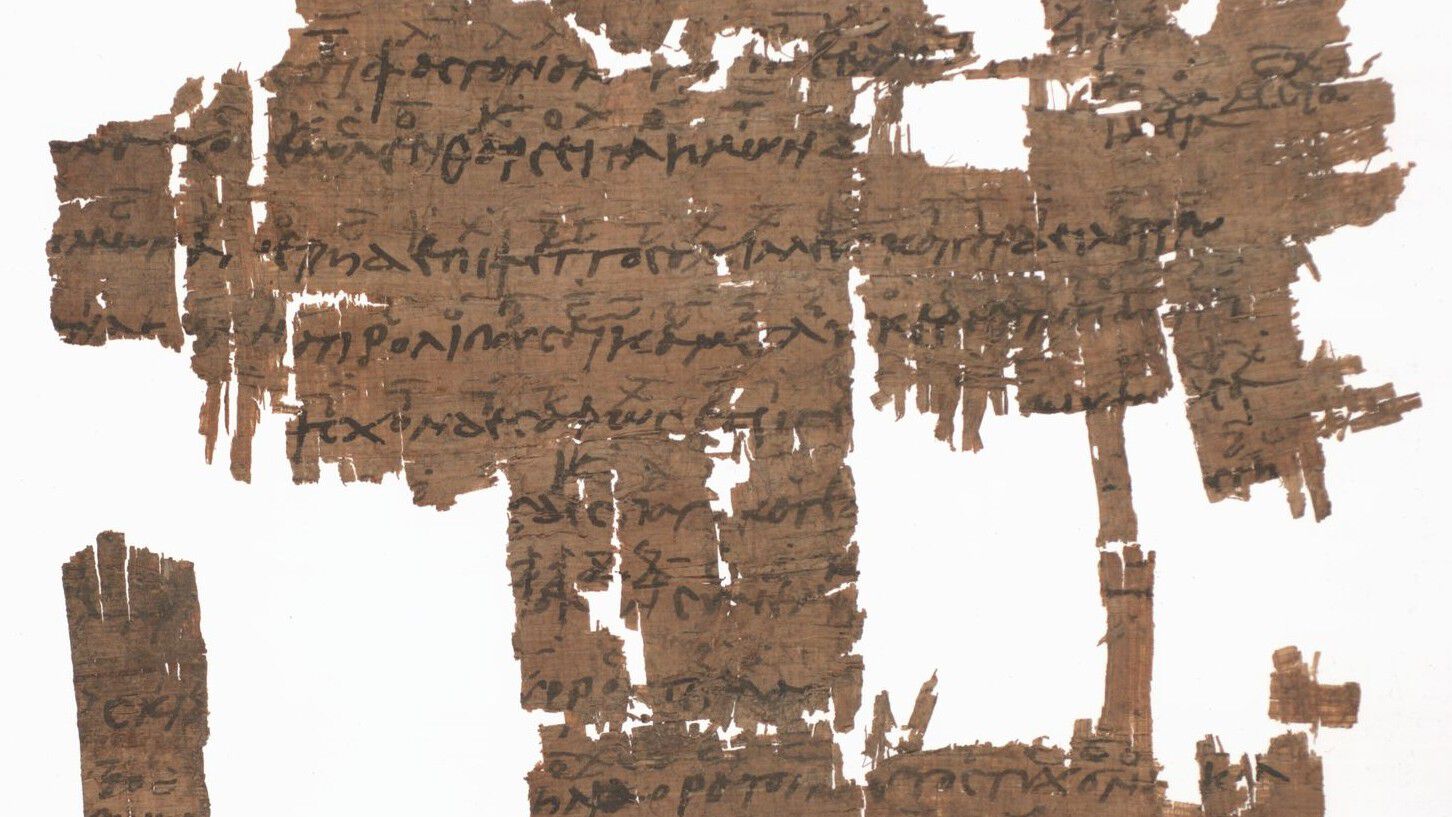
Abstract: Over the last two decades a quantitative turn took place in linguistics: the rise of big, annotated text corpora and the adoption of methods from statistics to analyze these corpora have made it possible to analyze language at a very large scale. Within the field of historical linguistics, Ancient Greek’s wealth of primary sources and its continuous usage over a long time span makes it an ideal candidate for such large-scale corpus-based investigations. In this talk I will present GLAUx (‘the Greek Language Automated’), a large (20M words) and richly annotated corpus of Ancient Greek created for such a purpose.
Since manual annotation is a time-intensive effort, GLAUx is fully automatically annotated: this was possible thanks to advancements in the field of Artificial Intelligence (AI). Ancient Greek is a particularly interesting test case for AI, as most methods have been primarily developed for languages such as English with a far less complex morphology, a more rigid word order and much more textual data available. In this talk I will discuss the methods I used to process GLAUx and some of the challenges involved. I will present a variety of examples of automated linguistic processing within the GLAUx project, in the domain of morphology, syntax and semantics.
Alek Keersmaekers is a Post-Doctoral Research Fellow at the University of Leuven.
The event is open to the public, and all interested parties are cordially invited to attend. A Zoom link will be provided via the Classics Seminar mailing list. If you would like to subscribe to the list (or present at the seminar), please get in touch with Tor Ivar Østmoe. Following the presentation, we will gather at Café Eckers for drinks and further informal discussions. Everyone is welcome to join (please note that expenses are not covered by the seminar).