
How do immigrants position themselves by acquiring/not acquiring the local dialect? This was one of the questions raised at the workshop Dialect acquisition and migration.
News - Page 2

Monika Schmid, Professor of Linguistics, is critical of European authorities’ use of language analyses to determine the place of origin of asylum seekers. She claims that it is impossible to determine a person’s origin by analysing his or her language.

Knowledge of the sociolinguistic situation of the minority language – and attitudes towards the language – is vital for our planning processes to secure minority languages, says State Secretary Anders Bals.
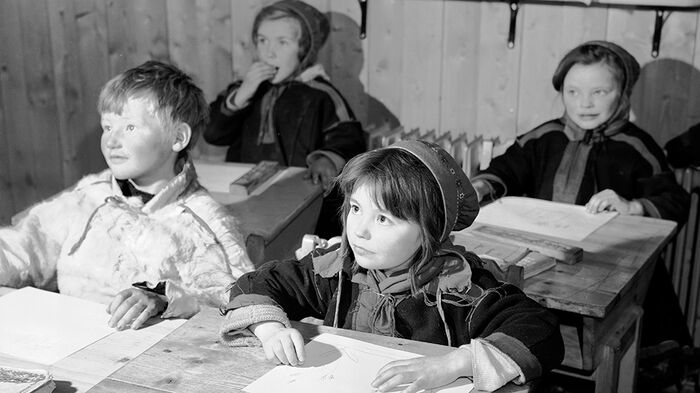
Many Sámi, Kvens and Forest Finns experience grief over not mastering the language that ties them to their own people. An increasing number are now trying to reclaim their language.

A black dot in the midst of the eye can tell researchers whether you are lying or not – and about plenty of other mental processes.

During the coronavirus pandemic, researchers were able to study children’s language development at home. While passive screen time gets in the way of learning, only 15 minutes of shared reading can work wonders for the vocabulary.
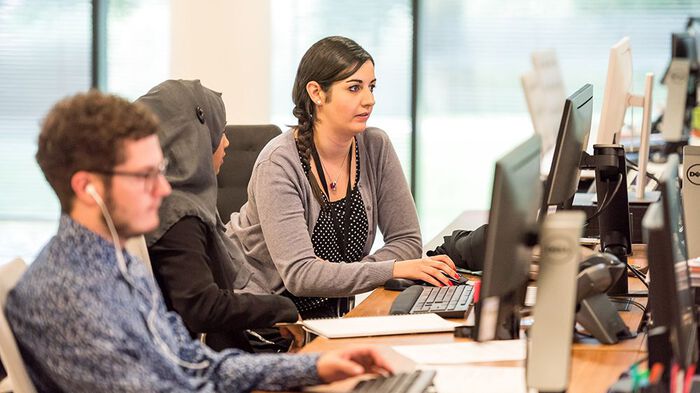
A new master’s programme at the University of Oslo will prepare students to work in a multilingual Norway and beyond.

Many European minority languages are being elevated within legislation and research. Linguistic Minorities in Europe aims to make the research available.
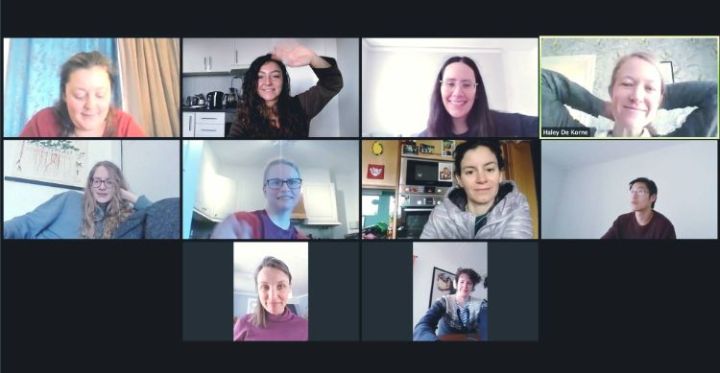
Around the world, people are adjusting to measures put in place to slow the spread of the novel coronavirus. The University of Oslo closed its doors Thursday 12 March. At MultiLing we are adjusting to a new normal: working and teaching from home, not knowing when we'll be able to return.
GURT 2020 Multilingualism: Global South and Global North Perspectives – an important milestone for MultiLing’s INTPART collaboration – was sadly cancelled due to the coronavirus. However, it didn't take long for the organizers to regroup and launch GURT as a virtual conference.
In 2018, MultiLing opened its Socio-cognitive Laboratory, which allowed for many new and exciting research projects to be carried out. In January 2020, a new branch of the lab, the Babylab, will be ready to receive its first participant visits.

Research shows that Snapchat, Facebook and WhatsApp help families with immigrant backgrounds develop their multilingualism.
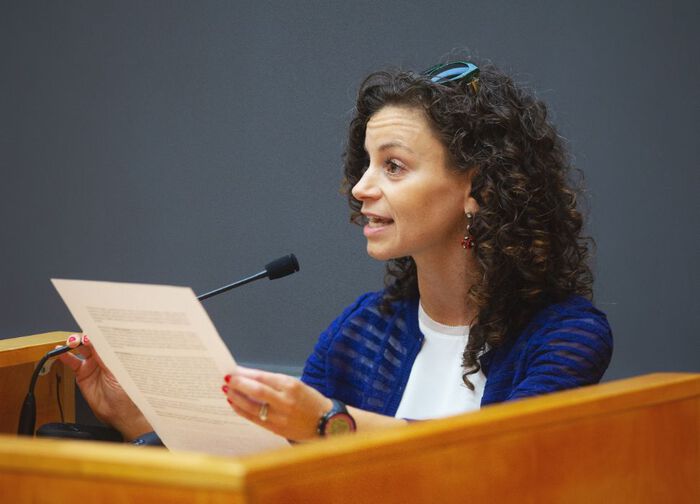
If you really want to empower women, what do you have to do? At the Women and Leadership round-table last week, students, university staff, and international scholars came together in Oslo to share experiences, and to discuss how we can achieve gender equality at all levels in academia.

How does meaning transfer, i.e., crosslinguistic influence involving meaning, originate from different levels of mental representations, and how do we study it?
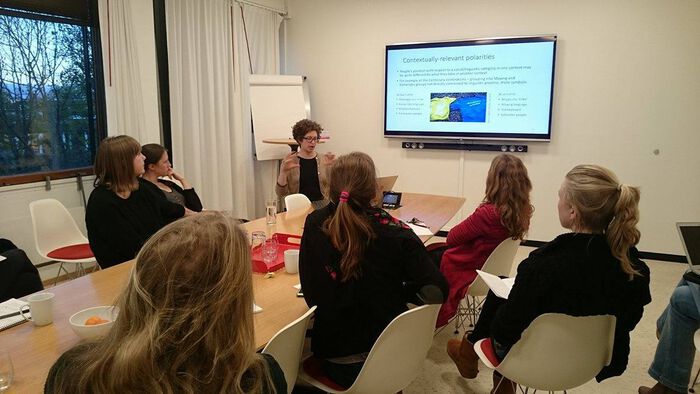
At Warruwi Community around ten Indigenous languages from five different language families are used among only 450 people. Why are so many languages still spoken at Warruwi when linguistic diversity has sharply declined in the rest of Australia? Visiting scholar Dr. Ruth Singer from the University of Melbourne held last week’s Wednesday seminar where she presented her research on this topic.

The annual meeting with MultiLing's Scientific Advisory Board (SAB) was held last week, on October 27–28. In addition to the SAB members, two of our new Adjunct Professors attended the meeting.
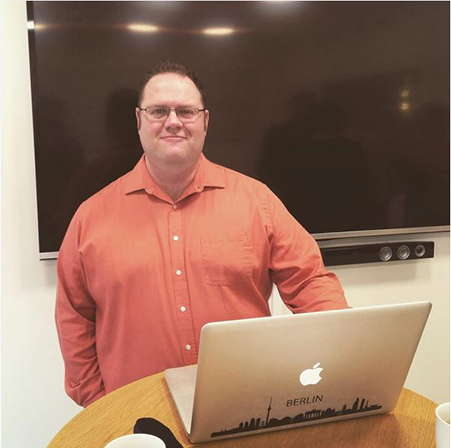
To juggle multiple grammars at once is a complex task, and the effects of crosslinguistic influence might occur when the grammars are simultaneously active. Associate Professor and MultiLing affiliate Mike Putnam presented his research on how filler-gap dependencies can help us investigate multilingual grammars.

The linguistic situation in Singapore has undergone dramatic changes in its 50 years of history. The result is a language shift away from Chinese, Malay and Tamil, and an increasing use of English.

More than half the world is bilingual — speaking at least two and sometimes more languages with some proficiency. Recent research suggests that bilingualism has protective benefits for the brain. The power of bilingualism is beyond language itself.
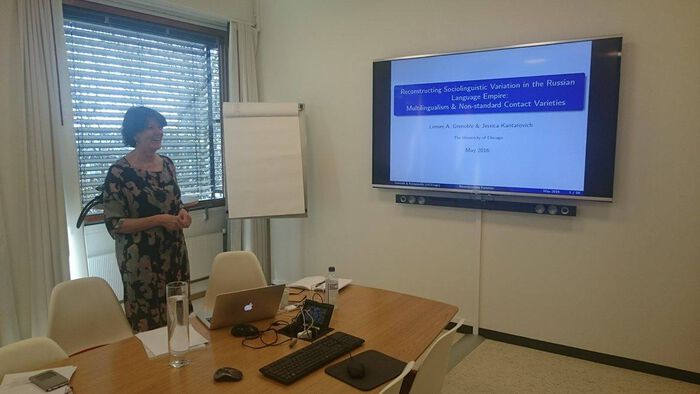
How do you reconstruct a language that is no longer spoken when there are few documentation records? Lenore Grenoble illustrates how mapping sociolinguistic context plays an important role in this kind of work.
Associate Professor Cecelia Cutler, the City University of New York, is visiting MultiLing in April to participate in the workshop Dialect acquisition and migration and in the SONE (Sociolinguistic Network in Norway) Conference. In her presentation at the workshop, “’People don’t see me as white’: how appearance plays in dialect acquisition among immigrants in the U.S.”, she addressed the topic of embodiment. She also explored people’s experience of being in a physical body, and how this experience shapes their language choices and their construction of identity. It’s not just about how it feels to be in your body, but also how others perceive you and how others frame you or attempt to construct you based on how you look.
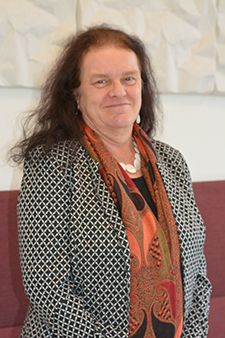
Professor Gillian Wigglesworth from the University of Melbourne is a Chief Investigator on the Centre of Excellence for the Dynamics of Language and has been visiting MultiLing this week. Her major research focus is on the languages indigenous children living in remote communities learn, and how these languages interact with English once the children start school. How can we improve the children’s school results and reverse the increasing loss of indigenous languages?
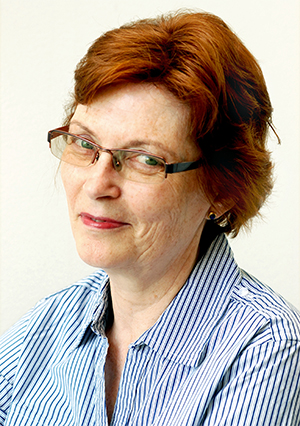
Inger Moen, Professor of applied linguistics at the University of Oslo, passed away on November 28th 2015, at the age of 75.

MultiLing, the Center for Multilingualism in Society Across the Lifespan, is one of five research communities at the University of Oslo that will receive funding from the Norwegian government for the recruitment of leading international scientists.
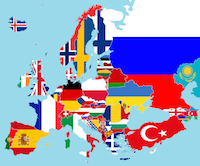
MultiLing has become a member of the research network LingNet Europe.