Research focus
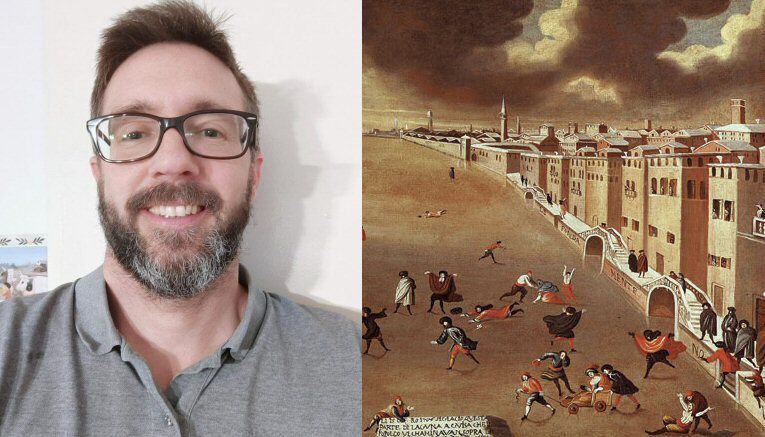
Nicolas Maughan is a senior research fellow at the Aix-Marseille University and research associate at the University of Bern. He was awarded a mobility grant from the Centre Universitaire de Norvège à Paris to work in Oslo in October/November.
Nicolas is conducting research in environmental sciences and climate history. His research interests include climate history (the relationships between humans and climate in the past), human consequences of past volcanic-induced climatic shocks as well as various aspects of environmental history. While including paradigms from environmental sciences (e.g. paleoecology and landscape ecology) alongside data from the archives of society for analyzing and assessing causation in socio-natural systems on a macro-historical scale. He is also interested in history of the Plague and other epidemics. He especially explores Eurasia and the Mediterranean world since the Late Middle Ages.
Background
Nicolas' recent projects have focused on the climate-conflict nexus but also on climate-induced migrations during the Little Ice age using climate data and climate driven economic and agricultural variables. He is also working on the management of large climate history databases using AI-powered search engines. He is currently focusing more specifically on the large Euro-Climhist database -“Ways to Weather Hindcasting”- (https://www.euroclimhist.unibe.ch/index_eng.html) created by Prof. Christian Pfister in the 1990s and hosted by the University of Bern. He is also involved in several PAGES (Past Global Changes) working groups, in particular the PAGES working group 2K and CRIAS. He regularly presents his work at international conferences and workshops on environmental and climate history, such as the Biennial European Society for Environmental History (ESEH) Conference or the World Congress in Environmental History.
He has collaborated on a large collective study concerning the reconstruction of the famous St. Mary Magdalene's flood that affected the whole of Europe in 1342 and which will be published in a major international journal.
Nicolas has just finished editing a multi-authored book entitled “History of the Laki Volcanic Eruptions in Europe and Beyond” which will be published in 2025 in the Springer Book series “Environmental History”.
At KLIMER
As a visiting researcher at KLIMER, he will continue exploring rapid and short-term socio-environmental consequences as well as long-term transformations induced by adverse effects of extreme climate events (evidence of declining impact or increasing adaptability of societies), especially during the famous winter of 1709, and present provisional findings at a seminar on October 22th, 2025.