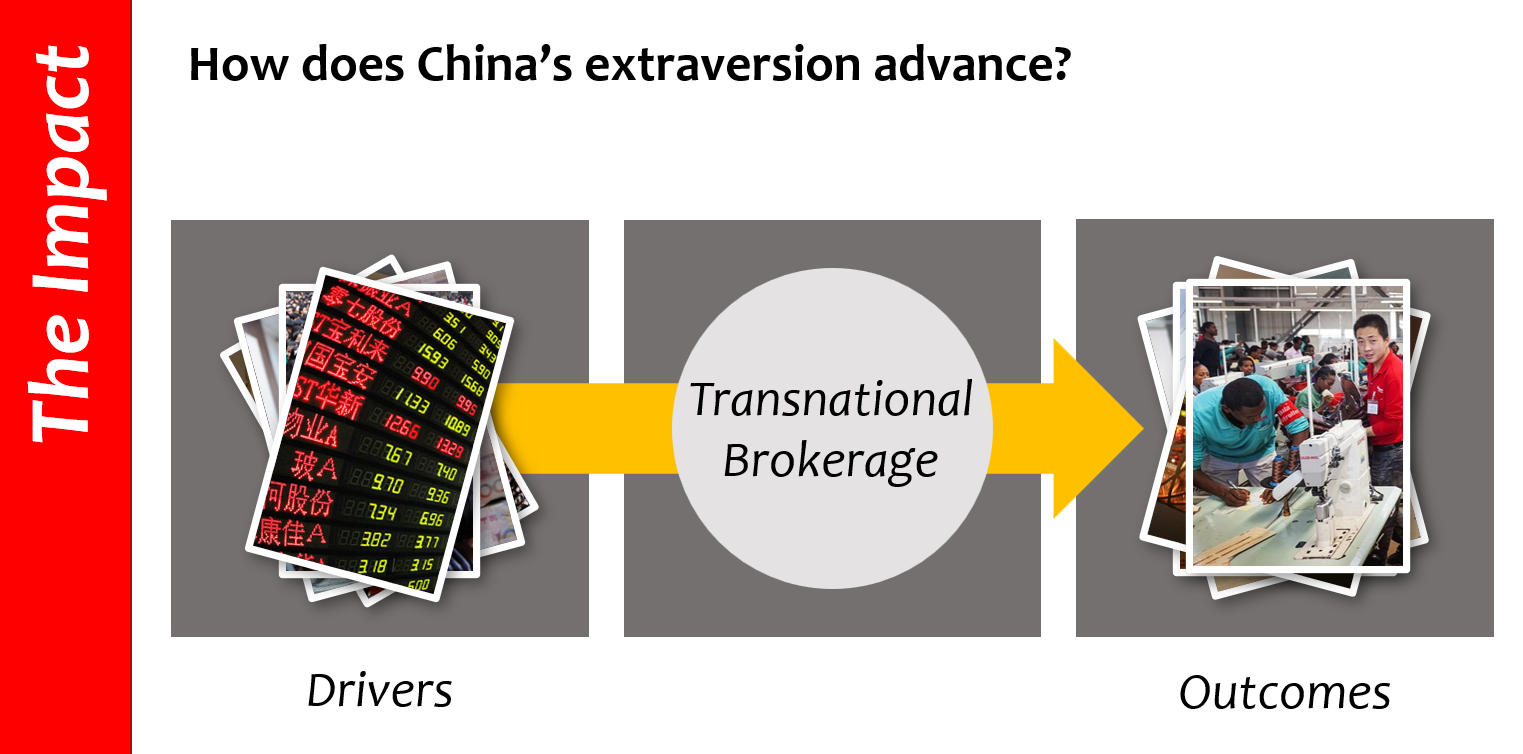
Brokering China's Extraversion: An Ethnographic Analysis of Transnational Arbitration (BROKEX) examined how brokers mediate transnational fields. The project analyzed China’s global integration by going beyond input-output descriptions, adopting an actor-centric approach to uncover how specific connections develop.
It was an interdisciplinary research project funded by a European Research Council (ERC) Starting Grant and the Research Council of Norway.
Case Studies and Method
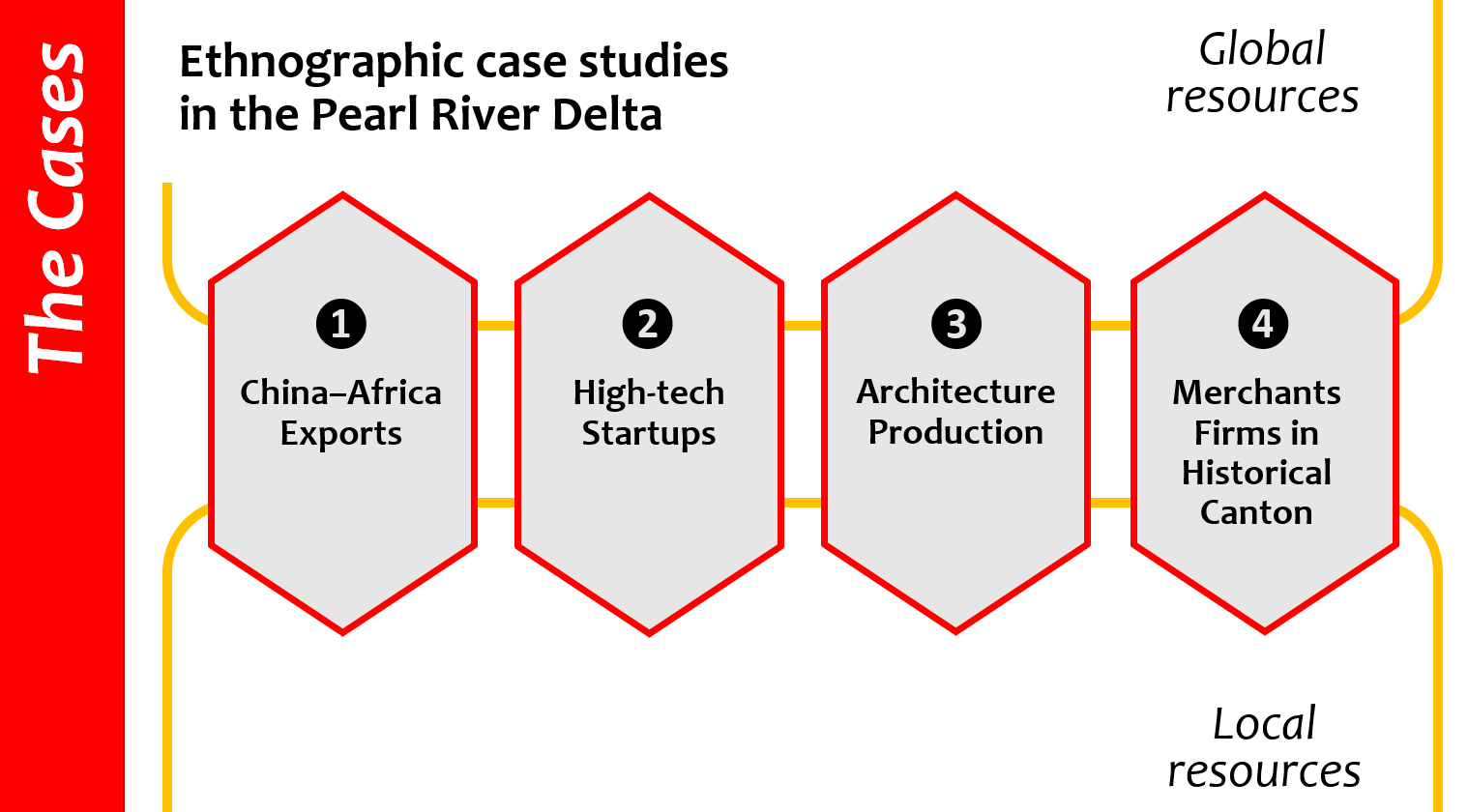
The Principal Investigator (PI) and three junior researchers have studied transnational links from the Pearl River Delta, South China. The case studies yield complementary information on the common challenge of brokering across geographic scales:
- Connecting low-cost Chinese manufacturing with African markets (primary investigator: Haugen);
- Transnational entrepreneurship in high-tech start-up firms (primary investigator: Liu);
- Transnational architecture production (primary investigator: Zhang);
- The role of historical Chinese merchant firms in forging links from South China (primary investigator: Wu).
China's travel restrictions during the Covid pandemic partially thwarted the project's focus on collecting ethnographic data from brokerage situations. To address this, we drew on archival material about historical instances of transnational brokerage and redirected some fieldwork to key nodes of China's global connections.
Theoretical Ambitions
Social scientific research on brokerage commonly uses the morphology of social networks as its starting point and focuses on how actors positioned at the intersection between groups operate. BROKEX adopted an innovative approach by examining how actors strategically seek to shape network morphologies in order to bridge gaps between groups.
By directing theoretical attention towards relationship formation that precedes acts of brokerage, this line of inquiry advances understandings of how and why brokered connections emerge. Rich empirical data combined with critical theorisation will generate new knowledge about the processes underlying the “rise of China” – one of the most significant socioeconomic developments of our times.


.png)
.png)
.png)