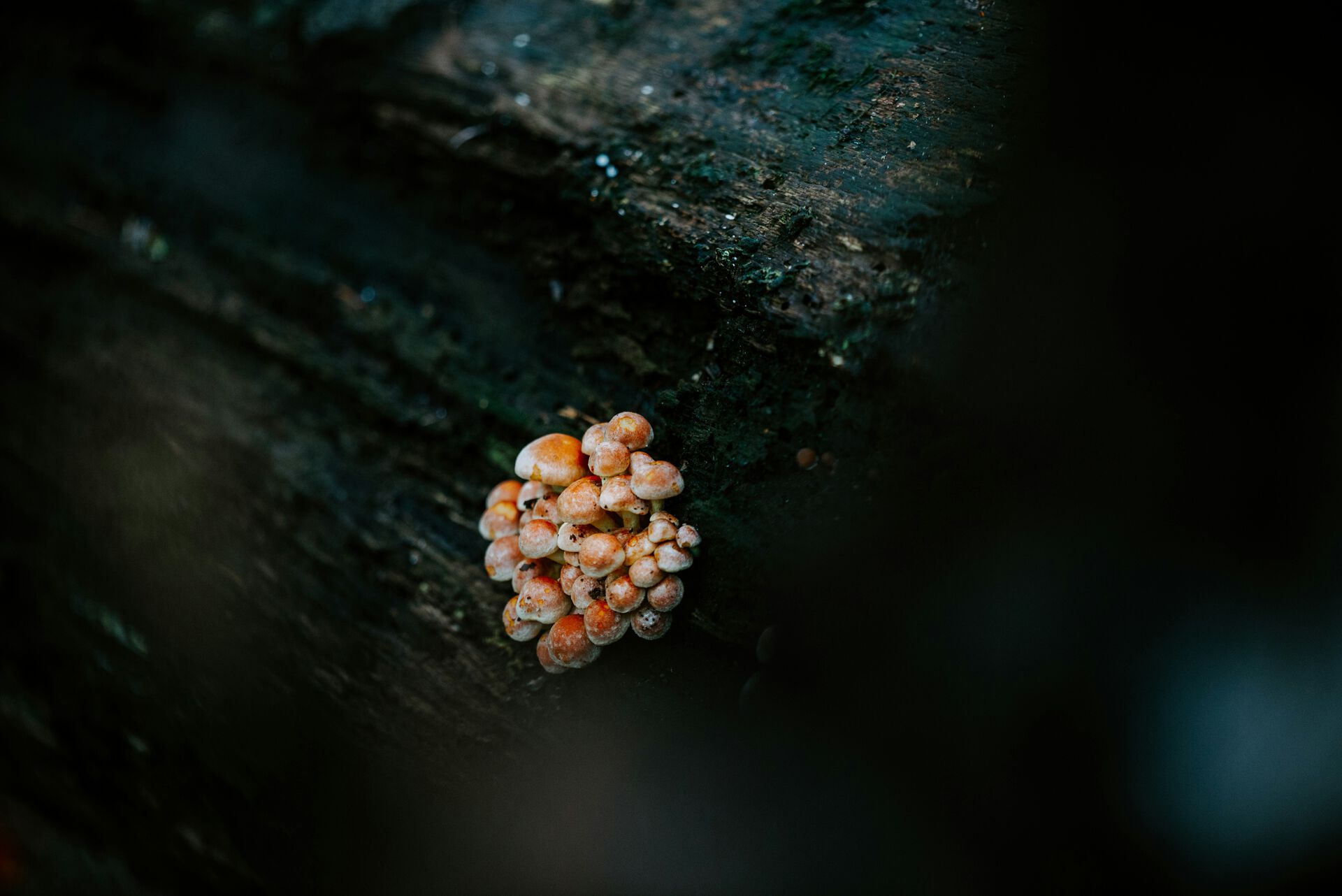
Alternative materials and textiles derived from fungi, algae and bacterial cultures are gaining traction in industrial, architectural and artistic spaces. However, most of these materials assume a transition from life to inert matter. Engineered Living Materials (ELMs) challenge this notion by remaining alive and responsive throughout their use cycle - capable of self-repair, CO2 capture and adaptation. These materials force us to rethink not only design but also our relationship to built environments as multispecies collaborations.
In this talk, Anna-Katharina Laboissière will explore the intersections of architecture, biology, and philosophy through her work in the FUNGATERIA project. This initiative brings together architects, microbiologists, and bioengineers to develop a new form of living architectural material through co-cultivation of mycelium and bacteria. The seminar will discuss how such materials challenge conventional understandings of homes and environments, prompting new ecological, metabolic and social perspectives on habitation.
Please bring your own lunch, coffee will be served!
Anna-Katharina Laboissière is a researcher at the Centre for Technology, Innovation and Culture at the University of Oslo, where she investigates living architectures, nonhuman intelligences, and participatory research methodologies. As a Marie Skłodowska-Curie postdoctoral fellow, she explored fallowing in agricultural policy as a site of emerging bio- and cosmopolitical articulations. Her previous research examines speculative conservationist interventions such as assisted migration and crop wild relative breeding.
Her academic and creative work has been featured in Cultural Studies Review, Fieldsights, and edited volumes with Routledge and Ohio University Press, as well as creative writing outlets including NebulX, Memori and Plant Magic Magazine. She earned her PhD from the École Normale Supérieure and Curtin University in 2021.