Infernal Voices: The Sinister Reaches of the High Voice (Research Forum at IMV)
FREYA JARMAN
In conversation with Peter Edwards & Áine Mangaoang
Throughout the history of western vocal music, high notes and high voices have come to signify a range of ideas that don’t seem at first to be issues of gender but which very rapidly turn out to be gendered spaces. From the purity and innocence of the angelic church treble, through the coloratura of the nineteenth-century operatic madwoman and the heroic climaxes of her tenor counterpart, to the antisemitic coding in Wagner’s high-tessitura villain roles, high voices do an awful lot of cultural work. Drawn from a book-length project on the topic, this paper will consider how high voices and high vocal notes code for sinister spaces—the devilish, the demonic, the underworld—and how these spaces are also intensely gendered. In order to explore these themes, I draw on examples from heavy metal and death metal, opera from Purcell to Penderecki, musical theatre, and various vocal accompaniments to death.
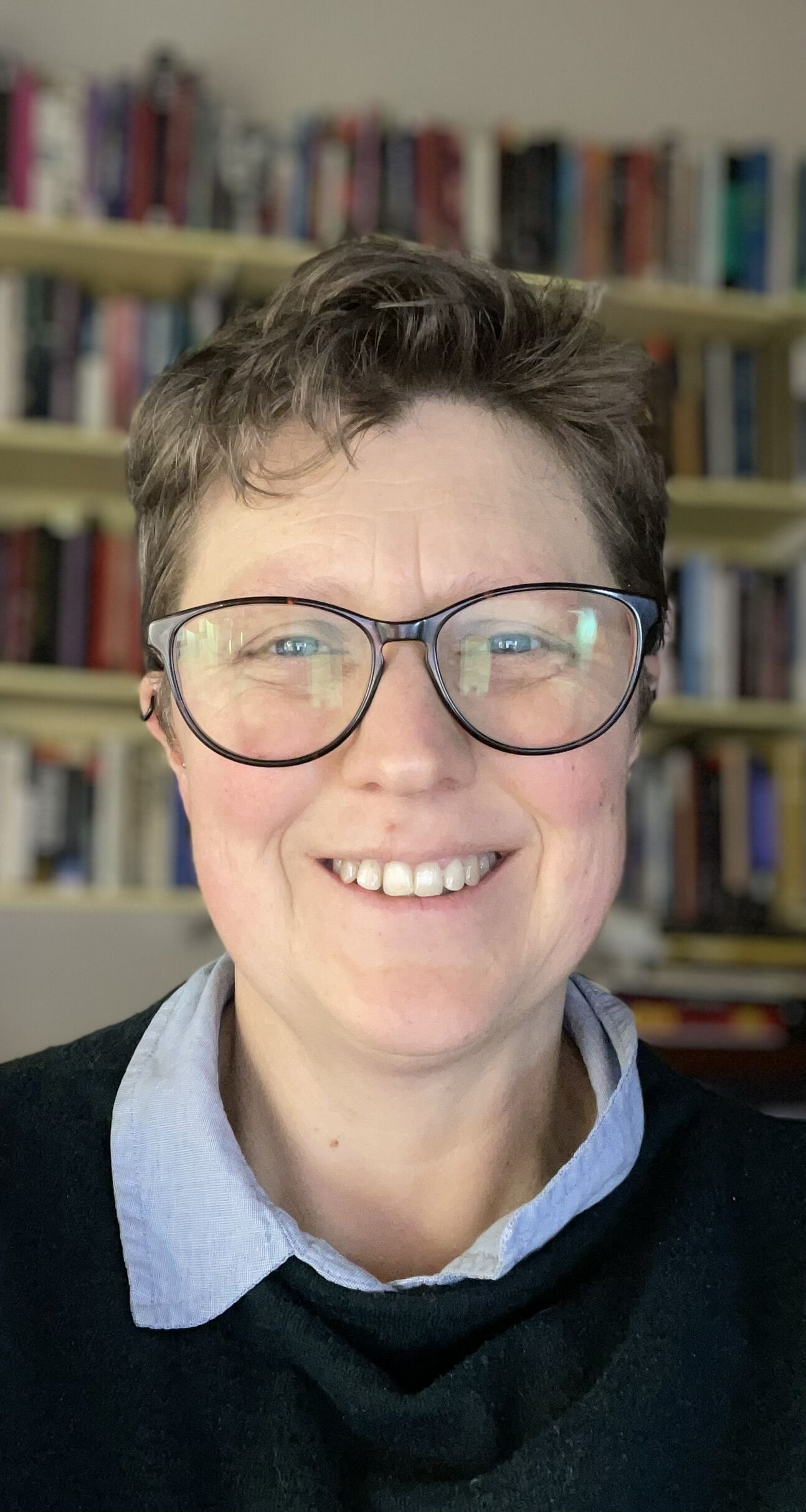
Dr Freya Jarman is a Reader in Music at the University of Liverpool. Her work focuses on vocality and identity, particularly through the lens of queer theory, in relation to a range of musical genres. She is the author of Queer Voices: Technologies, Vocalities, and the Musical Flaw (Palgrave 2011), and editor of the Journal of the Royal Musical Association. Freya is presently working on a gendered history of singing high notes for Oxford University Press.