Preserving a healthy lifestyle and engaging in self-care practices like psychotherapy and physical fitness, among others, have gained popularity particularly since the 2010s in contemporary Iran. To grasp what underlies these trends, Abbasi investigates the online and offline discourses surrounding wellness, self-care, and tools of self-cultivation, such as psychotherapy and corporeal care, which she theorizes as exemplifying a “politics of progress” and a cultivation of “earthly ideals” in one’s lifestyle.
Abbasi pursues a historically informed understanding of embryonic notions of body and mind as they developed in early modern Iran, looking closer at the processes of validation of non-pharmacological psychological practices and the construction of variegated knowledges of care for the body. Adopting a qualitative approach that draws on archival research, interviews, and online ethnography, she investigates the cultural underpinnings of new health norms and the complex interplay between individual agency, technology, migration, and societal structures in shaping contemporary Iranian lifestyles. In seven chapters, her dissertation delves into the dynamics of decision-making regarding healthy lifestyles, bodies, minds, and knowledges of care that are born within online and offline spaces forged through practices of self-care itself.
Considering this novel emergence of alternative and intensified representations of self-care and non-pharmacological self-cultivation tools among Iranians, how should we understand and position these trends? Through her research, Abbasi suggests that owning, forging, and striving for a healthy body and healed mind, in tandem with the application and ownership of the tools to do so, have evolved into becoming prerequisites for shaping a modern subjectivity and are regarded as a moral responsibility. Her research results contribute to interdisciplinary research domains on the healthy self, mental health, self-care, communication technologies, and psychotherapy, among others within the fields of global (mental) health studies and medical humanities in the SWANA region.
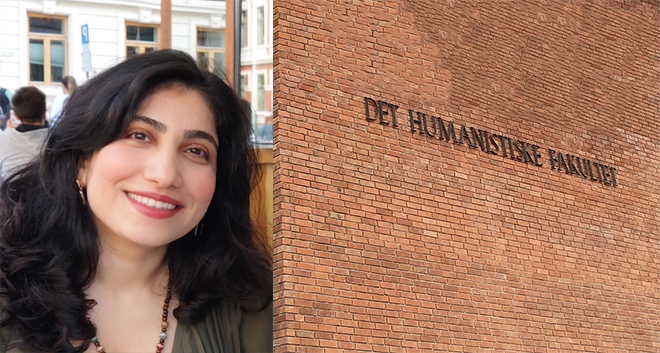
Zahra Abbasi has succesfully defended her thesis on 9 May 2025.
Trial lecture
The designated topic: "The Evolution of Persian-language Media from the Constitutional Revolution until today"
Evaluation committee
- Associate Professor Ladan Rahbari, University of Amsterdam (first Opponent)
- Associate Professor Rasmus Christian Elling, University of Copenhagen (second opponent)
- Senior Lecturer Samad Josef Alavi, University of Oslo (adminitrator)