Webpages tagged with «Oil»

Doctoral Research Fellow and artist Miriam Sentler combines mythology, collective memory, and the histories of various energy industries in her large-scale tapestries. In this interview, Eva Pritchard explores Miriam's choice of weaving as a medium and how her artworks reflect the different layers of energy narratives and myths.

On September 18th, the Translatability of Oil project organises an open midway evaluation of Miriam Sentler's PhD project on performative energy encounters in Shetland. External reader is Dr Antonia Thomas from UHI.

In the travelogue Petromania, Simen Sætre investigates what it means to live in a petrostate. Scholars affiliated with the Translatability of Oil project have invited the journalist, writer, and globetrotter to Blindern to discuss the advantages and pitfalls of making cross-cultural comparisons.

In Norse literature, Tyrving is the name of a cursed sword. It's also the name of an oil field in the North Sea. In this blog post, TOIL member Reinhard Hennig questions whether the curse of Tyrving has returned, only this time against oil companies. This follows a recent ruling by the Norwegian Supreme Court on April 11th, in which environmental organisations secured a victory in a climate lawsuit.
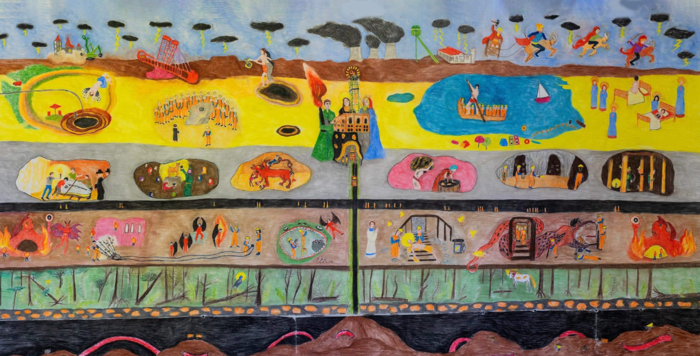
In the latest issue of the art magazine Metode, Miriam Sentler contributes an essay about the traditional Up Helly Aa festival in Shetland. In her text, Sentler explores how the Islands’ 1970s oil culture was met by frolicsome cultural displays and acts.

In October 2024, Doctoral Research Fellow Margrete Hestenes went to the non-profit art space Kunsthall Oslo to visit Norwegian artist Lars Holdhus’ solo exhibition Where Oil is First Found is the Minds of Men. In this blog post, Hestenes reflects on the exhibition’s expression of petro-masculinity.
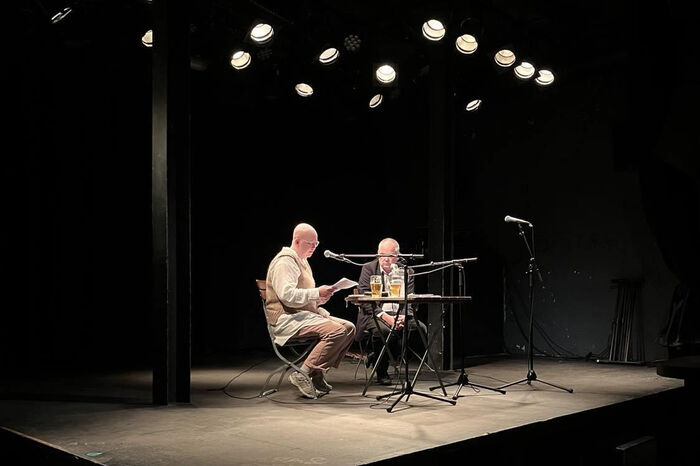
On Tuesday September 17th 2024, TOIL celebrated the 20th anniversary of Øyvind Rimbereid's poetry collection Solaris korrigert (2004), in collaboration with Litteratur på Blå. The celebration included a conversation with the author himself, led by Tomine Sandal, a Ph.D. candidate in Nordic Literature affiliated with TOIL and editorial member of Litteratur på Blå.

In this blog post, Doctoral Research Fellow Miriam Sentler shares some diary entries she made during her research trip to the Shetland Isles in January 2024. By documenting diverse experiences with the oil industry's presence in a diary format, Sentler provides her reader with fresh insights into the extent to which the industry has made its mark on the Shetland Islands' community and heritage.

In January 2024, Miriam Sentler, one of TOIL’s Doctoral Research Fellows, travelled to Shetland to learn more about its oil industry. In this conversation, Eva Pritchard asks Sentler why she decided to research oil in the Shetland Islands specifically, and how the islands’ Viking-inspired Up Helly Aa festival presents fascinating connections with local energy industries. By focusing on Shetland's creative community, Sentler uncovers new insights into how myth and oil frequently intertwine in the Shetland Isles, both historically and today.

The research network Oil & Society has selected “Oil workers” as the main topic of its first gathering. Margrete Hestenes will be representing TOIL with a contribution about oil culture and musical communities.

In this talk, Graeme Macdonald, Professor of English and Comparative Literary Studies (University of Warwick, UK), discusses how aesthetic signatures around the (in)visibility of oil apply to the aesthetics of contemporary energy transition and its representation in sound, screen and image. He explores these themes in two short films: Stephen Hurrel’s 2012 “Dead Reckoning” and Emily Richardson’s 2005 “Petrolia”.

In this talk, Darren Dochuk, Professor of history at the University of Notre Dame (US), reflects on the relationship between petroleum, politics, and religion in the United States between the mid-1970s and the mid-1980s, as well as investigating the continuing effects of this period on the energy sector today.

In this talk, Anne Gjelsvik, Professor of Film Studies at NTNU, examines how the capsizing of the Alexander Kielland oil platform is represented in Makta and considers the emotional impact of the blurred translation of the actual incident into the TV series’ realm of playful criticism of men in power.
What can the medium of photography contribute to our understanding of industrial whaling’s first oil age, and maybe to our relationship to our present mineral age? Espen Ytreberg, Professor of Media Studies at the University of Oslo, will give a talk based on his recent research on Norwegian whaling.