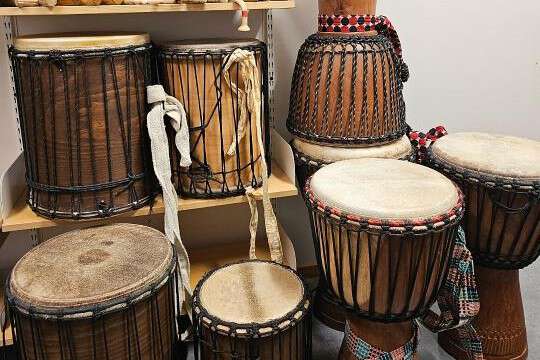
IMV owns a set of four djembes and four dundun drums, shown together in storage in Photo 1. The four djembes were made in Mali (Photos 2–5). Their shells were individually hand-carved by specialist carvers from local hardwoods, including Afzelia africana, known in Bambara as lenkè. The drumheads are made from untanned goatskin and tensioned with low-stretch synthetic rope.
The dundun drums were made in Germany from beech plywood and fitted with goatskin heads from Mali (Photos 6–9). This relatively lightweight construction follows Malian practice, in contrast to Guinean dunduns, which typically have heavier shells and cowhide or calfskin heads. The lightweight beaters used with these Malian-style drums are made from the leaf stalks of the raffia palm Raphia sudanica (Photos 10–12).
The photographs also show supplies and accessories from facilitator and associate professor Rainer Polak’s collection: handheld iron bells played by dundun players in Mali’s Khasonka tradition (Photo 13), and spare goatskins for future repairs (Photo 14). Finally, Photos 15–18 document a recent repair in which the drumhead of one of the dunduns was replaced. Together, the photographs document the ensemble, its individual instruments, and some of the materials and processes involved in playing and maintenance.


Further information on djembe music can be found on Rainer Polak’s personal website. Most of his academic publications on the subject are available as downloadable PDFs or through links to open-access versions on the publications page.