

Dominik Collet is professor for Environmental and Climate History. He works in the fields of historical climatology, the history of disasters and the global history of things. He was a founding member of the Oslo School of Environmental Humanities (now OCEH) with a long standing interest in "big interdisciplinarity" between the sciences and the humanities. His current research focuses on the historical entanglements of climate and culture both in their material and in their mental configurations.
Before coming to Oslo he taught at the Universities of Heidelberg and Göttingen. He has held visiting fellowships at the Max-Planck-Institute for History, the Warburg Institute London, the Forschungszentrum Gotha and the Centre for Interdisciplinary Research (ZIF) Bielefeld. In the academic year 2024/25 he was the PI of a researcher-in-residence group at the Center for Advanced Research (CAS) in Oslo.
Academic interests
- Environmental History of the early modern world
- Climate History
- Historical Disaster Studies / Famine studies
- Global History of Things
- History of the Museum
- Cultural History of Knowledge
Education
- Habilitation (second PhD) - Heidelberg University 2018
- PhD - Max-Planck-Institute for History / Hamburg University 2007
Background
- since 2018: Professor for Environmental and Climate History, University of Oslo
- 2013 - 2018: Research group leader, Heidelberg University
- 2010 - 2012: Postdoc, Grad. School Environmental History, Göttingen University
- 2006 - 2010: Ass. Prof., Early Modern History, Göttingen University
- 2001 - 2005: Doctoral Fellow, Max-Planck-Institute for History / Warburg Institute London / Forschungszentrum Gotha
News
23.3.2026 The CAS-NORLIA research group has published “The Nordic Little Ice Age. An online course on climate history and adaptation”.
The open access course explores what we can learn from the last time the climate changed. Its six interdisciplinary modules are interdisciplinary and aimed at high-school teachers and university students in history, science, and social studies. Each lesson provides videos by leading experts, commented data and sources, Q&A sections, a reading list, and a range of classroom activities to explore the Little Ice Age (1500-1800). In its entirety, it can be used to teach the new subject of “sustainability studies”. The course is available on Climatehistory.net or Canvas (fully importable) and has its own youtube channel.
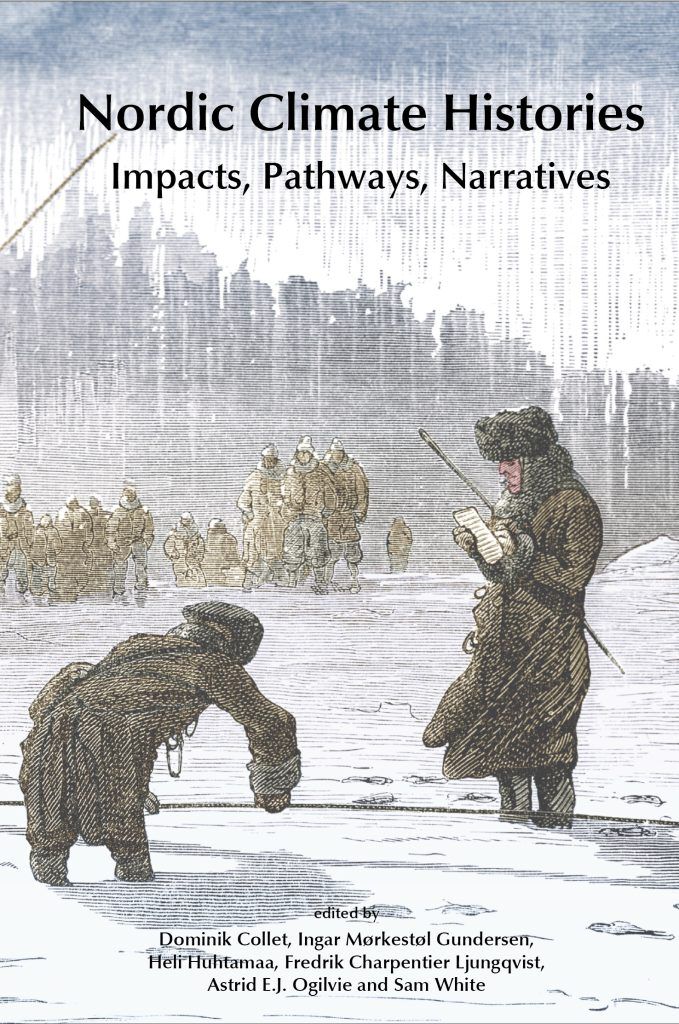
1.8.2025 The book Nordic Climate Histories has been published open access and in print. In provides a comprehensive view about the ways in which Nordic Societies have adapted to climate changes in the past.
Down the centuries, the people of the Nordic countries have confronted challenges from climatic variability and change and sought ways to survive and adapt. In a time of accelerating global warming, these climate histories take on new contemporary significance. Drawing on tools from the natural and historical sciences, the innovative scholarship in this volume addresses questions such as: How did Nordic societies cope with past climatic hazards? What was the historical significance of the ‘Little Ice Age’ or the ‘Medieval Climate Anomaly’ for Nordic countries? And how do we study, narrate and learn from these past experiences? More information here.
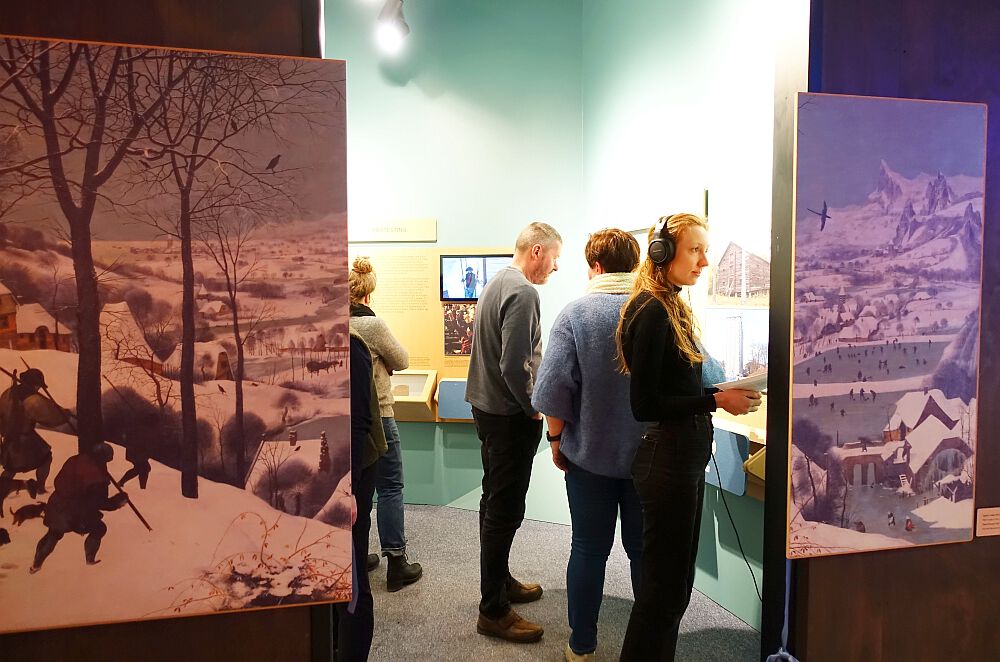
12.3.2025 The ClimateCultures project has opened its exhibition
"The Little Ice Age: How did we handle the last climate crisis?" at Klimhuset Oslo. Extreme weather, unpredictable climate and changing seasons. Sounds familiar? There are many similarities between the rapid climate changes we experienced during the Little Ice Age (1500-1800) and today's climate challenges. In the exhibition, you will get to know people who found solutions to societal problems accelerated by climate change. Find out more about the physical and the web-exhibition here.
Publications (selected)
Full list of academic publications here (with download links). Open access in bold.
Books and edited volumes
- Nordic Climate Histories. Impacts, Pathways, Narratives (ed. with Ingar Mørkestøl Gundersen, Heli Huhtamaa, Fredrik Charpentier Ljungqvist, Astrid Ogilvie, Sam White). Winwick (UK) 2025.
- Die doppelte Katastrophe. Klima und Kultur in der europäischen Hungerkrise 1770-1772 [The Twin Catastrophe. Culture and Climate in the European Famine of 1770-1772]. Göttingen 2019. [shortlisted for the Turku Book Price - best book in environmental history 2018/2019] [download the introduction]
- Famines During the 'Little Ice Age' (1300-1800). Socionatural Entanglements in Premodern Societies (ed. with Maximilian Schuh). Cham 2018.
- The University of Things. Theory – History – Practice (ed. with Marian Füssel / Roy McLeod). Yearbook for European Culture of Science 8. Stuttgart 2016.
- Handeln in Hungerkrisen. Neue Perspektiven auf soziale und klimatische Vulnerabilität. Göttingen 2012 (ed. with Thore Lassen / Ansgar Schanbacher).
- Die Welt in der Stube. Begegnungen mit Außereuropa in Kunstkammern der Frühen Neuzeit [The World at Home. Global Encounters in Early Modern Museums]. Veröffentlichungen des Max-Planck-Instituts für Geschichte 233. Göttingen 2007.
Articles / book chapters
- More than Laki. Compound Climate Shocks and Icelandic Volcanism in the Nordic World of the 1780s. (with White, S., Khumalo, W., Grotum, D., Gundersen, I. M., Huhtamaa, H., Kleemann, K., Krüger, K., Linderholm, H. W., Lundstad, E., Ljungqvist, F. C., Sigl, M., Skoglund, M. K., Stene, I., and Svarva, H. L). In: Climate of the Past / EGUsphere [preprint], 2026
- The Little Ice Age: The History and Future of a Traveling Concept. (with Sam White, Scott Bremer, et al.). In: WIREs Climate Change 16, no. 5 (2025): e70023.
- Climate and migration in historical perspective (with Lukáš Dolák, Rudolf Brázdil, Sam White, Qing Pei). In: Geografia 130.3 (2025), p. 221-250.
- Introduction: Integrating, Connecting and Narrating Nordic Climate Histories (with Ingar Mørkestøl Gundersen, Heli Huhtamaa, Fredrik Charpentier Ljungqvist, Astrid Ogilvie, Sam White). In: Ibid (eds.), Nordic Climate Histories. Impacts, Pathways, Narratives. Winwick (UK) 2025, p. 1-28.
- Extreme Winters during the 18th century. Entangling Climate and Culture. In: Joana van de Löcht / Anna Axtner-Borsutzky (eds.), Extremereignis ›Kältewinter‹ im 18. Jahrhundert Spuren in der zeitgenössischen Literatur, Kultur und Wissenschaft. Boston/Berlin 2025, p. 17-35.
- Die europäische Hungerkrise 1770-1772. Klima, Kultur, Katastrophe. In: Gerhard Hetzer / Anke Sczesny (eds.), Hungersnot und territoriale Vielfalt. Die Hungerkrise um 1770/72: Abläufe, Folgen, Erinnerung. Friedberg 2025, p. 13-38.
- Climate, Peace, and Conflict—Past and Present: Bridging Insights from Historical Sciences and Contemporary Research (with Sam White, Agustí Alcoberro, et al.). In: Ambio 54 (2025), p. 774-792.
- Public granaries as a source of proxy data on grain harvests and weather extremes for historical climatology (with Rudolf Brázdil, Jan Lhoták; Kateřina Chromá; Petr Dobrovolný; Heli Huhtamaa. In: Climate of the Past. 21(2) (2025), p. 547–570.
- Abusing Climate: The 1770s Anomaly and the First Partition of Poland–Lithuania. In: Acta historica Tallinnensia 29.2 (2023), p. 190-220.
- Famines in medieval and early modern Europe-Connecting climate and society (with Fredrik Charpentier Ljungqvist / Andrea Seim). In: WIRES Climate Change 15 (2023), 10.1002/wcc.859.
- Risk and Resilience in Urban-Environmental History. In: Sebastian Haumann / Martin Knoll / Detlev Mares (eds.), Concepts of Urban-Environmental History. Bielfeld 2020, p. 79-94.
- Introduction. Famines: At the Interface of Nature and Society. In: Dominik Collet / Maximilian Schuh (ed.), Famines During the 'Little Ice Age' (1300-1800). Socionatural Entanglements in Premodern Societies. Cham 2018, p. 3-14.
- Vulnerabilität als Brückenkonzept der Hungerforschung. In: Dominik Collet / Ansgar Schanbacher / Thore Lassen (eds.), Handeln in Hungerkrisen. Neue Perspektiven auf soziale und klimatische Vulnerabilität. Göttingen 2012, p.13-26.
- Storage and Starvation. Public Granaries as Agents of 'Food Security' in Early Modern Europe, in: Historical Social Research / Historische Sozialforschung 35.4 (2010) Special Issue: The Production of Human Security in Premodern und Contemporary History, p. 234-253.
- Big Sciences, Open Networks, and Global Collecting in Early Museums. In: David Livingstone/Peter Meusburger (eds.), Geographies of Science (Knowledge and Space vol. 3). Dordrecht 2010, p. 121-138.