
How can we exhibit climate – a phenomenon far removed from human perception? How do we narrate climatic change in a museum environment and initiate dialogue across its stakeholders and that locates it within the landscape of the UN’s Agenda 2030 Transforming our World? Various institutions have recently taken up this challenge. They range from established museums to new, emerging and experimental spaces. All attempt to promote debate and tell the stories we desperately need to connect scientific results to human lifeworlds.
This collaboratory will explore the dynamic and transgressive field of the ‘climate museum’. It will trace a unique and highly interdisciplinary space of encounter that connects the sciences and the humanities, academic and public spheres, research and action.
Theme
In the current environment disenchantment with the forms and channels used to communicate the challenges of climate change is growing. The scientific debate is often criticized for failing to provide a narrative able to relate to the lived experiences of a larger public. The mere distribution of facts is increasingly questioned in its ability to overcome complacency and to encourage change.
Museums in contrast provide communication rather than information, engaging in translation rather than simple transmission. They are also widely perceived as impartial actors with established patterns of transnational cooperation, an essential requisite for meeting the inherently global challenges climate change. However, museums must also be prepared to relinquish some of their more cherished notions, such as full curatorial authority and exclusive control over their own spaces. They will have to revisit their collections, exhibition designs and expert networks as well as develop their cross-societal appeal. Under these challenging terms, they could provide a readymade infrastructure for climate change communication and co-creation.
Core participants

Dominik Collet
Dominik Collet (PI), is a climate historian at UiO. He led cross-disciplinary research groups spanning the sciences and the humanities, cooperated extensively with museums both academically and practically and co-organised several exhibitions.

Brita Brenna
Brita Brenna, is a museologist at UiO. She has worked on natural history collections, from 18th century to present day. She is responsible for the group Heritage and sustainability in the Heritage Experience Initiative at UiO and has long standing experience in critical museology and museum collaboration.
Morien Rees
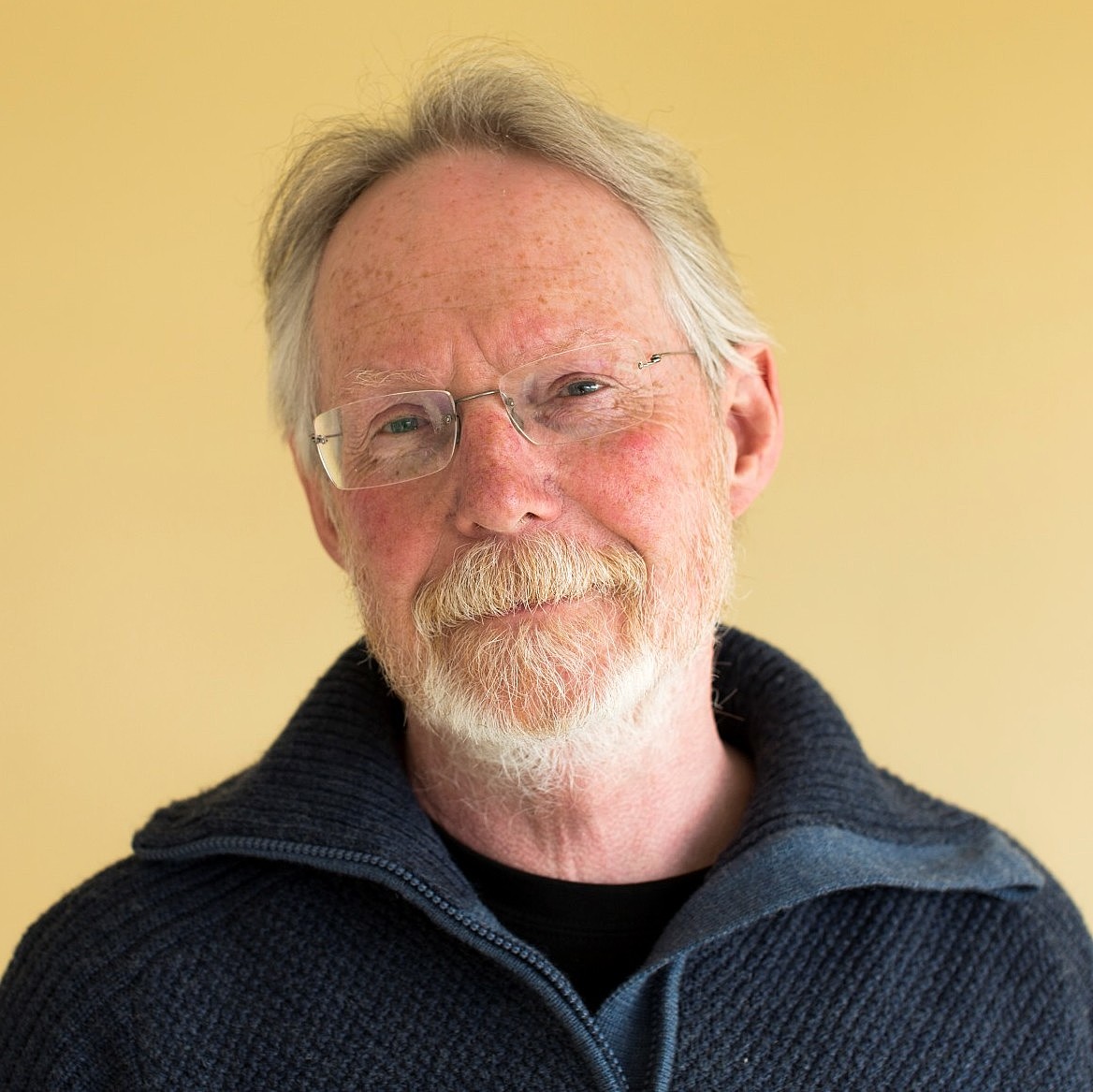
Morien Rees, is a curator at Varanger Museum on Norway’s Arctic coast. He has worked widely as a practitioner in the museum sector since 1994 and is the chair of the ICOM working group on Museums and Sustainability.
Bergsveinn Thorsson
Bergsveinn Thorsson, is museologist of the anthropocene. He ha s worked in Iceland’s museum environment for ten years before coming to Oslo for his PhD on museums, the environment and anthropocenic things.
He has now joined Iceland's Bifröst University:
Activities
2025
Workshop: On becoming a climate museum
7-9.4.2025. The NORLIA project at the Center for Advanced Studies, Oslo organises a workshop with Karen Brown (St. Andrews), Jeremie McGowan (Tromsø), Nathalia Brichet (Copenhagen), Marie-Theres Fojuth (Stavanger) and others. It explores the way forward to becoming a climate museum, as a space for immersive and sensorial experiences that engage audiences in co-creating narratives around climate change.
The workshop will take place at Oslo's Klimahuset and the Center for Advanced Studies and provide an open forum, working with examples that can inspire, and to end up with a manifesto: "Every Museum is a Climate Museum!" It discusses four themes: "Communities, Diverse Knowledges, and Experiences", "More-than-Human Relationality", "Activating Collections in the Anthropocene", "Climate Knowledge as Exhibit".
Exhibition opens: The Nordic Little Ice Age: How did we tackle the last climate crisis?
 12.3.2025. The new exhibition at Klimahuset, Oslo explores the relationship between climate change and societal change during the Little Ice Age and asks: Can we learn something from a 300-year-old climate crisis?
Extreme weather, unpredictable climate and changing seasons. Sounds familiar? There are many similarities between the rapid climate changes we experienced during the Little Ice Age (1500-1800) and today's climate challenges. In the exhibition, you will get to know people who found solutions to societal problems accelerated by climate change.
The exhibition is curated in collaboration with the research project Climate cultures. Norway during the Little Ice Age, 1500-1800, at the Department of Archaeology, Conservation, and History at the University of Oslo and "The Nordic Little Ice Age" at Center for Advanced Study Oslo.
The exhibition opens on March 18th. Norgeshistorie hosts an online version of the exhibition (in Norwegian). You can also visit the 3D-interactive model (my.matterport.com).
Press articles about the exhibition:
- "Opplev "Den lille istiden": Ei lita, men innaldsrik utstilling om tilpasningar i førre klimakrise(in Norwegian)
- How Nordic societies weathered the last climate crisis (CAS)
- "Den vesle istida kan læra oss noko om dagens klimaendringar" (Uniforum, in Norwegian)
2024
Research group granted: Nordic Climate History
 1.11.2024. UiO: Energy and Environment fund a new thematic research group that explores climate history and narration.
It asks:
- What happened the last time Nordic societies encountered rapid climate change?
- How did natural and social environments interact during the Little Ice Age (1300-1900), the Late Antique climate anomaly (500-700) and in response to major volcanic events (i.e. the 530s, 1250s, 1690s)?
- What can be learned from the ways people adapted to challenges that are in many ways similar to the ones we face today?
2023
Exhibition opens "The Shelter. Climate, migrations, heritage"
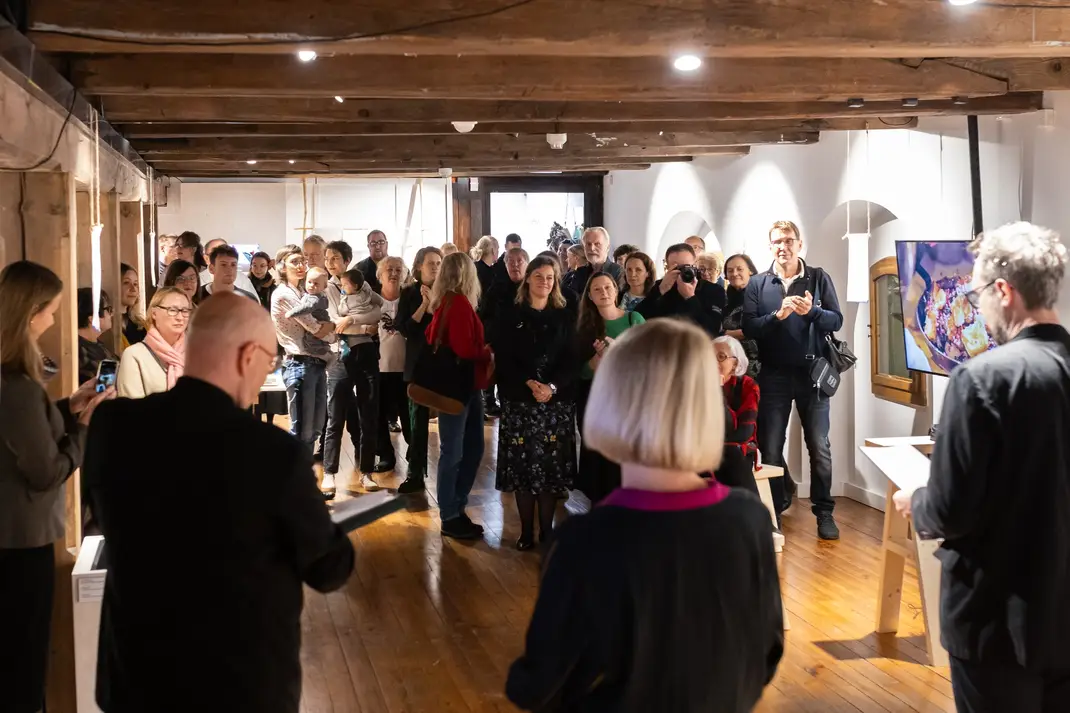
26.10.2023. The "shelter / schronienie" exhibitio n opened in Gdansk this week! The launch was accompanied by a symposium and a host of exciting events. The exhibition 'Shelter: wellbeing’ is the conclusion of the two-year international art and education is an attempt to create an open and creative space that links the world of culture with the world of nature, the world of humans with the world of non-human beings – plants and animals, the world of science with the world of art.
This ambitious redesign of the ethnographic collection in respect to "Climate, Migration, Heritage" is the result of an ILN funded project by the National Museum in Gdańsk with OSEHs Curating Climate as a partner.
The catalogue "Shelters. Essays for a time of crisis" will be available in the coming weeks. If you are in the Gdansk area, make sure you visit the exhibition in the beautiful Abbots granary.

Research group granted: The Nordic Little Ice Age: Lessons From Past Climate
6.9.2023. The Center for Advanced Studies in Oslo, has granted funding for a one-year research group in residence headed by PI Dominik Collet.
It will explore how the lived experiences of the Little Ice Age in the North can help broaden current debates on climate adaptation and narration. In its final stage it will connect academics working on climate science and history to climate communicators, museum curators and activists.
2022
Workshop with "The Shelter. Climate, migrations, heritage"
16.6.2022. Curating Climate is part of "The shelter" pro ject, headed by the National Museum in Gdańsk and funded by an ILN grant. Together with Anna Kraika and her project team the collaboratory hosted a workshop on "climate. migration. heritage". It took us to Oslo's Klimahuset (Climate house), the new "Control" exhibition at the Oslo Historical Museum and Tøyen hovedgård.
Many thanks to our colleagues Anne Birkeland and Gro Birgit Ween.
Meet Curating Climate at the Environmental Humanities festival
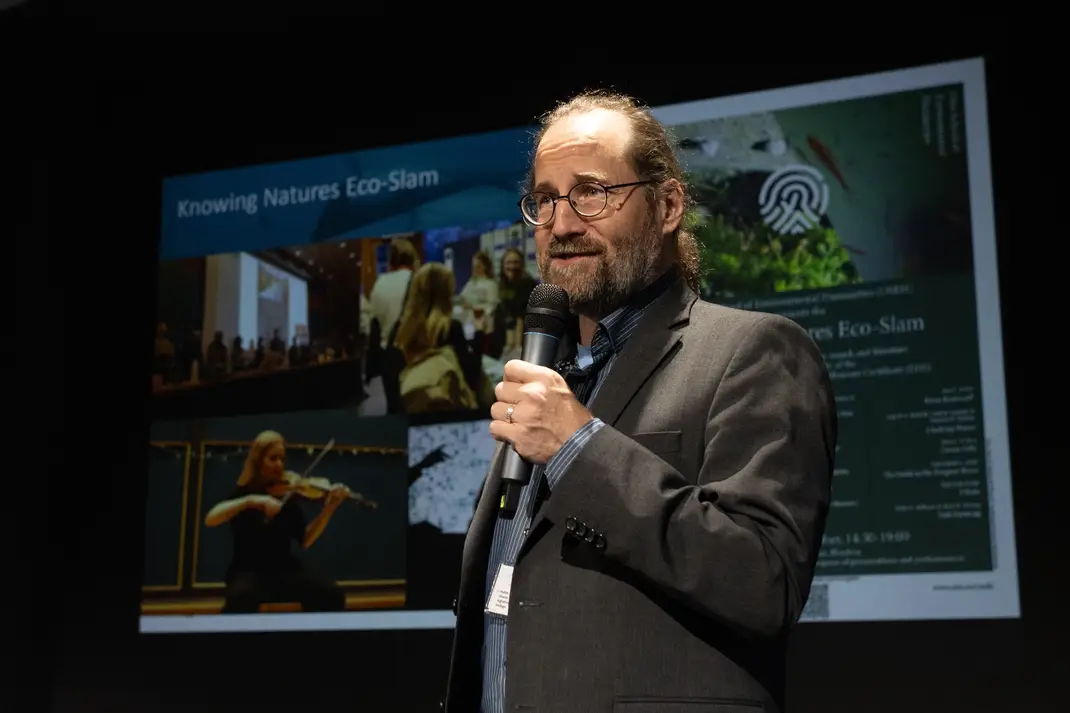
10.6.2022. The Curating Climate collaboratory is part of the Environmental Humanities Festival organised by OSEH. You can hear about our approach and meet us during the Lab talks on June 10th, 10-30-12h.
2020
Research project granted: ClimateCultures
21.12.2020. The Norwegian research council has  granted funding for the research project ClimateCultures - Socionatural entanglements in Little Ice Age Norway (1500-1800).
The project has developed out of the Curating Climate collaboratory and is headed by PI Dominik Collet. It will run from 2021-2025, entails a dedicated climate museums perspective and will hosts a series of climate narration labs at Oslo Klimahuset.
Special issue of Nordic Museology (2020/3): Curating Climate
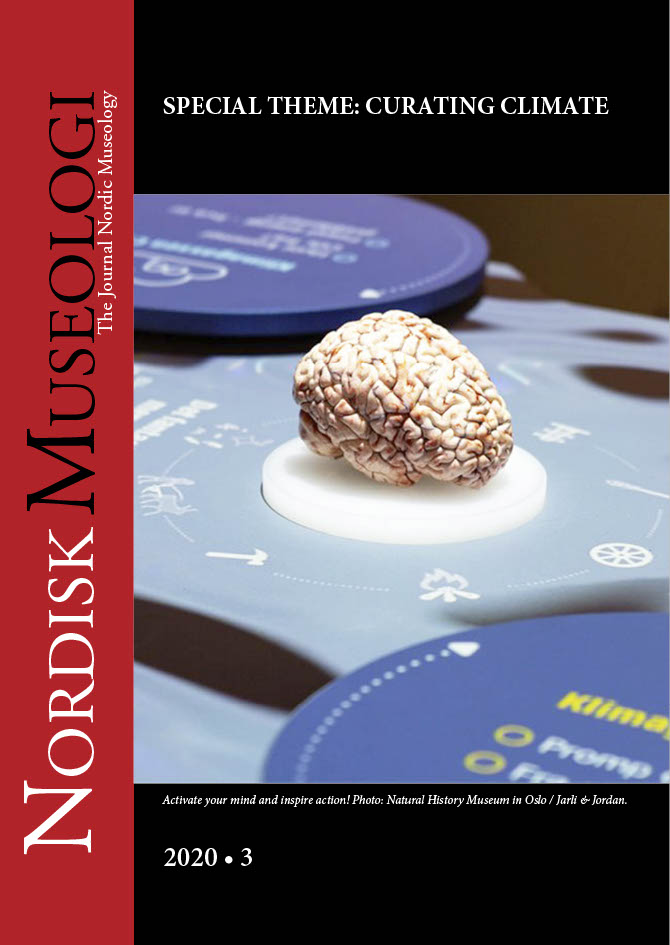
12.2020 The issue explores museums as contact zones of climate research, education and activism. It features an introduction by our team member Bergsveinn Thorsson as well as four fantastic papers reflecting the topics from our 2019 workshop.
Content:
- Bergsveinn Þórsson - Introduction
- Sarah W. Sutton - Museums as agents and settings for climate hope
- Jamie Larkin - Rethinking museum shops in the context of the climate crisis
- Magdalena Puchberger, Nina Szogs - Curating soya. Trying, testing and tasting (for) a sustainable museum
- Sameer Honwad et al. - Weaving strands of knowledge. Learning about environmental change in the Bhutan Himalayas
Klimahaus Bemerhaven - Symposium and Declaration
24.9.2020 Our partner Filip Wätjen has organised a fantastic symposium in the Klimahaus Bremerhaven in Germany. It features contributions from many members of our team.
They have also released the Bremerhaven Declaration on the Role of Museums in Addressing the Climate Crisis which you can find on the webpage for Klimahaus Bremerhaven.
Klimahuset Oslo opens!
16.6.2020 - Our partner, the Oslo Climate House, has opened its doors and is offering a remarkable exhibition and a wide array of events, both online and in situ.
- Website for Klimahuset
2019
International workshop: Curating Climate - Museums as ‘contact zones’ of climate research, education and activism.
Date: 28/29th October 2019
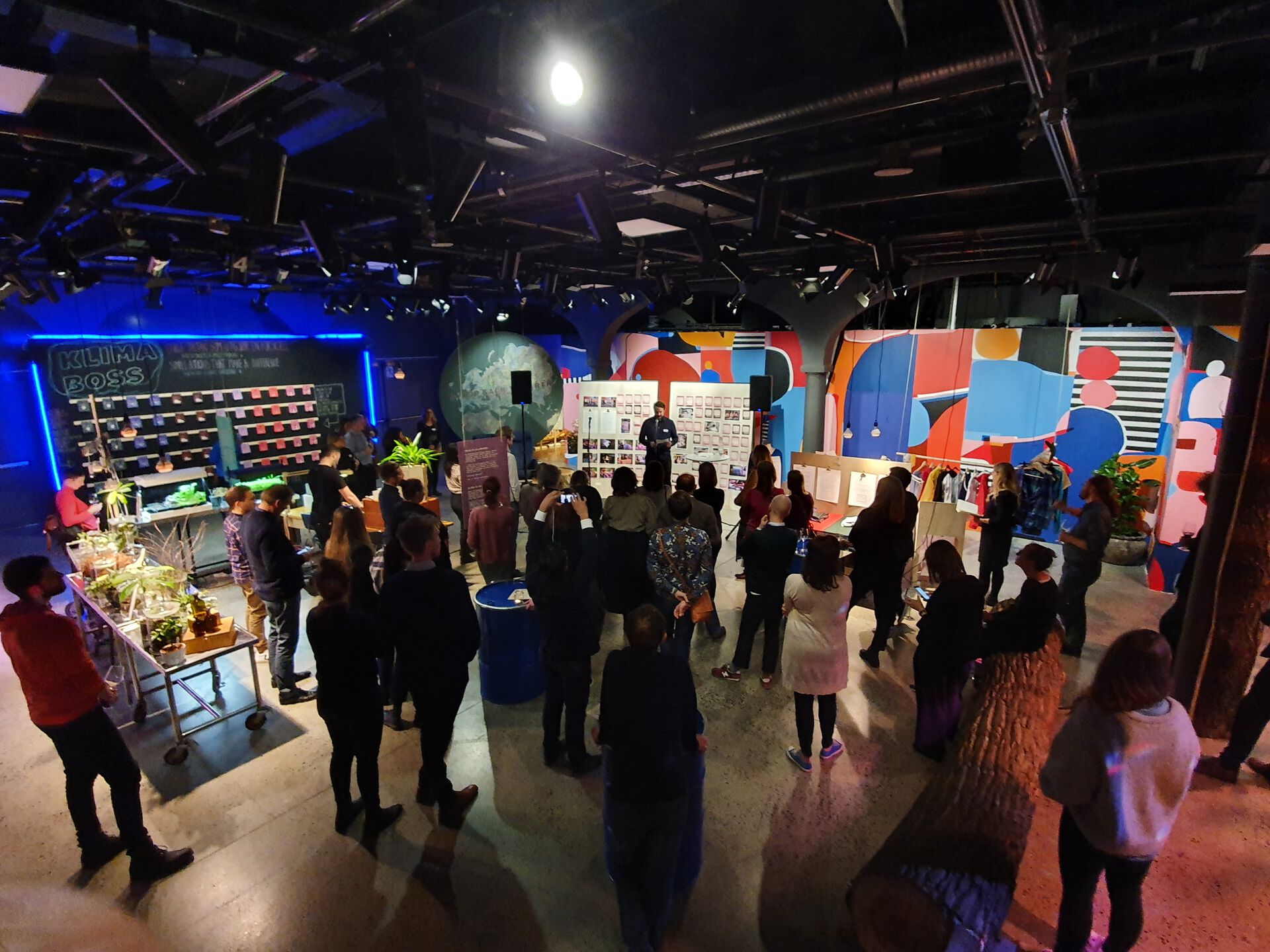 The workshop explored the emerging, dynamic and transgressive field of the ‘climate museum’, by bringing together people working in the museum and heritage sector, researchers, artists, activists and policy makers.
The workshop was hosted by Oslo’s new Klimahuset under the umbrella of Oslo Green Capital 2019. It welcomed over 70 participants from 15 countries to the botanical garden at Tøyen Oslo and the Nobel Peace Center. The event was co-funded by OSEH, HEI, the Naturhistorisk Museum and UiO:Energy.
The collaboratory is open for interested participants. To join our discussions, please contact: dominik.collet@iakh.uio.no