Academic interests
- Late medieval and early modern intellectual history (1300–1700)
- Late medieval political thought (Dante Alighieri, Marsilius of Padua, William of Ockham, Francis Petrarch, Birgitta of Sweden, Catherine of Siena)
- Religious reform movements
- Apocalyptic and utopian visions in late medieval and early modern Europe
- History of Emotions
- Women's contribution to early modern history of knowledge
- Renaissance women writers and philosophers
- Renaissance humanism and book history
- Respublica literaria (salons, academies, and virtual communities in the Italian Renaissance)
Education
- 2006: PhD (Dr. art) i italian literature, University of Oslo
- 1994: MA (Cand. philol.) Italian studies, University of Oslo
- BA (Cand. mag) in italian, latin and history of ideas, University of Oslo
Background
- From 2017: Professor, History of Ideas, University of Oslo
- 2016-2017: Associate Professor, History of Ideas, University of Oslo
- 2014-2016: Academy Research Fellow at the Royal Swedish Academy of Letters, History and Antiquities, affiliated to the Department of Culture and Aesthetics, Stockholm University.
- 2013: Visiting Professor, Lindköping University
- 2008-2013: Postdoctoral Fellow, University of Oslo
- 2009-2011: Visiting Professor and Fulbright Visiting Scholar, Yale University
- 2005-2008: Lecturer in Italian and Comparative Literature, University of Oslo
- 1998-2004: Doctoral Research Fellow, University of Oslo (leave of absence 2001-2003)
- 2001-2003: Chief Editor of Modern Fictional Literature, Gyldendal Norsk Forlag
- 1995-1998: Editor of Non-Fictional Literature, Gyldendal Norsk Forlag
Prizes, grants and fellowships
- Elected member of the Norwegian Academy of Science and Letters (from 2020)
- The Alberigo Senior Award 2019 (European Academy of Religion) for my book The The Avignon Papacy Contested. An Intellectual History from Dante to Catherine of Siena (Harvard University Press, 2017)
- The Helen and Howard R. Marraro Prize in Italian History 2018 (Society for Italian Historical Studies/American Historical Association) for The Avignon Papacy Contested. An Intellectual History from Dante to Catherine of Siena (Harvard University Press, 2017)
- Principal investigator and project manager for the interdisciplinary research project The Legacy of Birgitta of Sweden. Women, Politics and Reform in Renaissance Italy. The Research Council of Norway (2018-2022)
- Academy research scholarship from the Royal Swedish Academy of Letters, History and Antiquities (2014-2016)
- Premio "Il lauro dantesco", Centro Relazioni Culturali, Comune di Ravenna (2011)
- Fellow at the Whitney Humanities Center, Yale University (2010-2012)
- Fulbright visiting scholarship, Yale University (2010-2011)
- Leiv Eriksson mobility programme grant. The Research Council of Norway (2010-2011)
- Postdoctoral research scholarship from Faculty of Humanities, University of Oslo (2008-2013)
- Doctoral research scholarship from Faculty of Humanities, University of Oslo (1998--2004)
Appointments
Curriculum vitae
See my CV (pdf)
Tags:
History of Ideas,
Intellectual history,
Renaissance studies,
Humanism,
Early Modern Women,
Book History,
Gender Studies
Publications
Books:
- Renessansen på 200 sider. Modernitetens smeltedigel (The Renaissance in 200 pages: The Crucible of Modernity). Oslo: Kagge, 2026.
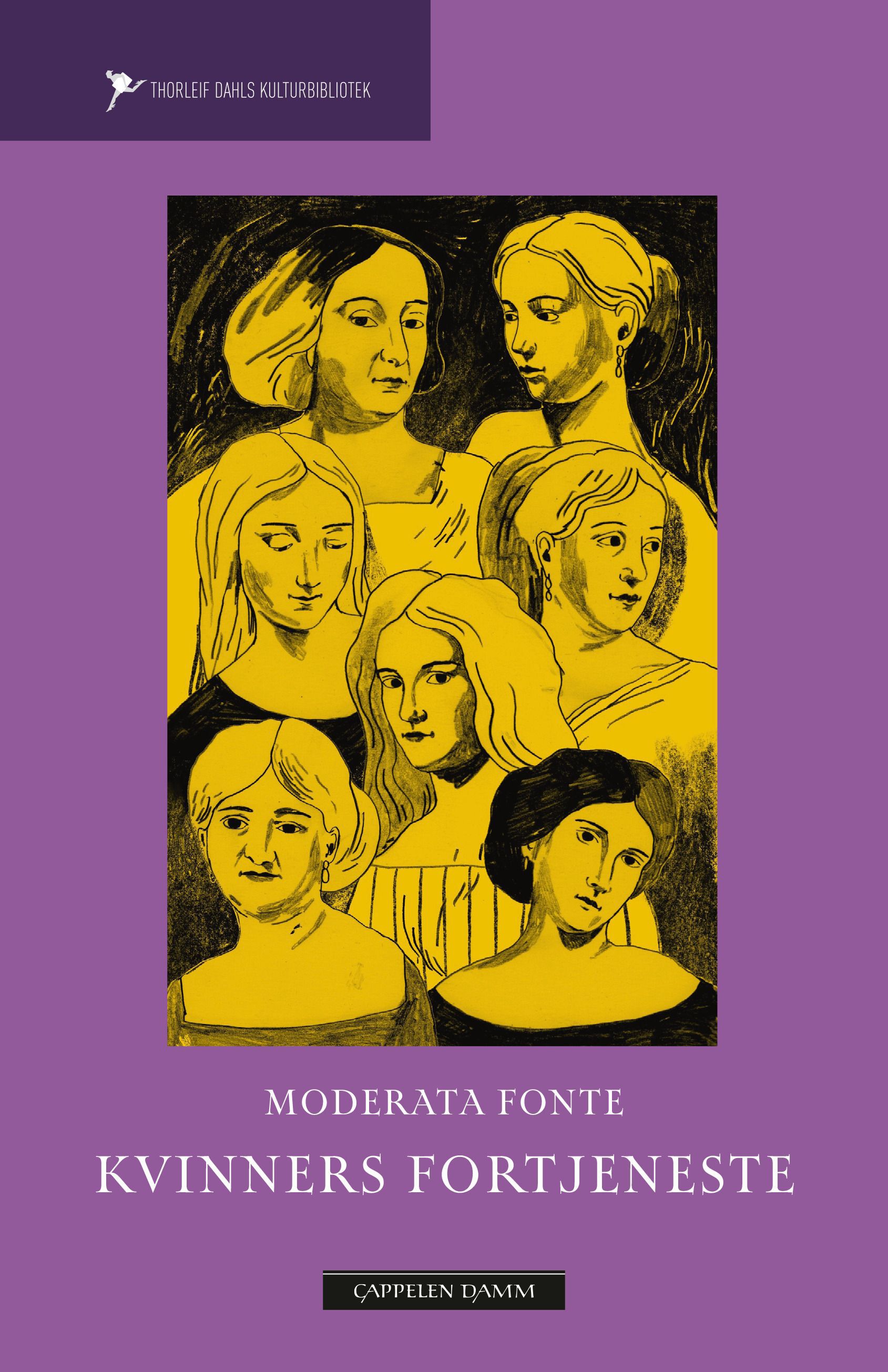
- Moderata Fonte, Kvinners fortjeneste. Hvorfor kvinner har større verdighet og er mer fullkomne enn menn. First published in Venice in 1600. Translated, with an introduction and epilogue, by Unn Falkeid. Thorleif Dahls Kulturbibliotek. Oslo: Capplen Damm, 2025.
- The Legacy of Birgitta of Sweden. Women, Politics and Reform in Renaissance Italy. Co-edited with Anna Wainwright. Leiden: Brill, 2023.
- Den hellige Birgitta. Enken som utfordret Europa (Saint Birgitta. The widow who challenged Europe). Oslo: Kagge forlag 2021.
- Sanctity and Female Authorship: Birgitta of Sweden & Catherine of Siena. Co-edited with Maria H. Oen. Routledge, 2019.
- The Avignon Papacy Contested. An Intellectual History from Dante to Catherine of Siena. Harvard University Press, 2017.
- The Cambridge Companion to Petrarch. Co-edited with Albert Russell Ascoli. Cambridge University Press, 2015).
- Rethinking Gaspara Stampa in the Canon of Renaissance Poetry. Co-edited with Aileen A. Feng. Ashgate/Routledge, 2015.
- Aiolos: tidsskrift för litteratur, teori och estetik. No. 50–51 (2015). Co-edited with Håkan Trygger.
- Dante. A Critical Reappraisal. Oslo Academic Press, 2008.
- Petrarca og det moderne selvet. En lesning av canzone 129 (Petrarch and the moderf self. A reading of canzone 129). Oslo Academic Press, 2006.
-
Falkeid, Unn
(2023).
"The Most Illustrious and Divine of All the Sibyls." Saint Birgitta in the Prophetic Visions of Tommaso Campanella and Queen Cristina of Sweden.
In Falkeid, Unn & Anna, Wainwright (Ed.),
The Legacy of Birgitta of Sweden. Women, Politics and Reform in Renaissance Italy.
De Gruyter Brill.
ISSN 9789004431782.
p. 277–308.
Full text in Research Archive
Show summary
Saint Birgitta of Sweden (d. 1373), one of the most famous visionary women of the late Middle Ages, lived in Rome for the last 23 years of her life. Much of her extensive literary work was penned there. Her Celestial Revelations circulated widely from the late 14th century to the 17th century, copied in Italian scriptoria, translated into vernacular, and printed in several Latin and Italian editions. In the same centuries, an extraordinary number of women writers across the peninsula were publishing their work. What echoes might we find of the foreign widow’s prophetic voice in their texts? This volume offers innovative investigations, written by an interdisciplinary group of experts, of the profound impact of Birgitta of Sweden in Renaissance Italy.
-
Falkeid, Unn & Wainwright, Anna
(2023).
Introduction.
In Falkeid, Unn & Anna, Wainwright (Ed.),
The Legacy of Birgitta of Sweden. Women, Politics and Reform in Renaissance Italy.
De Gruyter Brill.
ISSN 9789004431782.
p. 1–33.
Full text in Research Archive
Show summary
Saint Birgitta of Sweden (d. 1373), one of the most famous visionary women of the late Middle Ages, lived in Rome for the last 23 years of her life. Much of her extensive literary work was penned there. Her Celestial Revelations circulated widely from the late 14th century to the 17th century, copied in Italian scriptoria, translated into vernacular, and printed in several Latin and Italian editions. In the same centuries, an extraordinary number of women writers across the peninsula were publishing their work. What echoes might we find of the foreign widow’s prophetic voice in their texts? This volume offers innovative investigations, written by an interdisciplinary group of experts, of the profound impact of Birgitta of Sweden in Renaissance Italy.
-
Falkeid, Unn
(2022).
“Stupor et mirabilia!" The Ascent of an Early Modern Redeemer.
Scienza & Politica. Per una storia delle dottrine.
ISSN 1590-4946.
34(66),
p. 15–29.
doi:
10.6092/issn.1825-9618/15169.
Full text in Research Archive
Show summary
Saint Birgitta of Sweden (1303–1373), one of the most powerful visionary women from the late Middle Ages, was celebrated as a prophet and a sibyl long into seventeenth century. A common suggestion has been that Birgitta’s prophetic status was crafted by her supporters after her death. My claim, however, is that the construction of the prophet was the result of a highly conscious strategy which followed Birgitta from the very beginning of her visionary career, and to which both her supporters and she herself carefully contributed. We meet the traces of such a construction in the earliest hagiographers’ accounts, in the confessors’ ardent supports, and in the many witnesses from the canonization process. Yet, the strongest testimonies of the prophet in spe, is to be found in Birgitta’s own revelations, which is the focus of this article.
-
Falkeid, Unn
(2021).
Magistra apostolorum: The Virgin Mary in Birgitta of Sweden
and Vittoria Colonna.
In Cox, Virginia & McHugh, Shannon (Ed.),
Vittoria Colonna. Poetry, Religion, Art, Impact.
Amsterdam University Press.
ISSN 9789463723947.
p. 75–95.
Full text in Research Archive
-
-
Falkeid, Unn
(2019).
"Constructing Female Authority. Birgitta of Sweden, Catherine of Siena, and the Two Marys.".
In Oen, Maria H. & Falkeid, Unn (Ed.),
Sanctity and Female Authorship: Birgitta of Sweden & Catherine of Siena.
Routledge.
ISSN 9780367368555.
p. 54–73.
doi:
10.4324/9780429351778-4.
Full text in Research Archive
Show summary
Birgitta of Sweden (Birgitta Birgersdotter, 1302/03-1373) and her younger contemporary Catherine of Siena (Caterina Benincasa, 1347-1380) form the most powerful and influential female duo in European history. Both enjoyed saintly reputations in life, while acting as the charismatic leaders of a considerable group of followers consisting of clergy as well as mighty secular men and women. They are also among the very few women of the Trecento to leave a substantial body of written work which was widely disseminated in their original languages and in translations. Copies of Birgitta’s Liber celestis revelacionum (The Heavenly Book of Revelations) and compilations of Catherine's letters (Le lettere), prayers Le orazioni) and her theological work, Il Dialogo della divina Provvidenza (The Dialogue) found their way into monastic, royal, and humanist libraries all over Europe. After their deaths, Birgitta’s and Catherine’s respective groups of supporters sought to have them formally canonized. In both cases, however, their political and theological outspokenness, orally and in text, and their public authority represented obstacles.
In this comparative study, leading scholars from different disciplinary backgrounds offer, for the very first time, a comprehensive exploration of the lives and activities of Birgitta and Catherine in tandem. Particular attention is given to their literary works and the complex process of negotiating their sanctity and authorial roles. Above all, what the chapters reveal is the many points of connections between two of the most influential women of the Trecento, and how they were related to one another by their peers and successors.
-
Oen, Maria H. & Falkeid, Unn
(2019).
Introduction.
In Oen, Maria H. & Falkeid, Unn (Ed.),
Sanctity and Female Authorship: Birgitta of Sweden & Catherine of Siena.
Routledge.
ISSN 9780367368555.
p. 1–13.
Full text in Research Archive
Show summary
Birgitta of Sweden (Birgitta Birgersdotter, 1302/03-1373) and her younger contemporary Catherine of Siena (Caterina Benincasa, 1347-1380) form the most powerful and influential female duo in European history. Both enjoyed saintly reputations in life, while acting as the charismatic leaders of a considerable group of followers consisting of clergy as well as mighty secular men and women. They are also among the very few women of the Trecento to leave a substantial body of written work which was widely disseminated in their original languages and in translations. Copies of Birgitta’s Liber celestis revelacionum (The Heavenly Book of Revelations) and compilations of Catherine's letters (Le lettere), prayers Le orazioni) and her theological work, Il Dialogo della divina Provvidenza (The Dialogue) found their way into monastic, royal, and humanist libraries all over Europe. After their deaths, Birgitta’s and Catherine’s respective groups of supporters sought to have them formally canonized. In both cases, however, their political and theological outspokenness, orally and in text, and their public authority represented obstacles.
In this comparative study, leading scholars from different disciplinary backgrounds offer, for the very first time, a comprehensive exploration of the lives and activities of Birgitta and Catherine in tandem. Particular attention is given to their literary works and the complex process of negotiating their sanctity and authorial roles. Above all, what the chapters reveal is the many points of connections between two of the most influential women of the Trecento, and how they were related to one another by their peers and successors.
-
Falkeid, Unn
(2019).
The Political Discourse of Birgitta of Sweden.
In Oen, Maria H. (Eds.),
A Companion to Birgitta of Sweden and Her Legacy in the Later Middle Ages.
De Gruyter Brill.
ISSN 9789004338685.
p. 80–102.
doi:
10.1163/9789004399877_005.
Full text in Research Archive
Show summary
St Birgitta of Sweden (d. 1373) is one of the most celebrated female visionaries and authors of the Middle Ages and a central figure in the history of late-medieval religion. An aristocratic widow, Birgitta left her native country in 1349 and settled in Rome, where she established herself as an outspoken critic of the Avignon Papacy and an advocate of spiritual and ecclesiastical reform. Birgitta founded a new monastic order, and her major work, The Heavenly Book of Revelations, circulated widely in a variety of monastic, reformist, and intellectual milieus following her death. This volume offers an introduction to the saint and the reception of her work written by experts from various disciplines. In addition to acquainting the reader with the state of the scholarship, the study also presents fresh interpretations and new perspectives on Birgitta and the sources for her life and writings.
-
Falkeid, Unn
(2018).
Voci puerili: children in Dante's Divine Comedy.
In Aasgaard, Reidar; Horn, Cornelia B. & Cojocaru, Oana Maria (Ed.),
Childhood in History: Perceptions of Children in the Ancient and Medieval Worlds.
Routledge.
ISSN 9781472468925.
p. 273–289.
doi:
10.4324/9781315571133-17.
Full text in Research Archive
-
Falkeid, Unn
(2018).
"'Una gran cosa.' Moderata Fonte og renessansens protofeminisme".
Norsk filosofisk tidsskrift.
ISSN 0029-1943.
2-3,
p. 66–78.
doi:
10.18261/issn.1504-2901-2018-02-03-03.
Full text in Research Archive
Show summary
I den italienske renessansen får vi et kraftig oppsving av skrivende og publiserende kvinner – og med dem, et stadig større fokus på kvinners tilgang til kunnskapsinstitusjoner som universiteter, akademier, trykkerier og litterære salonger. En viktig tekst er Moderata Fontes dialog Il merito delle donne (Kvinners verd, 1600), som består av en fiktiv samtale mellom syv kvinner i Venezia. I løpet av samtalen utforsker og drøfter de en rekke sider ved kvinners liv. Det virkelig nye med Fonte er imidlertid det store samfunnsengasjementet hennes. Fontes sosiale blikk er spesifikt, og griper direkte inn i den venetianske hverdagen hun levde i. Samtidig oppfordrer hun til handling. Artikkelen er en undersøkelse av hvordan Fonte fremmer sine synspunkter og samtidig iverksetter noen retoriske strategier for å overbevise sine lesere om kvinners naturlige intellektuelle evner. Fontes spørsmål er ikke om kvinner er likeverdige menn – altså om de er like tapre, edle, smarte eller verdifulle – men hvordan menn i alle dager kan ha tilranet seg en slik makt som de har over kvinner. Hvordan besvarer hun så dette spørsmålet? Påstanden er at i Fontes forklaring ligger kimen til en ny type feminisme som kom til å bli avgjørende for senere århundres kvinnekamp i Europa.
-
Falkeid, Unn
(2017).
Kampen om fortidens stemmer: Birgitta av Sverige og senmiddelalderens politiske kanon.
In Aasgaard, Reidar; Krefting, Ellen Marie & Schaanning, Espen (Ed.),
Grep om fortiden: Perspektiver og metoder i idéhistorie.
Cappelen Damm Akademisk.
ISSN 9788202565282.
p. 101–117.
Full text in Research Archive
-
Falkeid, Unn
(2015).
De vita solitaria and De otio religioso: the perspective of the guest.
In Ascoli, Albert Russell & Falkeid, Unn (Ed.),
The Cambridge Companion to Petrarch.
Cambridge University Press.
ISSN 9781107006140.
p. 111–119.
doi:
10.1017/cco9780511795008.013.
Full text in Research Archive
Show summary
Petrarch (Francesco Petrarca, 1304–74), best known for his influential collection of Italian lyric poetry dedicated to his beloved Laura, was also a remarkable classical scholar, a deeply religious thinker and a philosopher of secular ethics. In this wide-ranging study, chapters by leading scholars view Petrarch's life through his works, from the epic Africa to the Letter to Posterity, from the Canzoniere to the vernacular epic Triumphi. Petrarch is revealed as the heir to the converging influences of classical cultural and medieval Christianity, but also to his great vernacular precursor, Dante, and his friend, collaborator and sly critic, Boccaccio. Particular attention is given to Petrach's profound influence on the Humanist movement and on the courtly cult of vernacular love poetry, while raising important questions as to the validity of the distinction between medieval and modern and what is lost in attempting to classify this elusive figure.
-
Falkeid, Unn & Ascoli, Albert Russell
(2015).
Introduction.
In Ascoli, Albert Russell & Falkeid, Unn (Ed.),
The Cambridge Companion to Petrarch.
Cambridge University Press.
ISSN 9781107006140.
p. 1–9.
Full text in Research Archive
Show summary
Petrarch (Francesco Petrarca, 1304–74), best known for his influential collection of Italian lyric poetry dedicated to his beloved Laura, was also a remarkable classical scholar, a deeply religious thinker and a philosopher of secular ethics. In this wide-ranging study, chapters by leading scholars view Petrarch's life through his works, from the epic Africa to the Letter to Posterity, from the Canzoniere to the vernacular epic Triumphi. Petrarch is revealed as the heir to the converging influences of classical cultural and medieval Christianity, but also to his great vernacular precursor, Dante, and his friend, collaborator and sly critic, Boccaccio. Particular attention is given to Petrach's profound influence on the Humanist movement and on the courtly cult of vernacular love poetry, while raising important questions as to the validity of the distinction between medieval and modern and what is lost in attempting to classify this elusive figure.
-
Falkeid, Unn
(2015).
I skyttel mellom liv og skrift. Petrarca og brevene.
Aiolos – tidskrift för litteratur, teori och estetik.
ISSN 1400-7770.
p. 5–13.
Full text in Research Archive
-
Falkeid, Unn
(2015).
"The Sublime Realism of Gaspara Stampa".
In Falkeid, Unn & Feng, Aileen A. (Ed.),
Rethinking Gaspara Stampa in the Canon of Renaissance Poetry.
Ashgate.
ISSN 9781472427069.
p. 39–54.
Full text in Research Archive
Show summary
Despite the fact that Gaspara Stampa (1523?-1554) has been recognized as one of the greatest and most creative poets and musicians of the Italian Renaissance, scholarship on her work has been surprisingly scarce and uncoordinated. In recent years, critical attention towards her work has increased, but until now there have been no anthologies dedicated solely to Stampa. Rethinking Gaspara Stampa in the Canon of Renaissance Poetry aims to set a foundation for further Stampa studies by accounting for her contributions to literature, music history, gender studies, the history of ideas, philosophy, and other areas of critical thought. This volume brings together an international group of interdisciplinary scholars who employ varied methodologies to explore multiple aspects of Stampa's work in dialogue with the most recent scholarship in the field. The chapters emphasize the many ways in which Stampa's poetry engages with multiple cultural movements of early modern Italy and Europe, including: Ficinian and Renaissance Neoplatonism, male-authored writing about women, Longinus's theory of the sublime, the formation of writing communities, the rediscovery of Aristotle's writings, and the reimagined relation between human and natural worlds. Taken as a whole, this volume presents a rich introduction to, and interdisciplinary investigation of, Gaspara Stampa's impact on Renaissance culture.
-
Falkeid, Unn & Feng, Aileen A.
(2015).
"Editors' Introduction".
In Falkeid, Unn & Feng, Aileen A. (Ed.),
Rethinking Gaspara Stampa in the Canon of Renaissance Poetry.
Ashgate.
ISSN 9781472427069.
p. 1–12.
Full text in Research Archive
Show summary
Despite the fact that Gaspara Stampa (1523?-1554) has been recognized as one of the greatest and most creative poets and musicians of the Italian Renaissance, scholarship on her work has been surprisingly scarce and uncoordinated. In recent years, critical attention towards her work has increased, but until now there have been no anthologies dedicated solely to Stampa. Rethinking Gaspara Stampa in the Canon of Renaissance Poetry aims to set a foundation for further Stampa studies by accounting for her contributions to literature, music history, gender studies, the history of ideas, philosophy, and other areas of critical thought. This volume brings together an international group of interdisciplinary scholars who employ varied methodologies to explore multiple aspects of Stampa's work in dialogue with the most recent scholarship in the field. The chapters emphasize the many ways in which Stampa's poetry engages with multiple cultural movements of early modern Italy and Europe, including: Ficinian and Renaissance Neoplatonism, male-authored writing about women, Longinus's theory of the sublime, the formation of writing communities, the rediscovery of Aristotle's writings, and the reimagined relation between human and natural worlds. Taken as a whole, this volume presents a rich introduction to, and interdisciplinary investigation of, Gaspara Stampa's impact on Renaissance culture.
-
Falkeid, Unn
(2014).
Visdom til begjær. Marsilio Ficino og renessansens kjærlighetstraktater.
Arr - Idéhistorisk tidsskrift.
ISSN 0802-7005.
p. 153–160.
Full text in Research Archive
-
Falkeid, Unn
(2014).
"Helgeninnen med diktersjel". Sigrid Undsets CAterina av Siena lest i lys av nyere forskning.
Edda. Nordisk tidsskrift for litteraturforskning.
ISSN 0013-0818.
p. 131–145.
Full text in Research Archive
-
Falkeid, Unn
(2014).
En stige godt plantet i jorden. Teologikritikk og politisk motstand i den hellige Birgittas Frågornas bok.
Norsk litteraturvitenskapelig tidsskrift.
ISSN 0809-2044.
p. 38–54.
Full text in Research Archive
-
Falkeid, Unn
(2013).
"Thorn in the Flesh": Pain and Poetry in Petrarch's Secretum.
In Cullhed, Anders; Franzén, Carin; Hallengren, Anders & Malm, Mats (Ed.),
Pangs of Love and Longing. Configurations of Desire in Premodern Literature.
Cambridge Scholars Publishing.
ISSN 9781443847636.
p. 74–89.
Full text in Research Archive
-
Falkeid, Unn
(2013).
Forsakelsesns strategier. En lesning av Carin Franzéns studie "Jag gav honom inte min kärlek. Om hövisk kärlek som kvinnelig strategi".
Norsk litteraturvitenskapelig tidsskrift.
ISSN 0809-2044.
16(1),
p. 47–53.
Full text in Research Archive
-
-
Falkeid, Unn
(2012).
Petrarch's Laura and the Critics.
MLN: Modern Language Notes.
ISSN 0026-7910.
127(1),
p. S64–S71.
Full text in Research Archive
-
-
Falkeid, Unn
(2011).
Da libido dominandi a libido servandi. Il Paradiso VI di Dante letto alla luce de la Monarchia.
In Vigh, Éva (Eds.),
Leggere Dante oggi. Interpretare, commentare, tradurre alle soglie del settecentesimo anniversario.
Aracne editrice.
ISSN 9788854839625.
p. 131–151.
Full text in Research Archive
-
Falkeid, Unn
(2011).
Zygmunt G. Baranski and Martin McLaughlin, eds., Dante the Lyric and Ethical Poet: Dante lirico e etico.
Renaissance Quarterly.
ISSN 0034-4338.
p. 157–158.
doi:
10.1086/660372.
Full text in Research Archive
-
Falkeid, Unn
(2010).
Dante og skjøgen i Babylon et politisk oppgjør i det tidligmoderne Europa.
Arr - Idéhistorisk tidsskrift.
ISSN 0802-7005.
22(1),
p. 89–102.
Full text in Research Archive
-
-
-
Falkeid, Unn
(2008).
"Ove l'aura si sente". Petrarcas elegi over tapt muntlighet.
Arr - Idéhistorisk tidsskrift.
ISSN 0802-7005.
p. 115–128.
Full text in Research Archive
-
-
Falkeid, Unn
(2008).
Style, the Muscle of the Soul. Theories on Reading and Writing in Petrarch's Texts.
Quaderni d'Italianistica.
ISSN 0226-8043.
XXIX(1),
p. 21–39.
Full text in Research Archive
View all works in NVA
-
Falkeid, Unn
(2025).
Kvinners fortjeneste: Hvorfor kvinner har større verdighet og er mer fullkomne enn menn.
ISBN 9788202840136.
336 p.
Full text in Research Archive
Show summary
Moderata Fontes Kvinners fortjeneste – med undertittelen «Hvorfor kvinner har større verdighet og er mer fullkomne enn menn» – er en filosofisk dialog, først utgitt i 1600.
Syv kvinner i forskjellige aldre og med ulik sosial status møtes i et palass i Venezia, som på denne tiden var egen republikk og en stormakt ved Middelhavet. I en kreativ og spenstig dialog som strekker seg over to dager, tilnærmer kvinnene seg det sentrale spørsmålet: Hvordan kan det ha seg at menn har tilranet seg slik makt som de har over kvinner? Svarene som Fonte gir, peker fremover mot den moderne feminismens gjennombrudd flere hundre år senere. Kvinners fortjeneste gir også dagens lesere et sjeldent innblikk i 1500-tallets politiske, økonomiske, vitenskapelige og litterære virkelighet.
-
Falkeid, Unn & Anna, Wainwright
(2023).
The Legacy of Birgitta of Sweden. Women, Politics and Reform in Renaissance Italy.
De Gruyter Brill.
ISBN 9789004431782.
362 p.
doi:
10.1163/9789004540040.
Full text in Research Archive
Show summary
Saint Birgitta of Sweden (d. 1373), one of the most famous visionary women of the late Middle Ages, lived in Rome for the last 23 years of her life. Much of her extensive literary work was penned there. Her Celestial Revelations circulated widely from the late 14th century to the 17th century, copied in Italian scriptoria, translated into vernacular, and printed in several Latin and Italian editions. In the same centuries, an extraordinary number of women writers across the peninsula were publishing their work. What echoes might we find of the foreign widow’s prophetic voice in their texts? This volume offers innovative investigations, written by an interdisciplinary group of experts, of the profound impact of Birgitta of Sweden in Renaissance Italy.
-
Falkeid, Unn
(2021).
Den hellige Birgitta. Enken som utfordret Europa.
Kagge Forlag AS.
ISBN 9788248928171.
322 p.
Full text in Research Archive
Show summary
Martin Luther mente hun var gal. August Strindberg kalte henne en «satans kjerring». Den hellige Birgitta (1303–1373) var en av de tydeligste stemmene i Europa i sin tid og satte både konger og paver på plass. Unn Falkeid skildrer en modig nordisk adelskvinne som valgte å følge et hellig kall og bryte opp fra det livet som var staket ut. Hun føder og oppdrar åtte barn, blir så enke og bestemmer seg for å dra til Roma, kirkens sentrum, for å be paven om å vende hjem fra sitt franske eksil. Stadig mottar hun visjoner som nedtegnes og som til slutt fyller åtte bøker. Birgitta etterlot seg en klosterorden og det hittil største forfatterskapet skrevet av en kvinne. «Den svenske enken» ble hun kalt. Hun ble kanonisert etter sin død, og er i dag Europas skytshelgen. Birgittas dramatiske liv er en enestående fortelling fra europeisk middelalder.
-
-
Oen, Maria H. & Falkeid, Unn
(2019).
Sanctity and Female Authorship: Birgitta of Sweden & Catherine of Siena.
Routledge.
ISBN 9780367368555.
228 p.
Full text in Research Archive
Show summary
Birgitta of Sweden (Birgitta Birgersdotter, 1302/03-1373) and her younger contemporary Catherine of Siena (Caterina Benincasa, 1347-1380) form the most powerful and influential female duo in European history. Both enjoyed saintly reputations in life, while acting as the charismatic leaders of a considerable group of followers consisting of clergy as well as mighty secular men and women. They are also among the very few women of the Trecento to leave a substantial body of written work which was widely disseminated in their original languages and in translations. Copies of Birgitta’s Liber celestis revelacionum (The Heavenly Book of Revelations) and compilations of Catherine's letters (Le lettere), prayers Le orazioni) and her theological work, Il Dialogo della divina Provvidenza (The Dialogue) found their way into monastic, royal, and humanist libraries all over Europe. After their deaths, Birgitta’s and Catherine’s respective groups of supporters sought to have them formally canonized. In both cases, however, their political and theological outspokenness, orally and in text, and their public authority represented obstacles.
In this comparative study, leading scholars from different disciplinary backgrounds offer, for the very first time, a comprehensive exploration of the lives and activities of Birgitta and Catherine in tandem. Particular attention is given to their literary works and the complex process of negotiating their sanctity and authorial roles. Above all, what the chapters reveal is the many points of connections between two of the most influential women of the Trecento, and how they were related to one another by their peers and successors.
-
Falkeid, Unn
(2017).
The Avignon Papacy Contested. An Intellectual History from Dante to Catherine of Siena.
Harvard University Press (HUP).
ISBN 9780674971844.
288 p.
Full text in Research Archive
Show summary
The Avignon papacy (1309–1377) represented the zenith of papal power in Europe. The Roman curia’s move to southern France enlarged its bureaucracy, centralized its authority, and initiated closer contact with secular institutions. The pope’s presence also attracted leading minds to Avignon, transforming a modest city into a cosmopolitan center of learning. But a crisis of legitimacy was brewing among leading thinkers of the day. The Avignon Papacy Contested considers the work of six fourteenth-century writers who waged literary war against the Catholic Church’s increasing claims of supremacy over secular rulers—a conflict that engaged contemporary critics from every corner of Europe.
Unn Falkeid uncovers the dispute’s origins in Dante’s Paradiso and Monarchia, where she identifies a sophisticated argument for the separation of church and state. In Petrarch’s writings she traces growing concern about papal authority, precipitated by the curia’s exile from Rome. Marsilius of Padua’s theory of citizen agency indicates a resistance to the pope’s encroaching power, which finds richer expression in William of Ockham’s philosophy of individual liberty. Both men were branded as heretics. The mystical writings of Birgitta of Sweden and Catherine of Siena, in Falkeid’s reading, contain cloaked confrontations over papal ethics and church governance even though these women were later canonized.
While each of the six writers responded creatively to the implications of the Avignon papacy, they shared a concern for the breakdown of secular order implied by the expansion of papal power and a willingness to speak their minds.
-
Ascoli, Albert Russell & Falkeid, Unn
(2015).
The Cambridge Companion to Petrarch.
Cambridge University Press.
ISBN 9781107006140.
266 p.
Full text in Research Archive
Show summary
Petrarch (Francesco Petrarca, 1304–74), best known for his influential collection of Italian lyric poetry dedicated to his beloved Laura, was also a remarkable classical scholar, a deeply religious thinker and a philosopher of secular ethics. In this wide-ranging study, chapters by leading scholars view Petrarch's life through his works, from the epic Africa to the Letter to Posterity, from the Canzoniere to the vernacular epic Triumphi. Petrarch is revealed as the heir to the converging influences of classical cultural and medieval Christianity, but also to his great vernacular precursor, Dante, and his friend, collaborator and sly critic, Boccaccio. Particular attention is given to Petrach's profound influence on the Humanist movement and on the courtly cult of vernacular love poetry, while raising important questions as to the validity of the distinction between medieval and modern and what is lost in attempting to classify this elusive figure.
-
Falkeid, Unn & Feng, Aileen A.
(2015).
Rethinking Gaspara Stampa in the Canon of Renaissance Poetry.
Ashgate.
ISBN 9781472427069.
222 p.
Full text in Research Archive
Show summary
Despite the fact that Gaspara Stampa (1523?-1554) has been recognized as one of the greatest and most creative poets and musicians of the Italian Renaissance, scholarship on her work has been surprisingly scarce and uncoordinated. In recent years, critical attention towards her work has increased, but until now there have been no anthologies dedicated solely to Stampa. Rethinking Gaspara Stampa in the Canon of Renaissance Poetry aims to set a foundation for further Stampa studies by accounting for her contributions to literature, music history, gender studies, the history of ideas, philosophy, and other areas of critical thought. This volume brings together an international group of interdisciplinary scholars who employ varied methodologies to explore multiple aspects of Stampa's work in dialogue with the most recent scholarship in the field. The chapters emphasize the many ways in which Stampa's poetry engages with multiple cultural movements of early modern Italy and Europe, including: Ficinian and Renaissance Neoplatonism, male-authored writing about women, Longinus's theory of the sublime, the formation of writing communities, the rediscovery of Aristotle's writings, and the reimagined relation between human and natural worlds. Taken as a whole, this volume presents a rich introduction to, and interdisciplinary investigation of, Gaspara Stampa's impact on Renaissance culture.
-
-
-
View all works in NVA
-
-
-
-
-
Falkeid, Unn
(2022).
“Non mi lasciar morire in questa carcere”. Lamentation and call to action in Renaissance civic poetry.
Full text in Research Archive
-
Falkeid, Unn
(2022).
“I will always speak the truth.” Justified anger in the household of Margherita Datini (1360–1423).
Full text in Research Archive
-
-
-
Falkeid, Unn
(2022).
“I will always speak the truth.” Justified anger in the household of Margherita Datini (1360–1423).
Full text in Research Archive
-
-
-
-
-
-
Falkeid, Unn
(2021).
’The most illustrious and divine of all the sibyls.’ Saint Birgitta in the prophetic visions of Tommaso Campanella and Queen Christina of Sweden.
Full text in Research Archive
-
-
-
-
-
-
-
Falkeid, Unn
(2019).
'A single fold under one shepherd’. Birgitta of Sweden in Tommaso Campanella’s Monarchia del Messia.
Full text in Research Archive
-
-
-
-
-
Falkeid, Unn
(2019).
“’A single fold under one shepherd.’ Birgitta of Sweden in Tommaso Campanella’s Monarchia del Messia.
Full text in Research Archive
-
-
-
-
-
-
-
-
Falkeid, Unn
(2016).
Reconsidering Birgitta of Sweden and Catherine of Siena in the Canon of European Political Thought.
Full text in Research Archive
-
-
-
-
-
-
-
-
-
-
Falkeid, Unn
(2014).
An unsuccessful ascent. Birgitta of Sweden's Liber questionum and the critique of Mathias of Linköping and Bonaventure.
Full text in Research Archive
-
-
-
-
-
-
-
-
-
-
-
-
-
-
-
-
-
-
-
-
-
-
-
-
-
Falkeid, Unn
(2010).
Da "libido dominandi" a "libido servandi".Il Paradiso VI di Dante letto alla luce de la Monarchia.
Full text in Research Archive
-
-
-
-
-
-
-
-
-
-
-
-
-
-
-
-
-
-
-
-
-
-
-
-
-
-
-
-
-
-
-
-
-
-
-
-
-
-
-
-
-
-
-
-
-
Butenschøn, Unn Falkeid
(2006).
Petrarca og det moderne selvet. En lesning av canzone 129.
Universitetet i Oslo.
Full text in Research Archive
Show summary
Den italienske dikteren Francesco Petrarca (1304-74) omtales gjerne som ”humanismens far”. Med det menes det nye synet på selvet som på den ene siden er knyttet til renessansehumanismens fremhevelse av antikkens kultur som forbilledlig, og på den andre siden ønsket om å konkurrere og overgå de klassiske mestrene. I diktene så vel som i brevene, dialogene og traktatene tematiserer Petrarca selvet og de personlige erfaringenes egenart i den forstand at tekstene fremstår som selvbiografiske. En dominerende tendens innenfor Petrarca-resepsjonen har derfor vært biografisk orientert.
Gjennom grundige analyser av Petrarcas tekster – hovedsakelig av canzone 129, men også av en rekke andre dikt fra den italienskspråklige sangboken Canzoniere og av sentrale tekster fra det latinske forfatterskapet – problematiserer og utfordrer Unn Falkeid Butenschøn de biografiske fortolkningsmodellene. Hennes påstand er at Petrarcas tekster i stor grad dreier seg om fortolkningens vilkårlighet og selvets ustadighet, slik at en teksts sanne mening ikke lar seg rekonstruere. Snarere stilles leserne selv til ansvar for den mening som kan oppspores i Petrarcas tekster ved at fortolkningene avslører hver enkelt lesers verdihierarki og erfaringshorisont.
View all works in NVA
Published
July 5, 2016 10:29 AM
- Last modified
July 5, 2026 6:21 PM



.jpg?alt=original&vrtx=view-as-webpage
)