Tidligere arrangementer - Side 2

Welcome to HEI's annual International Student Conference!
This conference unites early career researchers in both formal and informal settings, providing a platform to explore the latest developments in the field of heritage studies.

Hvordan har blikket, ansiktet og ansiktsløsheten blitt fremstilt og forstått i russisk kunst- og litteraturhistorie? Fabian Heffermehl er i år aktuell med to bøker som utforsker disse temaene fra ulike perspektiver.

Aldri var en samlende organisasjon for verdenssamfunnet mer tiltrengt, og aldri har det vært vanskeligere for FN å fylle den rollen. Hvorfor ble det slik, og hva slags veier leder videre fra den underkjente og underfinansierte posisjonen i dag?

Eirik Welo (IFIKK, UiO)
Arkeologisk fredagsseminar med Professor David Wright, en av prosjektlederne for ERC Synergy prosjektet EcoArch. Les mer om prosjektet her https://www.ecoarch-project.org/

We are pleased to host Senior Lecturer Erling Lorentzen Sogge who will speak about "Heavy metal in Lebanon: How a vilified subculture found ways to endure"

Ghoutia Soumia Attig (PhD Candidate at the University of Tlemcen, Algeria) examines the political rhetoric surrounding the introduction of English education in Algeria

Following the Annual Exphil lecture, the Department of Philosophy, Classics, History of Art and Ideas is excited to host a workshop on the themes raised in C. Thi Nguyen’s work.
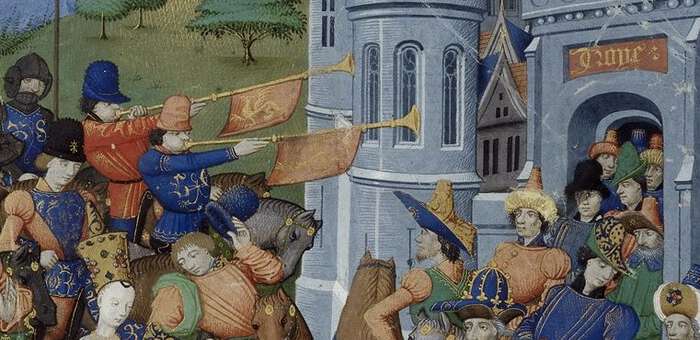
The study of meter in the 20th century has generally been marked by the foregrounding of some types of verse that proved amenable to a particular theoretical approach (e.g. English iambic pentameter in generative metrics, Russian iambic tetrameter in statistical work on verse, Greek hexameter in diachronic reconstruction), to the detriment of others.
Over the past several years the Linguistics and Poetics research group at the University of Oslo has sought to circumvent this kind of bias by exploring various manifestations and uses of poetic language in ancient (Greek) and Medieval (Latin, Germanic) cultural milieus. We have dwelt on the diversity of attested literary cultures (sometimes proliferating within a single national “tradition”) and prioritized an empiricist ethos over the goal of finessing any particular methodology.
The international symposium “Comparative metrics sub specie philologiae” aims to expand our vision of comparative metrics by interrogating and juxtaposing novel, tailor-made, and empirically-driven approaches to cross-culturally diverse uses of poetic meter.

Bureaucracy changes our values and our concepts. Philosopher C. Thi Nguyen (University of Utah) explores questions of why and how in this year’s Exphil lecture.
Byråkratiet forandrer våre verdier og våre begreper. Filosofen C. Thi Nguyen (University of Utah) utforsker hvorfor og hvordan i årets Exphil-forelesning.

How can we better understand deep disagreements? Philosopher Hugo Ribeiro Mota gives this year’s Gold Medal Lecture at the Faculty of Humanities.
Hvordan kan vi forstå dype uenigheter bedre? Filosof Hugo Ribeiro Mota holder årets gullmedaljeforelesning ved Det humanistiske fakultet.

A talk by Heidi Østbø Haugen, Professor of Human Geography at the University of Oslo, and Sinikka Wasland Gjems, research assistant at the Norwegian Institute of International Affairs.
Master Paal Fredrik Skjørten Kvarberg at the Department of Philosophy, Classics, History of Art and Ideas will defend his thesis Public Models of Welfare for the degree of philosophiae doctor (PhD).

Hva gjør smarttelefonen med læringsmiljøet, og hvordan bør vi best innrette undervisningen i en tid preget av digitale forstyrrelser?

The Faculty of Humanities organizes an information meeting about calls by the Research Council of Norway and the European Research Council.

We are pleased to host Assistant Professor Irena Kalhousová who will speak about “Israel at the Ballot Box: Parties, Politics, and the Future of Israel”

The Philosophical Seminar With John Hyman (UCL)

Gabriele Cifani (University of Rome, Tor Vergata)

This seminar explores (dis)connection practices among migrants, asylum seekers and roofless individuals
Hva kjennetegner god litteraturkritikk? Hvor langt er det mellom litteraturvitenskapen og litteraturkritikken? Sier dagens kritikk noe vesentlig om litteraturen, og vil den stå seg om 50 år?

Master Jens Gold at the Department of Archaeology, Conservation and History will defend his thesis Lippmann Interferential Colour Photography: Material Characteristics, Preservation, and Conservation Challenges for the degree of philosophiae doctor (PhD).

We are pleased to host Assoc. Prof. Jonas Dræge who will speak about "Media and the Politics of Legitimation in Post-Assad Syria"