Affiliated events - Page 4

Denaturalising the Concept of Territory in International Law

Join us for a conversation with Jeanne Féaux de la Croix from the University of Bern who is currently a visiting fellow at TIK in the Anthropogenic Soils project. We will discuss what transferable lessons on cultivating livability can we take from our own empirical evidence and theorizing, e.g. on soil remediation and air pollution activism? This talk connects the Anthropogenic Soils fund of knowledge to insights from my ethnographic, arts-based and transdisciplinary research in Central Asia. It explores the use of understanding soils in forming more-than-academic life and labour, less vulnerable to despair.

"Civilized Barbarians and Other Paradoxes of State-Centered Thinking"

We are happy to announce that this month, we will be joined by a PhD Fellow and lecturer Սերինա Թարխանիան (Serina Tarkhanian) to discuss Healing Earths - an ongoing artistic research project on the medicinal uses of the Armenian bole.

Our new PHD and Postdoc fellows will present their new project.

The common heritage of humanity and cosmopolitan preservationist duties
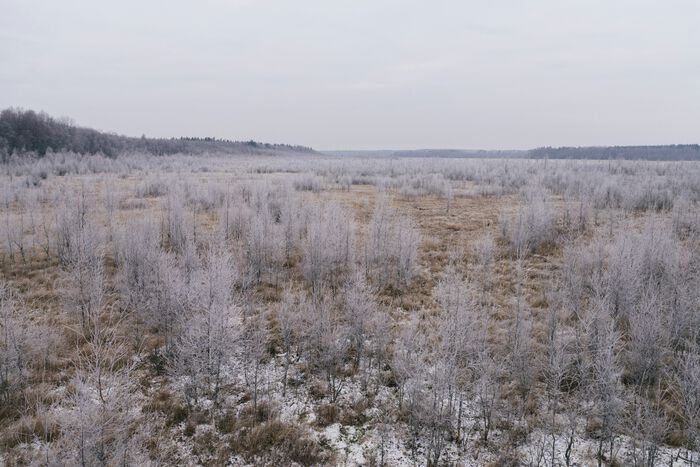
Join us for a seminar with Anastasiya Halauniova, Bruno-Latour-Fellow at Sciences Po, Paris. This event is part of the Anthropogenic Soils project.


The Climate House (Klimahuset) in Tøyen invites you to breakfast and an open lecture. On the first Thursday of February 2025, TOIL's very own leader will be discussing petro-nostalgia as both a problem and an opportunity.

The research network Oil & Society has selected “Oil workers” as the main topic of its first gathering. Margrete Hestenes will be representing TOIL with a contribution about oil culture and musical communities.
'Anthropocene nostalgia' – a useful concept?

This month we will be joined by a professor in soil biology at Lund University in Sweden Håkan Wallander to discuss the intricate world of mycorrhizal fungi.

Re-bundling territoriality? Global Environmental Governance and Transformations of Sovereign Power over Nature
Explaining Historical Variation in International Rule
Legal Tools for Democracies in the Climate Crisis: A Planetary Contract in an Eco-Nihilistic World

An Action-Guiding Functionalist Theory of Territorial Rights of States
An Action-Guiding Functionalist Theory of Territorial Rights of States
Narrating Space/Spatializing Narrative
“Water as Mediator: Plural Ontologies of Land and Pragmatism in Territorial Rights”

The topic of this session is 'emotions across time and brain'.
"The EAT-Lancet Planetary diet, and the governance of the global food system"

This interdisciplinary PhD course introduces participants to the environmental humanities of soils. Soil demands a transdisciplinary approach and, as a matter of nature-culture in the Anthropocene, has become a key interest to the humanities. As a group of scholars from diverse disciplinary backgrounds – archaeology, art history, arts, biology, design, environmental humanities, philosophy, social anthropology, STS – we will organize this place-based PhD course to find different ways of approaching human-soil relations in the Arctic.

Eco-Emotions participants are welcome to join a guided tour in the exhibition 'Trembling Earth' at the Munch Museum.

In this talk, Graeme Macdonald, Professor of English and Comparative Literary Studies (University of Warwick, UK), discusses how aesthetic signatures around the (in)visibility of oil apply to the aesthetics of contemporary energy transition and its representation in sound, screen and image. He explores these themes in two short films: Stephen Hurrel’s 2012 “Dead Reckoning” and Emily Richardson’s 2005 “Petrolia”.