Forskningsområder
- Kunnskapshistorie, bokhistorie, manuskriptkulturer
- Heksetro og trolldom, magi, folkelig religiøsitet
- Medisinhistorie, folkemedisin
- Kulturmøter
- Tradisjon, ritualer, kulturarv
Forskningsprosjekter og samarbeid
- Medlem av forskningsnettverkene CHiMere Research Network on Cultural Histories of Magic og One by Walking.
- Re-Storied Sites and Routes studerer hvordan steder og veier med en religiøs eller mytisk fortid får fornyet betydning. I dette prosjektet forsker jeg på helligkilder i Norden, med spesiell vekt på Olavskilder. Prosjektet er finansiert av EEA Financial Mechanism Baltic Research Program i Estonia.
- Witchcraft in Norway er et pågående forskningsprosjekt om de norske trolldomsprosessene på 1500- og 1600-tallet i Norge. Boken skal publiseres av Routledge.
Akademisk bakgrunn
- 2021: Professor i kulturhistorie, UiO
- 2015: Førsteamanuensis i kulturhistorie, UiO
- 2014–2015: Førsteamanuensis, Høgskolen i Telemark
- 2008–2012: Ph.D i kulturhistorie, UiO
- 2010: Visiting Fellow, Harvard University
- 2001–2007: Universitetslektor i kulturhistorie, UiO
- 2000: Hovedfag i folkloristikk, UiO
Verv
- 2025– : Redaktør, ARV Nordic Yearbook of Folklore
- 2021–2024: Utdanningsleder, IKOS, UiO
- 2020– : Redaksjon, Tidsskrift for kulturforskning
- 2018– : Medlem, Nasjonalt fagråd i kulturvitenskap
- 2017–2022: Leder, Forening for kulturforskning
- 2015–2021: Redaksjon, Fortidsminneforeningens årbok
- 2017–2020: Faggruppeleder, Seksjon for kulturhistorie og museologi, IKOS, UiO
Follow me on Academia.edu

Emneord:
Kulturhistorie,
Kulturmøter,
Folkereligiøsitet,
Bokhistorie,
Heksetro og trolldom,
Ritualer,
Medisinhistorie,
Nærlesning
Publikasjoner
-
Ohrvik, Ane
(2026).
Walking for Treasures: Scavenger Apps, Attention Management, and the Creation of Heritage Topographies.
I Borg, Camilla Brudin; Åberg, Hanna E.; Norum, Roger; Österlund-Pötzsch, Suzanne & Martin, John (Red.),
One by Walking. Transdisciplinary Mobilities and Methodologies.
Bloomsbury Academic.
ISSN 9798216351979.
s. 243–257.
doi:
https:/www.bloomsbury.com/uk/one-by-walking-9798216365624/.
Fulltekst i vitenarkiv
Vis sammendrag
This article examines how location-based scavenger apps such as Geocaching function as tools of attention management and cultural heritage production. Focusing on Norwegian St. Olav wells, the study shows how app features like GPS coordinates, hints, photos, and user-generated content guide participants through forms of “attentive walking” that shape how landscapes are experienced and understood. Drawing on theories of spatial regimes, the tourist gaze and gait, and heritagisation, the article argues that these apps do more than facilitate recreation: they actively transform overlooked sites into meaningful heritage places. The study introduces the concept of “heritage topographies” to describe how digital scavenger technologies map, curate, and produce layered cultural landscapes by connecting movement, storytelling, ritual practice, and historical memory.
-
Ohrvik, Ane
(2026).
Biography and the History of Knowledge: The Formation of Knowledge Communities through the Life and Work of Peter Christen Asbjørnsen (1812–1885).
I Pobežin, Gregor & Koren, Petra Testen (Red.),
There's History in All Men's Lives.
ZRC SAZU, Založba ZRC.
ISSN 9789610511038.
s. 82–104.
doi:
10.3986/9789610511038_5.
Fulltekst i vitenarkiv
Vis sammendrag
Peter Christen Asbjørnsen (1812–1885) was a Norwegian natural scientist, folklorist, and author who significantly influenced the cultural and scientific landscape of 19th-century Norway. During his lifetime, he developed and maintained an extensive international network that contributed to the production, dissemination, interpretation, and advancement of knowledge at a pivotal moment marked by the emergence of new sciences, academic professionalization, and the formation of nation-states. By examining Asbjørnsen’s life and work, this article positions him as a distinct knowledge actor within 19th-century Europe.
-
Ohrvik, Ane
(2025).
Historiens kunnskap og kunnskap i historien. En undersøkelse av svartebøker i norske trolldomsprosesser.
Tidsskrift for kulturforskning.
ISSN 1502-7473.
24(2),
s. 103–119.
doi:
https:/ojs.novus.no/index.php/TFK/article/view/2490.
Fulltekst i vitenarkiv
Vis sammendrag
The article examines five Norwegian witchcraft trials conducted between 1595 and 1639 in which svartebøker (magic books) – referred to by the court, among other terms, as ‘books of witchcraft’ – appear as confiscated items of evidence. The point of departure is how these books were understood by the court, and how the accused explained their contents. Drawing on Arne Bugge Amundsen’s close-reading strategy as outlined in the article “Historiens tale og tale i historien”, the article demonstrates how ‘questions as method’ may serve as a productive approach to understanding historical sources. Through this methodological discussion, the article also seeks to show how the courtroom functioned as an arena in which different conceptualisations of knowledge were negotiated among the actors involved. When the confiscated books were defined and described in court, the knowledge and epistemological assumptions of the accused were subjected to pressure: for the court, the books represented witchcraft, whereas for the accused, they contained remedies intended to heal the sick.
-
Esborg, Line & Ohrvik, Ane
(2025).
Scientific Societies and the Formation of Knowledge in the Nineteenth Century: The Case of Peter Christen Asbjørnsen and his Honorable Memberships.
I Lummer, Felix; Ásdísardóttir, Ingunn; Þorsteinsdóttir, Rósa; Mikaelsdóttir, Katrin Lisa van der Linde & Magnúsdóttir, Júlíana Þóra (Red.),
Good Thoughts on Folklore and Mythology. Festschrift in Honour of Terry Gunnell.
Trivent Publishing.
ISSN 9786156696786.
s. 29–46.
doi:
https:/trivent-publishing.eu/home/212-399-festschrift-terry-gunnell-vol-1.html#%2F27-cover-paperback.
Fulltekst i vitenarkiv
Vis sammendrag
The article investigates how nineteenth-century scientific societies shaped the production and circulation of knowledge in Europe, focusing on Peter Christen Asbjørnsen as a case study. It situates him within the national romantic movement and the emergence of folklore as a scientific discipline, while drawing on theories that view knowledge as socially anchored and dependent on networks and institutions. Using diplomas, grant letters, and correspondence as empirical material, the authors demonstrate how Asbjørnsen’s scientific activities extended well beyond folklore into marine zoology, forestry, and natural history, gaining him honorary memberships in more than fourteen scientific societies across Europe despite lacking a permanent academic position. These societies worked as institutions of knowledge that legitimized research, facilitated correspondence, and enabled cross-disciplinary collaboration among both scholars and skilled amateurs. The study concludes that Asbjørnsen’s career exemplifies how interdisciplinary and boundary-crossing knowledge practices were central to nineteenth-century science—and remain relevant as models for contemporary approaches to knowledge production.
-
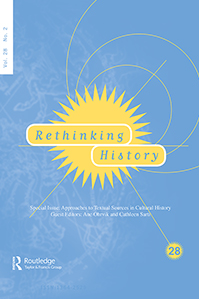
Ohrvik, Ane & Sarti, Cathleen
(2024).
Approaches to textual sources in cultural history.
Rethinking history.
ISSN 1364-2529.
28(2),
s. 181–193.
doi:
10.1080/13642529.2024.2370137.
Fulltekst i vitenarkiv
Vis sammendrag
How do we approach textual sources within cultural history? Do we ‘think’ about sources and ‘work’ with them in similar ways? Is it possible to identify a specific methodology among cultural historians? Cultural history is both a subfield and a discipline in its own right. In this domain, scholars often equate methodology with the application of theories to a text. However, it is crucial to explore the gap between reading a textual source and applying theories to understand and interpret it. This need to address methodology in a didactic manner motivates this special issue. Rather than taking our interpretive methods for granted, the authors in this special issue advocate for a self-reflective consciousness, explaining what we do and why. Through investigations and discussions on how we define and categorize textual sources within cultural history, the reading strategies we apply when approaching texts, and the interpretive strategies we may employ, the articles in this issue illustrate the relationship between application and result: how our methodology impacts our findings.
-
Ohrvik, Ane
(2024).
What is close reading? An exploration of a methodology.
Rethinking history.
ISSN 1364-2529.
28(2),
s. 238–260.
doi:
10.1080/13642529.2024.2345001.
Fulltekst i vitenarkiv
Vis sammendrag
What is close reading and what are the steps we take in close reading as a methodological approach? This article explores reading strategies and advocates for a more conscious close reading. Starting by tracing the hermeneutic heritage of close reading, and examining its development from the New Criticism movement onwards, it then describes the fundamental physical and cognitive aspects of reading as a distinct form of analytic attentiveness. Three methodological steps are delineated, discussed, and exemplified through the author’s close reading practices. By employing a paratextual lens to the close reading of manuscripts from the Early Modern period, the article demonstrates how theoretically informed readings, such as the paratextual perspective, enhance the reading process and deepen our understanding of historical conditions.
-
Lykke, Karen Victoria & Ohrvik, Ane
(2023).
The Foliate Mask in Vernacular Material Culture from Medieval to Modern Norway.
Journal for the Study of Religion, Nature and Culture (JSRNC).
ISSN 1749-4907.
17(2),
s. 297–316.
doi:
10.1558/jsrnc.24300.
Fulltekst i vitenarkiv
Vis sammendrag
In this article, we explore the contexts and appearances of what we argue is a Norwegian version of the Green Man – the Glibb – in vernacular settings. We also discuss the figure’s possible meanings in Norwegian secular culture. Most of the objects are part of the digital artifact collection called Digitalt Museum (Digital Museum), which is a common database for Norwegian and Swedish museums and collections. Our collection and analysis of this material provides an initial step toward documenting the figure’s appearances and uses beyond the ecclesial material culture; however, it does not represent an exhaustive list of sources. We investigate the appearance of this particular ‘Green Man’ figure, discussing its material form and iconographical features and analysing its placement and occurrence. We argue that the Glibb’s ambiguous and flexible imagery is also a flexible symbol. Over the centuries, such symbols can enter into new constellations and interpretations of meaning with is new generation that continues to use their material forms.
-
Ohrvik, Ane
(2022).
Mapping the Knowledge Network of the Norwegian Folklore Collector Peter Christen Asbjørnsen in the Nineteenth Century.
I Gunnell, Terry (Red.),
Grimm Ripples: The Legacy of the Grimms' Deutsche Sagen in Northern Europe.
De Gruyter Brill.
ISSN 9789004511606.
s. 147–184.
Fulltekst i vitenarkiv
Vis sammendrag
This study is based on a collection of letters belonging to Peter Christen Asbjørnsen (1812-1885), a Norwegian folklore collector and scientist which are stored in the Norwegian Folklore Archive. Taking this collection of over 1,600 letters that Asbjørnsen received as a starting point, this study explores the extensive and diverse international knowledge network to which Asbjørnsen belonged. Drawing inspiration from studies on the history of knowledge and perspectives derived from "The Republic of Letters," it examines Asbjørnsen's communication partners, the exchange of thoughts and ideas within the network, the norms and rules that governed the network, and the specific topics and fields of knowledge that interested its members. It shows that while this 19th-century network shares many characteristics with the 18th-century "republic," it also develops and nurtures new interests and themes unique to its time.
-
Ulriksen, Emilie Steinbakk; Butt, Hussain Shakeel; Ohrvik, Ane; Blakeney, Rebecca Angelica; Kool, Anneleen & Wangensteen, Helle
[Vis alle 8 forfattere av denne artikkelen]
(2022).
The discovery of novel immunomodulatory medicinal plants by combination of historical text reviews and immunological screening assays.
Journal of Ethnopharmacology.
ISSN 0378-8741.
296.
doi:
10.1016/j.jep.2022.115402.
Fulltekst i vitenarkiv
Vis sammendrag
This study investigates the utilization of medicinal plants in Scandinavian folk medicine for treating diseases believed to involve the immune system. The methodology involves screening water extracts from medicinal plants that have been previously overlooked, aiming to identify potential new reservoirs of immunomodulatory compounds.
-
Ohrvik, Ane
(2021).
'In the Name of the 7 fatherless devils...': Pain, Fear, Anger, and Revenge in Magical Practice.
I Glauser, Jürg & Hermann, Pernille (Red.),
Myth, Magic, and Memory in Early Scandinavian Narrative Culture.
Brepols.
s. 185–200.
doi:
10.1484/M.AS-EB.5.120529.
Fulltekst i vitenarkiv
Vis sammendrag
Is it possible to comprehend the emotions associated with various forms of magical practices in Norway during the 17th and 18th centuries? This fundamental question is explored in this article, with examples drawn from magical recipes found in selected Norwegian Black Books (svartebøker) or magical books. Drawing inspiration from recent perspectives on emotion and affect and theories on emotional communities and emotional regimes, this study argues that specific emotions are connected to particular magical practices. The more severe the threat of witchcraft, illness, or theft, the more potent magical agents were employed in the magical practices aimed at preventing misfortune.
-
Ohrvik, Ane
(2021).
Hemmelig kunnskap: kryptering i norske svartebøker.
Nota Bene.
ISSN 1891-4829.
16,
s. 80–108.
Fulltekst i vitenarkiv
Vis sammendrag
Artikkelen drøfter noen av faktorene som lå til grunn for begrensning av innsyn eller hemmelighold av informasjon og kunnskap i det tidligmoderne Norge og Europa. Som utgangspunkt skiller studien mellom hemmelig kunnskap som idé og praksis i den tidligmoderne perioden og viser konkrete uttrykk for dette. Inspirert av Koen Vermeirs beskrivelser av hemmelighold, analyseres eksempler fra norske svartebøker som representerer både hemmelig kunnskap som idé og praksis. Artikkelen undersøker krypteringsteknikker som ble brukt for å skjule tekstlig innhold. Både sifrering, ukonvensjonell alfabetisering, lønnskrift og runer samt "caracterer" blir identifisert og diskutert. Studien viser at hemmelighold av informasjon og kunnskap i lys av de norske svartebøkene var både påvirket av lovmessighet og individuelle trekk.
-
Ohrvik, Ane
(2021).
When Ritual Texts Become Legendary. Practice and Fiction in Nordic Folklore.
I Otto, Bernd-Christian & Johannsen, Dirk (Red.),
Fictional Practice: Magic, Narration, and the Power of Imagination.
De Gruyter Brill.
ISSN 9789004466005.
s. 110–132.
Fulltekst i vitenarkiv
Vis sammendrag
The article explores the relationship between the fictional reality of legends about magical books (Black Books) and the historical magical manuscripts in Norway during the long eighteenth century. Drawing on a rich collection of Norwegian legends and magical manuscripts from that period, the study suggests that the connection between magical practices and the narratives describing, interpreting, and reporting such practices was characterized by reciprocity in various ways. The physical Black Books incorporated fictional elements, while the fictional narratives incorporated historical elements, creating an ongoing cycle of mutual influences, adoptions, and responses. As a result, magical practices and narratives helped bridge the "gap" between the real and the unreal, the factual and the fictional, the diverse and the stereotypical. Additionally, the reciprocity between the written and the oral tradition appears to rely on a certain interdependence, with both genres relying on each other to maintain their stability.
-
Ohrvik, Ane
(2020).
Den moderne skattejakten: app-teknologi som facilitator for kulturarvliggjøring ved St. Olavskilder i Norge.
Laboratorium för folk och kultur. En kulturvetenskaplig tidskrift.
s. 1–13.
Fulltekst i vitenarkiv
-
Johannsen, Dirk & Ohrvik, Ane
(2020).
How to Be a Pilgrim: Guidebooks on the Norwegian St. Olav Ways and the Heritagization of Religion.
Numen.
ISSN 0029-5973.
67(5/6),
s. 508–536.
doi:
10.1163/15685276-12341600.
Fulltekst i vitenarkiv
Vis sammendrag
The Norwegian St. Olav Ways are currently the largest Northern European project re-institutionalizing pilgrimage as cultural heritage, providing a new framework for vernacular religious practices to a wide audience. In this article we approach the current pilgrimage revival in Northern Europe as part of a trend toward a heritagization of religion that allows new religious self-understandings to emerge. We analyze pilgrim guidebooks to the St. Olav Ways with regard to their narrative scripts, detailing how they can create expectations, inform the pilgrims’ conduct, and direct their attention toward a history that translates into a heritage. Based on a corpus of published pilgrim journals and diaries, we argue that the guidebooks instruct a process of interpretive drift, which influence the pilgrims toward embracing and embodying a new role within the religious field: The guidebooks invite the pilgrims to take on the role of heirs to a medieval European tradition.
-
Bowman, Marion; Johannsen, Dirk & Ohrvik, Ane
(2020).
Reframing Pilgrimage in Northern Europe: Introduction to the Special Issue.
Numen.
ISSN 0029-5973.
67(5/6),
s. 439–452.
doi:
10.1163/15685276-12341597.
Fulltekst i vitenarkiv
Vis sammendrag
Largely inspired by the success of the Camino of Santiago de Compostela, pilgrimage is currently being rediscovered and re-presented even in areas where it was long discredited and discontinued for both theological and political reasons. This special issue of Numen is devoted to studies that show how pilgrimage is currently being reframed in various parts of Northern Europe where the physical and institutional infrastructure as well as the vernacular traditions of pilgrimage were interrupted, fragmented, or had disappeared altogether until recently. Today, diverse histories of disruption influence and inform the presentation, representation, and re-presentation of pilgrimage in these countries. Tracing an arc from Ireland via Scotland, Norway, Sweden, and Finland to Estonia, the contributors to this special issue study how diverse groups of pilgrims and stakeholders operationalize history and heritage in relation to pilgrimage. Travelers with varied backgrounds and motivations, local and regional administrations and associations, minority groups and spiritual movements, the churches, and national initiatives create traditions and address contemporary concerns, adapt imported practices to local material culture, negotiate physical and metaphorical borders, and translate the past into heritage.
-
Ohrvik, Ane
(2019).
Understanding Medical Knowledge and Practice: Strategies for the Reading of Early Modern Norwegian Manuscripts.
I Pócs, Éva (Red.),
The Magical and Sacred Medical World.
Cambridge Scholars Publishing.
ISSN 9781527522527.
s. 176–191.
Fulltekst i vitenarkiv
-
Ohrvik, Ane
(2016).
Negotiating Medical Knowledges: A Bakhtinian Reading of a Norwegian Medical Manuscript from 1794.
Arv. Nordic Yearbook of Folklore.
ISSN 0066-8176.
72,
s. 111–127.
Fulltekst i vitenarkiv
-
Ohrvik, Ane
(2015).
Forskning som terapi.
I Þorsteinsdóttir, Rósa; Guðmundsdóttir, Aðalheiður & Wawn, Andrew (Red.),
Gamanleikir Terentíusar settir upp fyrir Terry Gunnell sextugan 7. júlí 2015.
Menningar- og minningarsjóður Mette Magnussen.
ISSN 9789004168114.
s. 15–16.
Fulltekst i vitenarkiv
-
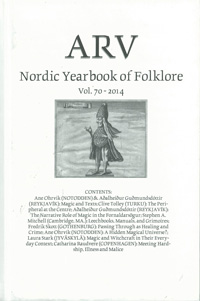
Ohrvik, Ane & Guðmundsdóttir, Aðalheiður
(2015).
Magic and Texts: An Introduction.
Arv. Nordic Yearbook of Folklore.
ISSN 0066-8176.
70,
s. 7–14.
Fulltekst i vitenarkiv
-
Ohrvik, Ane
(2015).
A Hidden Magical Universe? Exploring the Secrets of
Secrecy in Early Modern Manuscripts.
Arv. Nordic Yearbook of Folklore.
ISSN 0066-8176.
70,
s. 101–124.
Fulltekst i vitenarkiv
-
Ohrvik, Ane
(2014).
Et forsøk på portrett av en svarteboksamler i Norsk Folkeminnesamling.
I Esborg, Line & Johannsen, Dirk (Red.),
"En vild endevending av al virkelighet" - Norsk Folkeminnesamling i hundre år.
Novus Forlag.
ISSN 9788270997725.
s. 207–218.
Fulltekst i vitenarkiv
-
-
Ohrvik, Ane
(2012).
“… For All Honest Christian and Science-Loving Readers”. Religious Encounters in Early Modern Norwegian Black Books.
Arv. Nordic Yearbook of Folklore.
ISSN 0066-8176.
68,
s. 7–26.
Fulltekst i vitenarkiv
-
Ohrvik, Ane
(2011).
Autorisering i norske svartebøker. En studie av forfatterskap i Cÿperianus Konstbog.
I Esborg, Line; Kverndokk, Kyrre & Sem, Leiv (Red.),
Or gamalt - nye perspektiver på folkeminner.
Norsk Folkeminnelag.
ISSN 9788203351853.
s. 119–141.
Fulltekst i vitenarkiv
-
Ohrvik, Ane
(2010).
Egészségben, betegségben: orvosi tudás és gyakorlat a 18-19. századi Norvégiában.
I Pócs, Éva (Red.),
Mágikus és szakrális medicina. Vallásetnológiai fogalmak tudományközi megközelítésben.
Balassi Kiadó.
ISSN 9789635068340.
s. 515–523.
Fulltekst i vitenarkiv
-
Ohrvik, Ane
(2010).
"Sjælens Læger" og "de Syge selv": Sykdomsbehandling i norske svartebøker mellom 1600-1800 med vekt på religiøs tro og praksis.
I Amundsen, Arne Bugge & Laugerud, Henning (Red.),
Religiøs tro og praksis i den dansk-norske helstat fra reformasjonen til opplysningstid ca. 1500-1814.
Unipub forlag.
ISSN 9788299833905.
s. 169–187.
Fulltekst i vitenarkiv
-
Ohrvik, Ane
(2007).
"May the Star Come in?": The Process of Tradition in Grimstad, Norway.
I Gunnell, Terry (Red.),
Masks and Mumming in the Nordic Area.
Kungl. Gustav Adolfs Akademien för svensk folkkultur.
ISSN 9789185352708.
s. 583–602.
Fulltekst i vitenarkiv
-
-
Ohrvik, Ane
(2006).
Hallowiiiin! Ritualisering som entreprenørskap.
I Ohrvik, Ane; Amundsen, Arne Bugge & Hodne, Bjarne (Red.),
Ritualer. Kulturhistoriske studier.
Universitetsforlaget.
ISSN 9788215008585.
s. 139–159.
Fulltekst i vitenarkiv
Vis sammendrag
Denne boken reiser grunnleggende spørsmål: Hvordan vet vi at noe er et ritual? Når blir ritualer ritualer? Hvordan forandrer ritualer seg over tid? Når og hvorfor er ritualer viktige og meningsfulle? Hvem deltar i ritualer? Hvordan "virker" ritualer? Boken diskuterer tradisjonelle ritualer som bryllup, fødselsdager og påskefeiring. Den analyserer også fenomener vi kanskje ikke er så vant til å betegne som ritualer: halloween, reiser og holocaust-markeringer. I tillegg presenteres ulike teoretiske perspektiver på ritualer - fra 1500-tallet og frem til i dag.
-
Ohrvik, Ane
(2003).
Conference Report. Traditional Masks and Mumming in Northern Europe.
Arv. Nordic Yearbook of Folklore.
ISSN 0066-8176.
s. 221–227.
Fulltekst i vitenarkiv
-
Ohrvik, Ane
(2001).
Halloween in Norway.
Zeitschrift für Volkskunde.
ISSN 0044-3700.
II,
s. 233–240.
Fulltekst i vitenarkiv
Se alle arbeider i NVA
-
-
-
Ohrvik, Ane; Amundsen, Arne Bugge & Hodne, Bjarne
(2006).
Ritualer. Kulturhistoriske studier.
Universitetsforlaget.
ISBN 9788215008585.
242 s.
Fulltekst i vitenarkiv
Vis sammendrag
Denne boken reiser grunnleggende spørsmål: Hvordan vet vi at noe er et ritual? Når blir ritualer ritualer? Hvordan forandrer ritualer seg over tid? Når og hvorfor er ritualer viktige og meningsfulle? Hvem deltar i ritualer? Hvordan "virker" ritualer? Boken diskuterer tradisjonelle ritualer som bryllup, fødselsdager og påskefeiring. Den analyserer også fenomener vi kanskje ikke er så vant til å betegne som ritualer: halloween, reiser og holocaust-markeringer. I tillegg presenteres ulike teoretiske perspektiver på ritualer - fra 1500-tallet og frem til i dag.
-
-
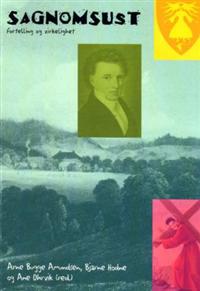
Ohrvik, Ane; Hodne, Bjarne & Amundsen, Arne Bugge
(2002).
Sagnomsust. Fortelling og virkelighet.
Novus Forlag.
ISBN 9788270993550.
206 s.
Fulltekst i vitenarkiv
Vis sammendrag
Sagnomsust viser hvordan historiske personer, steder og hendelser har vært og er gjenstand for et mangfold av fortellinger. Mangfoldet av fortellinger rommer også et mangfold av meninger: konflikt, fellesskap, identitet og verdier. Men rommer også fortellingene virkelighet? Sagnomsust presenterer nye innfallsvinkler til emnet sagn og fortelling.
Se alle arbeider i NVA
-
-
Ohrvik, Ane
(2026).
Preternatural Nature: Familiars and Metamorphoses in Seventeenth-Century Norwegian Witch Trials.
Fulltekst i vitenarkiv
Vis sammendrag
In early modern Europe, the relationships between the natural, preternatural, and supernatural were the subject of frequent intellectual debates and changing notions. Since the term ‘preternatural’ came to refer to demonic activity and to that resulting from magical practices, the term became central to understanding the realities and boundaries of witchcraft. Preternatural phenomena were the results of occult powers which were used in secret. Yet, as Lorraine Daston observes, while the preternatural was seen as manipulating natural causes, it was limited to working marvels but never miracles.
The witch trials during this period were arenas where these human-nature entanglements were displayed in narratives, discussed, and eventually judged upon among the persons involved. In the trials, human-nature related questions concerned bodily transformations (metamorphoses), the witch-animal relationship (familiars), the manipulation of natural forces (to cause bad weather, crop failures, or plagues), and the situating of witchcraft practices in wild nature (the sabbath) to name but a few. While research has widely considered witches’ characteristic abilities to influence their surroundings, little attention has been given to the concept of ‘nature’ and the character of the natural world. This paper will investigate a selection of Norwegian witch trials from the seventeenth century with particular attention to narrations concerning familiars and metamorphoses. How are these spirits conceptualised in the courtrooms?
-
Ohrvik, Ane
(2026).
Trolldom og heksebrenning - slik skapte historien farlige kvinner og vise menn.
Fulltekst i vitenarkiv
Vis sammendrag
75% av alle som ble dømt for trolldom var kvinner. Men betyr dette at hekseprosessene på 1600-tallet var en kvinneforfølgelse? Foredraget diskuterer sammenhengen mellom magi, trolldom og kjønn, og hvordan historien skapte farlige kvinner og vise menn.
-
-
-
Ohrvik, Ane
(2025).
Nisser! Fra helgen til sinnatagg. Et blikk på julenissens kulturhistorie.
Fulltekst i vitenarkiv
-
-
Ohrvik, Ane
(2025).
Conceptualising the Nordic through Nineteenth-Century Women: Examining Peter Christen Asbjørnsen's (1812-1885) Network of Female Cultural Actors.
Fulltekst i vitenarkiv
Vis sammendrag
When discussing those who contributed to conceptualising the Nordic region as a distinct entity in the nineteenth century, most studied and cited actors are men. While there are numerous explanations for this gender imbalance, it has resulted in a significantly understudied field: women as cultural agents in the nineteenth century.
This paper examines a group of largely unknown women who shared a keen interest in and sought to contribute to the visibility of Norwegian and Nordic culture and the development of a modern Nordic society. Their common link was their correspondence with Norwegian folklore collector Peter Christen Asbjørnsen (1812-1885). From their letters to Asbjørnsen which are now part of the Norwegian Folklore Archive, we gain insight into their ideas and concrete initiatives, as well as their contributions to the conceptualisation of Nordic identity.
-
Ohrvik, Ane
(2025).
Boundaries of Witchcraft: Conceptualisation of the Human-Nature Relationship in Early Modern Norwegian Witchcraft Trials.
Fulltekst i vitenarkiv
Vis sammendrag
The foundations of most European witchcraft accusations in the early modern period rest on notions concerning human-nature entanglements. This relationship between human and nature was constantly explored and debated among intellectuals who sought to define the boundaries of witchcraft, and numerous witchcraft treaties were printed and distributed across Europe. Central human-nature related questions concerned bodily transformations (metamorphoses), the witch-animal relationship (familiars), the manipulations of natural forces (to cause bad weather, crop failures or plagues), and the situating of witchcraft practices in wild nature. The question of knowledge was also crucial: how did witches acquire their understanding of nature’s hidden properties? The answers proposed often revealed more about early modern anxieties regarding human-nature boundaries than about the accused witches themselves.
While intellectuals debated the principles of the human/ nature entanglements in witchcraft, it was in the courtrooms of the witchcraft trials that these principles were operationalised in various ways. This paper will examine Norwegian witch trial records from the seventeenth century to explore how human-nature entanglements were expressed in the proceedings. Are the concepts of human versus nature expressed explicitly in the trial records? Is it possible to trace a negotiation of the boundaries between human/ nature among the people involved? These and related questions will be discussed in this presentation.
-
Ohrvik, Ane
(2024).
The Magical Body in Early Modern Magical Practices.
Fulltekst i vitenarkiv
Vis sammendrag
Magical practices often demand a specific performative interplay among various elements, including the senses, bodily movements, the utilization of objects and speech, geographical
considerations, and temporal factors, all arranged to attain a successful outcome. Particularly, the magical body is frequently associated with complex and challenging spatial and temporal settings, at least relative to the material world. In this paper, I will discuss the relationship between space, temporality, and the magical body in magical practices. How do magical practices use space and temporality to realize their objectives? To what extent is the magic itself conditioned by these elements. As primary sources, I will draw upon Norwegian magical manuscripts, commonly referred to as ‘Black Books’, originating from the early modern period. These manuscripts are replete with magical formulas and detailed instructions for bodily movements and actions.
-
-
Ohrvik, Ane
(2024).
Svarteboken: om de magiske manuskriptene som gjerne ville være bøker.
Fulltekst i vitenarkiv
-
Ohrvik, Ane
(2024).
Bybranner, trollfolk og syndebukker. Et glimt inn i trolldomsforfølgelsenes historie.
Fulltekst i vitenarkiv
-
Ohrvik, Ane; Foldvik, Therese & Andersen, Mette Moesgaard
(2024).
Svartebøkene forteller om helbredelse og å påkalle djevelen. – Skulle ikke vises frem.
[Journal].
forskning.no.
Fulltekst i vitenarkiv
-
-
Ohrvik, Ane
(2024).
Okkultisme og heksebrenning - slik skapte historien farlige kvinner.
Fulltekst i vitenarkiv
-
Ohrvik, Ane
(2024).
Historiens «farlige» kvinner er brennaktuelle.
[Journal].
Samtiden.
Fulltekst i vitenarkiv
Vis sammendrag
Professor Ane Ohrvik står foran et fullsatt bibliotek og forteller om hekseforfølgelsene i Norge og Europa. Samme dag fylles Emanuel Vigeland Mausoleum av folk som vil høre et debutalbum med heksen som gjennomgangsfigur.
-
Ohrvik, Ane
(2023).
Digital Walks as Attention and Experience Management.
Fulltekst i vitenarkiv
Vis sammendrag
Digital environments such as locative gaming apps creates different spatial regimes that add to, enhance or may contest other physical ones. This presentation will explore how digital walks, in this context denoting physical walking supported and instructed by way of digital Scavenger apps, play out and what effects such instructions may have on why, how and where you walk.
Digital walks are linked to heritage sites appearing as possible targets or posts. This is the case in Norway as elsewhere in the world and may potentially have an important role and impact on heritagisation processes. By directing and managing the user’s attention and experience of space and place the apps facilitate and may contribute to new sets of heritage topographies, lingering between the physical and the digital, the imagined and real, the tangible and intangible. In this presentation I will explore these perspectives by ways of a few examples.
-
Ohrvik, Ane
(2023).
Aasta M.B. Bjørkøy; Ruth Hemstad; Aina Nøding; Anne Birgitte Rønning (red.), 2019. Litterære verdensborgere. Transnasjonale perspektiver på norsk bokhistorie 1519-1850. Bokanmeldelse.
Tidsskrift for kulturforskning.
ISSN 1502-7473.
22(1),
s. 108–111.
Fulltekst i vitenarkiv
-
Ohrvik, Ane; Inngjerdingen, Marit; Inngjerdingen, Kari Tvete & Kool, Anneleen
(2023).
Svartebøker og gammel folketro inspirerer moderne medisin.
[Journal].
Apollon : Forskningsmagasin for Universitetet i Oslo.
Fulltekst i vitenarkiv
-
-
-
Ohrvik, Ane; Inngjerdingen, Kari Tvete; Inngjerdingen, Marit & Kool, Anneleen
(2023).
Middelaldermedisinen er tilbake.
[Radio].
NRK P2.
Fulltekst i vitenarkiv
Vis sammendrag
I jakten på nye behandlingsmetoder går forskerne til legebøker fra middelalderen, og henter gamle medisinplanter inn i laboratoriet. Kan disse brukes til å utvikle nye medisiner?
-
Ohrvik, Ane
(2023).
Utsynsmeldingen – Kunnskapsdepartementets stortingsmelding om fremtidens kompetansebehov. Prodekan Gunn Enli i samtale med Bjørn Stensaker, viserektor ved UiO og Ane Ohrvik, undervisningsleder ved Institutt for kulturstudier og orientalske språk, HF, UiO.
Fulltekst i vitenarkiv
-
Ohrvik, Ane
(2023).
Digital walks: Locative gaming apps and the creation of heritage topographies.
Fulltekst i vitenarkiv
Vis sammendrag
Digital environments such as locative gaming apps creates different spatial regimes that add to, enhance or may contest other physical ones. This paper will explore how digital walks, in this context denoting physical walking supported and instructed by way of digital Scavenger apps, play out and what effects such instructions may have on why, how and where you walk.
Digital walks are in increasing numbers being linked to heritage sites appearing as possible targets or posts. This is the case in Norway as elsewhere in the world and may potentially have an important role and impact on heritagisation processes. By directing and managing the user’s attention and experience of space and place the apps facilitate and may contribute to new sets of heritage topographies, lingering between the physical and the digital, the imagined and real, the tangible and intangible. This paper explores these perspectives by way of a few examples.
-
Ohrvik, Ane
(2023).
A Republic of Letters? Exploring a 19th-Century Knowledge Network through the life of the Norwegian Scientist Peter Christen Asbjørnsen (1812-1885).
Fulltekst i vitenarkiv
-
Ohrvik, Ane
(2022).
Hunting healthy living: Scavenger apps, attention management and the (unexpected) creation of heritage topographies.
Fulltekst i vitenarkiv
-
Ohrvik, Ane
(2022).
Mapping a Cultural Network: Exploring the letter collection of Peter Christen Asbjørnsen (1812-1885).
Fulltekst i vitenarkiv
Vis sammendrag
This study is based on a collection of letters belonging to Peter Christen Asbjørnsen (1812-1885), a Norwegian folklore collector and scientist which are stored in the Norwegian Folklore Archive. Taking this collection of over 1,600 letters that Asbjørnsen received as a starting point, this study explores the extensive and diverse international knowledge network to which Asbjørnsen belonged. Drawing inspiration from studies on the history of knowledge and perspectives derived from "The Republic of Letters," it examines Asbjørnsen's communication partners, the exchange of thoughts and ideas within the network, the norms and rules that governed the network, and the specific topics and fields of knowledge that interested its members. It shows that while this 19th-century network shares many characteristics with the 18th-century "republic," it also develops and nurtures new interests and themes unique to its time.
-
-
-
-
Ohrvik, Ane
(2022).
Layers of Magical Beliefs: A Case of Witchcraft in a Norwegian Police Report from the 1940’ties.
Fulltekst i vitenarkiv
-
Ohrvik, Ane
(2022).
How to become a pilgrimage destination: Ingredients of pilgrim storyworlds.
Fulltekst i vitenarkiv
-
Bjorå, Charlotte Sletten; Ohrvik, Ane & Melteig, Elina
(2022).
Svartebøker og urtemedisin kan være nyttig i jakten på nye medisiner.
[Internet].
Titan.uio.no.
Fulltekst i vitenarkiv
-
Ohrvik, Ane
(2022).
Santa Claus - fra helgen til Cola-nisse.
[Radio].
Radio Metro, Historier som endret verden [podcast].
Fulltekst i vitenarkiv
Vis sammendrag
Julnissen, Santa Claus, Sankt Nikolaus, Sinter Klaas - kjært barn har mange navn, men var dette en faktisk person? Og hvordan endte en helgen opp med å fly rundt med reinsdyr og klatre ned piper?
Ukens gjest er journalist og forfatter Ane Ohrvik.
Programleder og produsent er Christian Konglund.
Produsert av Gjenklang.
-
Ohrvik, Ane
(2022).
Den norske nissen.
[Radio].
Radio Metro, Historier som endret Norge [podcast].
Fulltekst i vitenarkiv
Vis sammendrag
Ingen i norsk folketro kommer nærmere oss mennesker enn den lille gråkledde mannen med rød lue og langt skjegg. Han har blitt et symbol på det som er erke-norsk. På godt og på vondt. Men hvordan har Nissen endret Norge?
Ane Ohrvik er igjen gjest i Historier som endret Norge.
Programleder og produsent: Christian Gilsvik
Klipp: Nikolai Nielsen
Podkasten er produsert av Gjenklang.
-
Bjorå, Charlotte Sletten & Ohrvik, Ane
(2022).
Svartebøker og urtemedisin er interessante kilder til kunnskap for forskere.
[Radio].
Universitetsplassen Podkast.
Fulltekst i vitenarkiv
-
Butt, Hussain Shakeel; Ulriksen, Emilie Steinbakk; Wangensteen, Helle; Ohrvik, Ane; Inngjerdingen, Marit & Inngjerdingen, Kari Tvete
(2022).
Bioactive polysaccharides from Daphne mezereum and Angelica archangelica subsp archangelica.
Fulltekst i vitenarkiv
-
Ohrvik, Ane
(2022).
Svartebøker og urtemedisin er nyttige kilder for forskerne.
[Radio].
Universitetsplassen podcast - en podcast fra UiO.
Fulltekst i vitenarkiv
Vis sammendrag
På jakt etter nye medisiner eller bedre bevaring av truede arter: Svartebøker og urtemedisin er viktige kilder til ny kunnskap. I episoden møtes professor Ane Ohrvik ved Humanistisk fakultet og førsteamanuensis Charlotte Bjorå ved Naturhistorisk museum til en samtale om svartebøker, urtekunnskap og bevaringsbiologi – og et aldri så lite møte med en heksedoktor i Afrika.
-
Ohrvik, Ane
(2022).
Tro og overtro i norsk historie.
I Lorentzen, Sandra; Følstad, Sverre & Steinsvik, Tone Sinding (Red.),
Mellom to verdener. Mystikk og myter i norsk kunst 1850-1950.
Utstillingskatalog Stiftelsen Modum Blaafarveværk.
ISSN 9788290734591.
s. 28–34.
Fulltekst i vitenarkiv
-
-
-
-
-
-
Ohrvik, Ane
(2021).
Dra til Bloksberg! Om hekser i norsk kulturhistorie.
Fulltekst i vitenarkiv
Vis sammendrag
I Norge ble rundt 350 innbyggere henrettet under hekseprosessene på 1500- og 1600-tallet. De fleste av disse var kvinner, tiltalt for forbrytelsen «trolldom». Det flyr fortsatt hekser blant oss, men nå som fantasivesen i filmer og bøker, på sopelimer og med krokete neser. På hvilke måter henger vårt moderne bilde av hekser sammen med de forfulgte, historiske hekseskikkelsene? Finnes det trollfolk? Hvilke forestillinger har vi hatt om dem? Hvorfor var de nesten alltid kvinner? Og hva slags hekseskikkelser er vi omgitt av i dag?
Kulturhistoriker Ane Ohrvik og historiker Rune Blix Hagen møter forfatter Liv Gulbrandsen til samtale om heksa i norsk kulturhistorie.
https://podcasts.apple.com/us/podcast/dra-til-bloksberg-om-hekser-i-norsk-kulturhistorie/id1224948722?i=1000544300878
-
Ohrvik, Ane
(2021).
Whose agency? Whose values? Geocaching St Olav wells in the Norwegian landscape.
Fulltekst i vitenarkiv
-
-
-
Ohrvik, Ane
(2021).
"Svartebøker, trykkesensur og magisk kunnskap i tidlig moderne Skandinavia".
Fulltekst i vitenarkiv
-
-
Ohrvik, Ane
(2021).
Trodde folk egentlig på troll, nøkken og huldra i gamle dager?
[Internet].
forskning.no.
Fulltekst i vitenarkiv
-
Ohrvik, Ane
(2021).
Scavenging holy wells in the Norwegian landscape: Negotiating history through narration and emotion in digital applications.
Fulltekst i vitenarkiv
-
Ohrvik, Ane
(2020).
Tro og tilhørighet. Episode 1.
[Radio].
Norgeshistorie (UiO), en podcastserie lagd for NRK.
Fulltekst i vitenarkiv
Vis sammendrag
Å kaste salt over skulderen er kanskje ikke noe de fleste av oss vil satse på for å unngå covid-19, men før vitenskapens overtak satte menneskene sin lit til folketro og folkemedisin når epidemier slo til. Teologen og biskopen Erik Pontoppidan var en av kirkens menn som kritiserte slike handlinger som overtro på 1700-tallet.
-
Ohrvik, Ane
(2020).
The Writing of Magic and the Formation of Knowledge Communities: The Case of Magic Books in the Early Modern Period.
Fulltekst i vitenarkiv
-
-
Ohrvik, Ane
(2020).
"Fra djeveltilbedelse til englevakt: magi og trolldom i europeisk kulturhistorie".
Fulltekst i vitenarkiv
-
Ohrvik, Ane
(2020).
Жизнь других [The Life of Others: Oslo].
[TV].
Russisk TV: Channel One.
Fulltekst i vitenarkiv
-
-
Ohrvik, Ane
(2019).
"Fredag den 13" i Stanghelle på en fredag.
[Radio].
NRK P1+, Stanghelle på en fredag.
Fulltekst i vitenarkiv
-
Ohrvik, Ane
(2019).
"The Cultural Network of the Norwegian Folklore Collector Peter Christen Asbjørnsen in the Nineteenth Century".
Fulltekst i vitenarkiv
-
Ohrvik, Ane; Johannsen, Dirk & Bowman, Marion
(2019).
"How to be a pilgrim: Heritagisation religion in Norwegian pilgrimage".
Fulltekst i vitenarkiv
-
Ohrvik, Ane
(2019).
Anmeldelse: "En förtrollad värld. Förmoderna föreställningar och bohuslänska trolldomsprocesser 1669-1672." Lund 2017.
Svenska landsmål och svenskt folkliv.
ISSN 0347-1837.
141,
s. 229–230.
Fulltekst i vitenarkiv
-
-
Ohrvik, Ane & Johannsen, Dirk
(2019).
"Re-Storied Places, New Pilgrims, and Old Saints: On the Heritagisation of Pilgrimage in Norway".
Fulltekst i vitenarkiv
-
-
Ohrvik, Ane
(2018).
Anmeldelse: "Påskefeiring i Norge. Kirke, folketro og folkelige skikker" av Ørnulf Hodne.
Tidsskrift for kulturforskning.
ISSN 1502-7473.
17(2),
s. 72–73.
Fulltekst i vitenarkiv
-
Ohrvik, Ane
(2018).
"'In the Name of the Seven Fatherless Devils...': Fear, Envy and Revenge in Magical Practice.".
Fulltekst i vitenarkiv
-
-
-
-
-
Ohrvik, Ane
(2018).
"Fra boksamling, trolldom til kunnskapshistorie - og tilbake igjen (eller fortellingen om en inskripsjon).".
Fulltekst i vitenarkiv
-
-
Ohrvik, Ane
(2018).
Book review: "Cultural-Historical Methods in Ethnology".
Ethnologia Scandinavica. A Journal for Nordic Ethnology.
ISSN 0348-9698.
48,
s. 250–251.
Fulltekst i vitenarkiv
-
-
Ohrvik, Ane
(2017).
"Re-telling the Religious Past: Routes and Roots of Neo-pagan Movements in Norway".
Fulltekst i vitenarkiv
-
Ohrvik, Ane
(2017).
"Hvordan kan vi forstå fortidens forestillinger? Trolldom og trollfolk etter reformasjonen".
Fulltekst i vitenarkiv
-
Ohrvik, Ane
(2017).
"Folkloristisk tid - kulturhistorisk tid: fra objekt til periodisering og temporalitet".
Fulltekst i vitenarkiv
-
-
Ohrvik, Ane
(2017).
Book review: Cultural-historical methods in etnology.
Arv. Nordic Yearbook of Folklore.
ISSN 0066-8176.
73,
s. 152–153.
Fulltekst i vitenarkiv
-
Ohrvik, Ane
(2017).
"Fast or slow, distant or close: Reading strategies in cultural history research".
Fulltekst i vitenarkiv
-
Ohrvik, Ane
(2017).
"Reactivating St. Olav's wells in Norway: From pilgrimage to Japanese sake".
Fulltekst i vitenarkiv
-
-
-
-
-
Ohrvik, Ane
(2016).
"Har vi noen helnorske høytider?" NRK Ytring.
[Radio].
NRK P2, Ytring.
Fulltekst i vitenarkiv
-
-
-
Ohrvik, Ane
(2016).
"What do we do when we close read? A search for a disciplinary methodology.".
Fulltekst i vitenarkiv
-
Ohrvik, Ane
(2016).
The who-what-where of blasphemy in the early modern period in Denmark-Norway.
Fulltekst i vitenarkiv
-
Ohrvik, Ane
(2016).
Like norsk som pizza. Kronikk på NRK Ytring.
Fulltekst i vitenarkiv
Vis sammendrag
Kritikken mot den norske Halloween-feiringen som amerikansk kulturimport florerer på sosiale medier. Men det er verd å spørre hvor helnorske våre tradisjoner egentlig er.
-
Ohrvik, Ane
(2015).
"Vet du hvor juletradisjonene våre kommer fra?".
[TV].
Aftenposten TV.
Fulltekst i vitenarkiv
-
Ohrvik, Ane
(2015).
"Er det noen snille barn her? Den norske julenissen.".
[Internet].
ABC Nyheter.
Fulltekst i vitenarkiv
-
Ohrvik, Ane
(2015).
"Hvorfor kler vi oss ut? Om maskeringsskikker i norsk og europeisk kultur.".
[Radio].
NRK Ekko Helg.
Fulltekst i vitenarkiv
-
Ohrvik, Ane
(2015).
Book review: Simon Olaus Wolff: Underestimated Folklorist.
Arv. Nordic Yearbook of Folklore.
ISSN 0066-8176.
71,
s. 192–193.
Fulltekst i vitenarkiv
-
Ohrvik, Ane
(2014).
Anmeldelse: Folkloristikens aktuella utmaningar. Vänbok till Ulf Palmenfelt. Owe Ronström, Georg Drakos, Jonas Engman (red.) 2014.
Tidsskrift for kulturforskning.
ISSN 1502-7473.
s. 67–69.
Fulltekst i vitenarkiv
-
Ohrvik, Ane
(2014).
Slitte permer, krokete signaturer og blanke ark: nye perspektiver på gammelt materiale.
Fulltekst i vitenarkiv
-
Ohrvik, Ane
(2013).
Book review: Books in Early Modern Norway - Gina Dahl: Leiden: Brill, 2011. (The handpress world ; vol. 11).
Renaissance Quarterly.
ISSN 0034-4338.
66(2),
s. 707–709.
doi:
10.1086/671667.
Fulltekst i vitenarkiv
-
Ohrvik, Ane
(2013).
"Abracadabra! sopelimer og krumme neser? Magisk praksis i norske svartebøker fra 1700-tallet".
Fulltekst i vitenarkiv
-
-
-
Ohrvik, Ane
(2013).
"Kristen høytid eller folkelig fest? Et kulturhistorisk tilbakeblikk på de norske høstfestene".
Fulltekst i vitenarkiv
-
-
Ohrvik, Ane
(2012).
Doktoren svarer: "Det virker!" Oppskriftene i svartebøkene hadde dokumentert virkning.
[Journal].
Morgenbladet.
Fulltekst i vitenarkiv
-
-
-
Ohrvik, Ane
(2012).
Embodying Knowledge in Early Modern Norway: Eating Words as Medical Treatment.
Fulltekst i vitenarkiv
-
Ohrvik, Ane
(2012).
Svartebøkene viktige i norsk kultur.
[Journal].
Forskningsmagasinet Apollon.
Fulltekst i vitenarkiv
-
Ohrvik, Ane & Hovden, Astrid
(2012).
Erfaringer med å søke og gjennomføre phd-prosjekter.
Fulltekst i vitenarkiv
-
-
Ohrvik, Ane
(2012).
Knowledge Making and Authorization Strategies in Early Modern Norway.
Fulltekst i vitenarkiv
-
Ohrvik, Ane
(2012).
"Conceptualizing knowledge in early modern Norway: the case of Norwegian black books in the eighteenth century".
Fulltekst i vitenarkiv
-
-
-
Ohrvik, Ane
(2009).
Book review: Folk Conceptions and Folk Religiosity,Lena Marander-Eklund, Sofie Stran-dén, Nils G. Holm (eds.): Folkliga föreställningar och folklig religiositet. Festskrift till Professor Ulrika Wolf-Knuts. Åbo. Åbo Akademis förlag 2007. 235 pp.
Arv. Nordic Yearbook of Folklore.
ISSN 0066-8176.
s. 191–194.
Fulltekst i vitenarkiv
-
-
-
-
Ohrvik, Ane
(2009).
"Chanting away eye blisters…": Rethinking medical practices in 18th Century Norway.
Fulltekst i vitenarkiv
-
Ohrvik, Ane
(2009).
Magi og trolldom eller legekunnskap? Et blikk på norske svartebøker fra 1700-tallet.
Fulltekst i vitenarkiv
-
-
Ohrvik, Ane
(2009).
“In sickness and in health…": Medical practitioners and their patients in Norway in the 18th century.
Fulltekst i vitenarkiv
-
Ohrvik, Ane
(2008).
Book review: Charms and Charming. Jonathan Roper (ed.): Charms and Charming in Europe, 2004. Jonathan Roper: English Verbal Charms, 2005.
Arv. Nordic Yearbook of Folklore.
ISSN 0066-8176.
64,
s. 226–228.
Fulltekst i vitenarkiv
-
Ohrvik, Ane
(2008).
Julenissens kulturhistorie.
[Radio].
NRK Østlandssendingen, Lang lunsj.
Fulltekst i vitenarkiv
-
Ohrvik, Ane
(2008).
”At læse blemen af øyet…”: sykdomsbehandling som ritualisert kunnskap i norske svartebøker.
Fulltekst i vitenarkiv
-
Ohrvik, Ane
(2007).
"O jul med din glede..." Norsk julefeiring i et kulturhistorisk perspektiv.
Fulltekst i vitenarkiv
-
-
-
Ohrvik, Ane
(2006).
Anmeldelse av utstilling. Nordmenn og svensker 1814-2005 på Norsk Folkemuseum og Nordiska Museet.
Tidsskrift for kulturforskning.
ISSN 1502-7473.
5(1),
s. 76–81.
Fulltekst i vitenarkiv
-
Ohrvik, Ane
(2006).
Bokpresentasjon: Ritualer.
[Radio].
NRK Østlandssendingen - Lang lunsj.
Fulltekst i vitenarkiv
-
Ohrvik, Ane
(2005).
Julenisser, julebukker og stjernegutter i norsk tradisjon.
[Radio].
P4.
Fulltekst i vitenarkiv
-
-
-
-
-
-
-
Ohrvik, Ane
(2004).
Fra helgen til julenisse.
Levende Historie.
ISSN 1503-4208.
s. 59–63.
Fulltekst i vitenarkiv
-
-
Ohrvik, Ane
(2004).
Fra helgen til rødkledd nisse. Nissenes kulturhistorie i et europeisk perspektiv.
[Radio].
NRK P1, Østlandssendingen.
Fulltekst i vitenarkiv
-
-
Ohrvik, Ane
(2004).
Nisser! Fra helgen til sinnatagg. Bokpresentasjon og forfatterintervju.
[Radio].
NRK P2, Verdt å vite.
Fulltekst i vitenarkiv
-
Ohrvik, Ane & Ødegaard, Knut Jørgen Røed
(2004).
Julen i et astrofysisk og kulturhistorisk perspektiv.
[Radio].
NRK P1, Dagsnytt 18.
Fulltekst i vitenarkiv
-
Ohrvik, Ane
(2004).
Nisser! Fra helgen til sinnatagg. Bokpresentasjon og forfatterintervju.
[TV].
NRK 1, Frokost-tv.
Fulltekst i vitenarkiv
-
-
Ohrvik, Ane
(2004).
En kulturhistorisk reise i julenissens historie.
[Radio].
NRK P1, Nitimen.
Fulltekst i vitenarkiv
-
Ohrvik, Ane
(2004).
En kulturhistorisk reise i julenissens historie.
[Radio].
NRK P1, Nitimen.
Fulltekst i vitenarkiv
-
-
-
Ohrvik, Ane
(2004).
En kulturhistorisk reise i julenissens historie.
[Radio].
NRK P1, Nitimen.
Fulltekst i vitenarkiv
-
-
Ødegaard, Knut Jørgen Røed; Einevoll, Gaute; Hjort, Nils Lid & Ohrvik, Ane
(2004).
Selvsagt finnes Julenissen! av Didrik Sødelind.
Fulltekst i vitenarkiv
-
Ødegaard, Knut Jørgen Røed; Einevoll, Gaute; Hjort, Nils Lid & Ohrvik, Ane
(2004).
The Physics of Santa Claus! av Didrik Sødelind.
Fulltekst i vitenarkiv
-
Ohrvik, Ane
(2003).
Book review: Celebrating Norwegian Constitution Day. Barbro Blehr: En norsk besvärjelse. 17 maj-firande vid 1900-talets slut.
Arv. Nordic Yearbook of Folklore.
ISSN 0066-8176.
s. 237–239.
Fulltekst i vitenarkiv
-
Ohrvik, Ane
(2003).
Book review: Norden and Nordic Subject Traditions. Bjarne Rogan og Bente Gullveig Alver (red.): Norden og Europa - Fagtradisjoner i nordisk etnologi og folkloristikk.
Arv. Nordic Yearbook of Folklore.
ISSN 0066-8176.
s. 277–278.
Fulltekst i vitenarkiv
-
-
-
-
-
-
-
Ohrvik, Ane & Ødegaard, Knut Jørgen Røed
(2002).
Norsk julefeiring ut fra et astrofysisk, gastronomisk og kulturhistorisk perspektiv.
[Radio].
P4.
Fulltekst i vitenarkiv
-
-
-
Ohrvik, Ane
(2001).
Det var Donald som innførte det... Om Halloweens fremvekst i Norge.
Agderposten.
ISSN 0805-3723.
Fulltekst i vitenarkiv
-
Ohrvik, Ane
(2001).
St. Valentine’s Day. Utenlandske tradisjoners inntog i Norge.
[Radio].
NRK P2, Kulturbeitet.
Fulltekst i vitenarkiv
-
-
-
Ohrvik, Ane
(2001).
Handlinger, forestillinger og symboler knyttet til norsk julefeiring.
Fulltekst i vitenarkiv
-
-
-
-
Ohrvik, Ane
(2000).
Det historiske perspektivet i folkloristikken. –Og hvordan folkloristiske kilder og studier av disse kan bidra til økt kunnskap om sosialhistoriske forhold.
Fulltekst i vitenarkiv
-
Lykke, Karen Victoria; Ohrvik, Ane & Colman-Denstad, Erica
(2024).
Wildness and control: Mediating technology and perceptions of nature in nineteenth century Norway.
Universitetet i Oslo.
Fulltekst i vitenarkiv
Vis sammendrag
This dissertation explores the relationship between technology, use of nature, and perceptions of nature. It has sought to understand how technology has mediated experiences in nature historically, and how these insights can illuminate present-day issues regarding technology and sense of place. Central to this investigation is the role of narratives as technologies, mediating across social, cultural, spatial, and temporal dimensions. The objectives are: First, to explore the relationship between technology, control, and perceived wildness in nature. Second, to examine how technologies influence uses and experiences of nature, and how varied uses lead to divergent perceptions. Third, to show how narratives as technologies mediate experiences of nature, focusing on their capability to reflect and influence attitudes. The empirical basis for this study consists of texts describing Norwegian nature and experiences in it, notably Asbjørnsen’s Huldreeventyr og Folkesagn (1845, 1848) and Slingsby’s Norway: The Northern Playground: Sketches of Climbing and Mountain Exploration in Norway between 1872 and 1903 (1904). The dissertation shows how narratives frame nature in diverse ways, for instance as resource or recreation. Drawing inspiration from Ricœur’s (1984) theory of mimetic narrative, it underscores narratives’ role in preconditioning experiences in nature and in shaping our perceptions and memory of them. The research also investigates the relationship between perceived control and perceived wildness, highlighting the role of control in transforming “wilderness” into “playground”, fostering a “play illusion” (Henberg, 1984), that narratives in turn contribute to. The dissertation shows that narratives are flexible tools that are open to reinterpretation, adapting to the evolving relationship between humans and nature. It concludes that while narratives and the use of them may change across time, their foundational role in mediating human-nature relationships remains.
-
-
-
Ohrvik, Ane
(2003).
Lensmannsprosjektet 2002/2003: Sluttrapport.
Norges lensmannslag, Lensmannsbladet.
Fulltekst i vitenarkiv
Se alle arbeider i NVA
Publisert
3. aug. 2015 09:44
- Sist endret
14. jan. 2026 11:42