English version of this page

Hvor kommer grammatikken fra? Det kognitive grunnlaget for transitivitet og grammatiske relasjoner (avsluttet)

I dette prosjektet forsøkte vi å finne ut noe om hvordan grunnleggende setningsstrukturer oppstår, med utgangspunkt i våre allmenne kognitive evner og vårt felles behov for å kommunisere.

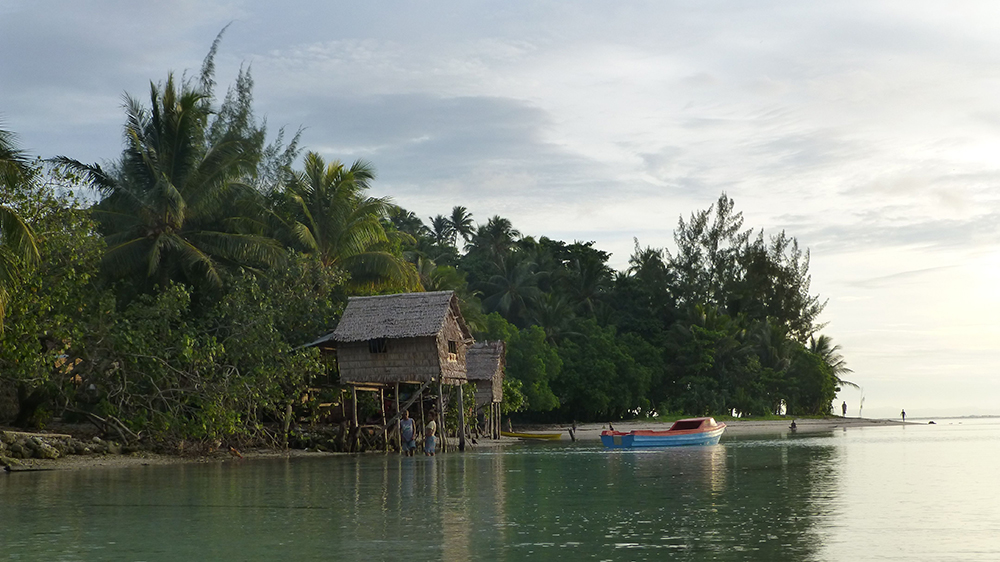
Et hus bygd på påler ved en strand på en stillehavsøy. Foto.

Prosjektet fokuserte på språkene i den austronesiske familien, som snakkes på øyene i Sørøst-Asia og i Stillehavet. Foto (c) Åshild Næss.

Om prosjektet

Språk er noe av det som gjør oss til mennesker, og alle mennesker har språk. Men er alle menneskelige språk grunnleggende like, eller kan de være bygd opp på svært ulike måter? Hvor kommer vår felles evne til å bruke språk fra – har vi en spesialisert språkevne i hjernen som bestemmer hvordan språk kan være strukturert, eller springer språket ut av våre allmenne kognitive evner og vårt felles behov for å kommunisere?

I dette prosjektet brukte vi den sistnevnte tilnærmingen til å forsøke å forklare noe om hvordan grunnleggende setningsstrukturer oppstår. Hvis alle menneskelige språk har en felles grammatisk grunnstruktur, ville man vente at alle språk organiserer setningsstrukturen sin rundt kategorier som subjekt og objekt, slik de europeiske språkene gjør.

Vi tok utgangspunkt i den austronesiske språkfamilien, som dekker øystatene i Sørøst-Asia og mesteparten av Stillehavet, og strekker seg helt til Madagaskar øst for Afrika. I denne språkfamilien har noen av språkene kategorier av typen subjekt og objekt; men andre ser ut til å være strukturert på en annen måte som henger mer direkte sammen med kommunikasjonssituasjonen, så som hvilke sider ved situasjonen taleren synes er viktigst og vil framheve.

Videre vet vi at de austronesiske språkene som har et subjekt/objekt-system, har utviklet det fra noe som ligner denne andre typen system. Dette tyder på at selv de mest grunnleggende sidene ved grammatisk struktur kan knyttes til språkets funksjon som kommunikasjonssystem.

Prosjektet brukte den store variasjonen i setningsstrukturer innenfor den austronesiske språkfamilien som utgangspunkt for å analysere hvordan våre kommunikasjonsbehov former grunnleggende setningsstruktur, og hvilke egenskaper som former ulike typer systemer. Dette gir mer kunnskap om hvordan språk som generelt fenomen fungerer, og hvordan menneskelig språk og menneskelig erfaring former og påvirker hverandre.

Finansiering

Prosjektet var finansiert av Norges forskningråd (FRIPRO).

Varighet

2018-2022.

Aktiviteter

  • Flere av prosjektmedlemmene deltok på «3rd International Conference on Prominence in Language» i Køln og «14th Austronesian and Papuan Languages and Linguistics Conference (APLL)» i Berlin i juni 2022. På APLL holdt Beth Evans plenumsforedrag, Åshild Næss og Eline Visser hadde innlegg, og Jozina Vander Klok satt i organisasjonskomiteen.
  • Eline Visser har fått en Small Grant fra Endangered Languages Documentation Programme for å gjøre feltarbeid på uruangnirin. 
  • Fra høsten 2022 fikk vi en ny prosjektmedarbeider: Eline Visser, som har stipend fra den svenske Wenner-Gren-stiftelsen. Hun skal skaffe og analysere data fra det ubeskrevne språket uruangnirin, som tilhører den sentral-malayopolynesiske greina av austronesisk, som vi generelt vet lite om. Velkommen, Eline! 
  • Våren/sommeren 2021 deltar prosjektmedlemmene på konferansene:
    • «International Symposium on the Languages of Java/International Symposium of Malay/Indonesian Linguistics» 
    • «Austronesian and Papuan Languages and Linguistics» 
    • «International Conference of Austronesian Linguistics» 
  • I november 2020 leverte Sindre Holmen masteroppgaven sin "Voice choice in Äiwoo: A discourse-functional study of the symmetrical voice system in Äiwoo" (duo.uio.no). Gratulerer, Sindre! 

Arrangementer

  • 11.-12, mai 2021 organiserte vi PhD-kurset «Expressions of information structure in a cross-linguistic perspective» 
  • I juni 2020 var vi vertskap for «12th International Austronesian and Papuan Languages and Linguistics Conference (APLL12)«». For første gang ble APLL avholdt digitalt.
  • 9-10 desember 2019 arrangerte vi en workshop om prominens og dens rolle i grammatikken til austronesiske språk. 

Publikasjoner

  • Holmen, Sindre Sperre & Næss, Åshild (2025). Voice choice in Äiwoo and the symmetrical voice-to-transitivity shift. Oceanic Linguistics. ISSN 0029-8115. 64(1), s. 1–45. doi: 10.1353/ol.2025.a960252. Fulltekst i vitenarkiv
  • Næss, Åshild & Sauppe, Sebastian (2025). Bringing psycholinguistics to the field: experiences from Solomon Islands. Language Documentation & Conservation. 19, s. 99–119. doi: https:/hdl.handle.net/10125/74816. Fulltekst i vitenarkiv
  • Næss, Åshild (2024). Voice and transitivity in Äiwoo and Engdewu: A case study in alignment change. Studies in Language. ISSN 0378-4177. 49(1), s. 158–193. doi: 10.1075/sl.23034.nae. Fulltekst i vitenarkiv
  • Klok, Jozina Madolyn Vander (2024). The role of prominence in post-verbal word order alternations in Javanese applicatives. I Evans, Bethwyn; Næss, Åshild & Klok, Jozina Madolyn Vander (Red.), Prominence in Austronesian. De Gruyter Mouton. ISSN 9783110735413. s. 129–167. doi: 10.1515/9783110730753-005. Fulltekst i vitenarkiv
  • Aznar, Jocelyn; Döhler, Christian & Klok, Jozina Madolyn Vander (2023). Applicatives in Austronesian. NUSA: Linguistic studies of languages in and around Indonesia. ISSN 0126-2874. 74. Fulltekst i vitenarkiv
  • Rødvand, Linn Iren Sjånes (2023). Possession in Patani. Language Typology and Universals. ISSN 1867-8319. 76(3), s. 443–470. doi: 10.1515/stuf-2023-2016. Fulltekst i vitenarkiv
  • Næss, Åshild (2023). Voice and Pluractionality in Äiwoo. Oceanic Linguistics. ISSN 0029-8115. 62(1), s. 47–80. doi: 10.1353/ol.2023.0001. Fulltekst i vitenarkiv
  • Næss, Åshild; Alfarano, Valentina; Boerger, BH & Vaa, Anders (2023). Comitative Constructions in Reefs–Santa Cruz. Oceanic Linguistics. ISSN 0029-8115. 62(1), s. 81–116. doi: 10.1353/ol.2023.0002. Fulltekst i vitenarkiv
  • Næss, Åshild (2022). Binominals in Äiwoo: Compounds, possessive constructions, and transitional cases. I Pepper, Steve; Masini, Francesca & Mattiola, Simone (Red.), Binominal Lexemes in Cross-Linguistic Perspective Towards a Typology of Complex Lexemes. De Gruyter Mouton. ISSN 9783110640878. s. 181–212. doi: 10.1515/9783110673494-006. Fulltekst i vitenarkiv
  • Klok, Jozina Madolyn Vander & Evans, Bethwyn (2022). The evolution of non-syntactic functions of applicatives: –i suffixation in Javanese and neighbouring languages. I Pacchiarotti, Sara & Zúñiga, Ferna (Red.), Applicative morphology: Neglected syntactic and non-syntactic functions.. Mouton de Gruyter. ISSN 9783110777949. s. 437–474. Fulltekst i vitenarkiv
  • Næss, Åshild (2021). Voice and valency morphology in Äiwoo. Oceanic Linguistics. ISSN 0029-8115. 60(1), s. 160–198. doi: 10.1353/ol.2021.0005. Fulltekst i vitenarkiv
  • Næss, Åshild (2021). Äiwoo wâtu and the typology of comparatives. Studies in Language. ISSN 0378-4177. 45(4), s. 938–967. doi: 10.1075/sl.20022.nae. Fulltekst i vitenarkiv
  • Næss, Åshild (2020). Looking for words in the Reef Islands: bound roots in Äiwoo and their descriptive and documentary challenge. I Leblic, Isabelle & Souag, Lameen (Red.), Du terrain á la théorie: les 40 ans de Lacito. Lacito Publications. ISSN 9782490768011. s. 199–220. Fulltekst i vitenarkiv
  • Klok, Jozina Madolyn Vander & Conners, Thomas J. (2019). Using questionnaires as a tool for comparative linguistic field research: Two case studies on Javanese. I Lahaussois, Aimée & Vuillermet, Marine (Red.), Methodological Tools for Linguistic Description and Typology. University of Hawai'i Press. ISSN 9780997329551. s. 62–96. Fulltekst i vitenarkiv

Se alle arbeider i NVA

Se alle arbeider i NVA

  • Næss, Åshild & Klok, Jozina Madolyn Vander (2024). Pivot (non-)restrictions and Austronesian syntactic typology. Fulltekst i vitenarkiv
  • Evans, Bethwyn; Næss, Åshild & Klok, Jozina Madolyn Vander (2024). Prominence in Austronesian: An introduction. I Evans, Bethwyn; Næss, Åshild & Klok, Jozina Madolyn Vander (Red.), Prominence in Austronesian. De Gruyter Mouton. ISSN 9783110735413. s. 1–18. doi: 10.1515/9783110730753-001. Fulltekst i vitenarkiv
  • Næss, Åshild (2024). Demonstrative forms vs. demonstrative systems: Patterns of overlap and cooccurrence in Äiwoo demonstratives. Fulltekst i vitenarkiv
  • Alfarano, Valentina & Næss, Åshild (2024). Valency morphology in Reefs-Santa Cruz: how Oceanic morphology gave rise to two kinds of 'un-Oceanic' systems. Fulltekst i vitenarkiv
  • Næss, Åshild & Klok, Jozina Madolyn Vander (2024). Pivot (non-)restrictions and Austronesian syntactic typology. Fulltekst i vitenarkiv
  • Rødvand, Linn Iren Sjånes (2023). Post-verbal subjects in an SV language: non-agentivity and discourse structure. Fulltekst i vitenarkiv
  • Næss, Åshild (2023). Voice choice in Äiwoo discourse. Fulltekst i vitenarkiv
  • Næss, Åshild (2022). Voice and pluractionality in Äiwoo. Fulltekst i vitenarkiv
  • Næss, Åshild (2022). Voice and transitivity in Äiwoo discourse. Fulltekst i vitenarkiv
  • Næss, Åshild (2022). Prominence levels and the symmetrical voice-to-transitivity shift. Fulltekst i vitenarkiv
  • Næss, Åshild (2022). Reversing grammatical relations: lessons from Reefs-Santa Cruz. Fulltekst i vitenarkiv
  • Klok, Jozina Madolyn Vander & Evans, Bethwyn (2021). Javanese applicatives within the historical evolution of applicatives in Austronesian. Fulltekst i vitenarkiv
  • Klok, Jozina Madolyn Vander (2021). Perspectives on information structure in Austronesian language. Linguistic Typology. ISSN 1430-0532. doi: 10.1515/lingty-2021-2073. Fulltekst i vitenarkiv
  • Klok, Jozina Madolyn Vander & Conners, Thomas J. (2021). Proceedings of ISLOJ 7 (International Symposium of the Languages of Java). NUSA: Linguistic studies of languages in and around Indonesia. ISSN 0126-2874. 69. Fulltekst i vitenarkiv
  • Klok, Jozina Madolyn Vander (2021). PPs in Javanese applicatives. Fulltekst i vitenarkiv
  • Næss, Åshild (2021). Universitetsplassen: Hvor kommer grammatikken fra? [Internet]. Universitetsplassen (podkast) . Fulltekst i vitenarkiv
  • Næss, Åshild (2021). Deictics, syntax and information structure in Äiwoo. Fulltekst i vitenarkiv
  • Næss, Åshild (2021). Äiwoo: momalâ. Fulltekst i vitenarkiv
  • Næss, Åshild (2021). Two comitative constructions in Äiwoo. Fulltekst i vitenarkiv
  • Rødvand, Linn Iren Sjånes (2021). Topicalization in Patani. Fulltekst i vitenarkiv
  • Rødvand, Linn Iren Sjånes (2020). Semantics of numeral classifiers in Patani. Fulltekst i vitenarkiv
  • Klok, Jozina Madolyn Vander (2020). The neglected syntactic functions of of optional applicative morphology in Javanese. Fulltekst i vitenarkiv
  • Næss, Åshild & Sauppe, Sebastian (2020). Bringing psycholinguistics to the field: experiences from the Solomon Islands. Fulltekst i vitenarkiv
  • Næss, Åshild (2019). How to grow grammatical relations: modelling the transition from symmetrical voice to subject/object structure in Austronesian. Fulltekst i vitenarkiv
  • Næss, Åshild (2019). Chasing the clause: the challenges of describing person indexing in Äiwoo. Fulltekst i vitenarkiv
  • Næss, Åshild (2019). Språkmangfaldet i Stillehavsregionen. Mål og makt. ISSN 0332-7744. 49(3), s. 33–37. Fulltekst i vitenarkiv
  • Næss, Åshild; Klok, Jozina Madolyn Vander & Evans, Bethwyn (2019). Prominence in Austronesian: introduction. Fulltekst i vitenarkiv
  • Næss, Åshild (2019). How to grow grammatical relations: modelling the transition from symmetrical voice to subject-object structure in Austronesian. Fulltekst i vitenarkiv
  • Næss, Åshild; Evans, Bethwyn & Klok, Jozina Madolyn Vander (2018). The rise of grammatical relations in Austronesian. Fulltekst i vitenarkiv
  • Rødvand, Linn Iren Sjånes; Næss, Åshild & Evans, Bethwyn (2024). Patani: Description of a South Halmahera–West New Guinea language. Universitetet i Oslo. Fulltekst i vitenarkiv
  • Holmen, Sindre Sperre (2020). Voice Choice in Äiwoo: A Discourse-Functional Study of the Symmetrical Voice System of Äiwoo. Universitetet i Oslo. Fulltekst i vitenarkiv

Se alle arbeider i NVA

Publisert 2. mai 2018 11:09 - Sist endret 14. nov. 2024 13:32

Deltakere

  • Åshild Næss Universitetet i Oslo
  • Jozina Vander Klok Universitetet i Oslo
  • Linn Iren Sjånes Rødvand Universitetet i Oslo
  • Sindre Sperre Holmen Universitetet i Oslo
  • Anne Derkje Johanna Oortwijn Universitetet i Oslo
  • Luca Lukas Universitetet i Oslo
  • Lidia Mazzitelli
  • Kristina Gallego
  • Huade Huang
Detaljert oversikt over deltakere