Faglige interesser
Mine forskningsinteresser ligger innen filosofisk logikk, matematikkens filosofi, Frege, metafysikk og språkfilosofi. Ellers er mine filosofiske interesser ganske brede.
Utdannelse og stillinger
Før jeg kom til IFIKK i 2012 var jeg Professor of Philosophy ved Birkbeck, University of London. Jeg har også hatt stillinger ved University of Bristol og Merton College, Oxford. Jeg fikk min PhD i filosofi fra Harvard University i 2002, og har hovedfag i matematikk fra UiO i 1995.
Verv
- Forskningsleder, IFIKK (januar 2021- desember 2022)
- Programrådsmedlem, Honours-programmet
- Medlem av Instituttstyret, IFIKK (2013-2020)
For annen informasjon, vennligst se min engelske nettside.
Emneord:
Filosofi,
Logikk,
Metafysikk,
Språkfilosofi,
Frege
Publikasjoner
- "Generality Explained", Journal of Philosophy (2022)
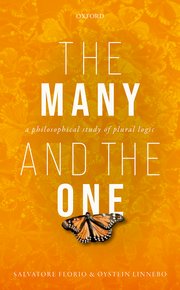
- The Many and the One: A Philosophical Study of Plural Logic (with Salvatore Florio), Oxford University Press (2021)
- Thin Objects: An Abstractionist Account, Oxford University Press (2018)
- "Actual and Potential Infinity" (with Stewart Shapiro), Noûs (2019); kåret av Philosophers' Annual til en av de ti beste filosofiske artiklene i 2019.
- Philosophy of Mathematics, Princeton University Press (2017)
- “What is the Infinite?” The Philosophers' Magazine 2nd quarter (2013), 42-47
- “The Potential Hierarchy of Sets”, Review of Symbolic Logic 6:2 (2013), 205-28
- “Pluralities and Sets,” Journal of Philosophy 107:3 (2010), 144-164
- “Platonism in the Philosophy of Mathematics,” in Edward N. Zalta (ed.), Stanford Encyclopedia of Philosophy (2009)
- “Structuralism and the Notion of Dependence,” Philosophical Quarterly 58 (2008), 59-79
- “Plural Quantification,” in Edward N. Zalta (ed.), Stanford Encyclopedia of Philosophy (2004)
-
-
Carson, Emily; Linnebo, Øystein; Sher, Gila; Sieg, Wilfried & Atten, Mark van
(2025).
Charles Parsons April 13, 1933 – April 19, 2024.
Philosophia Mathematica.
ISSN 0031-8019.
33(3),
s. 402–424.
doi:
10.1093/philmat/nkaf018.
Fulltekst i vitenarkiv
Vis sammendrag
Abstract Charles Dacre Parsons passed away on April 19, 2024, aged 91. In this obituary, four of his PhD students and one colleague and collaborator discuss, in an order (roughly) determined by the development of Parsons’s career, his engagement with proof theory; Quine; Kant; Brouwer and Gödel; and mathematical structuralism.
-
Dellsén, Finnur & Linnebo, Øystein
(2025).
What to do when experts disagree?
The Epistemology of Experts.
Routledge.
ISSN 9781003431459.
s. 223–244.
doi:
10.4324/9781003431459-16.
Fulltekst i vitenarkiv
Vis sammendrag
How should a layperson respond to learning that the experts on a given topic disagree among themselves? This chapter argues that, epistemically, the appropriate response to an expert disagreement depends greatly on what explains the disagreement, and that there are several quite different types of explanations for a given disagreement. Accordingly, expert disagreement calls for different epistemic responses in different circumstances. However, the chapter also supplements this pluralist account of how to respond epistemically to expert disagreement with a unifying account of how laypeople should respond “zetetically” to expert disagreement—that is, how they should direct their inquiry concerning the contested claim. Indeed, it is precisely because of the plurality of appropriate epistemic responses to expert disagreements that laypeople often have strong reasons to inquire into what explains the presence of disagreement among experts.
-
Linnebo, Øystein
(2025).
Ontology and the algebraic conception of logic.
I Donato-Rodríguez, Xavier de; Falguera, José L. & Martínez-Vidal, Concha (Red.),
Deflationist Conceptions of Abstract Objects.
Springer Nature Switzerland.
ISSN 9783031987175.
s. 143–152.
doi:
10.1007/978-3-031-98717-5_7.
Fulltekst i vitenarkiv
Vis sammendrag
I articulate and defend the thesis that first-order logic is algebraic, in the sense that it does not have a single canonical application to reality. If correct, this thesis supports a flexible conception of ontology. Suppose we have a first-order language that purports to talk about certain objects, say Fs, whose conditions for correct use are expressed in terms that are already assumed to be in good standing and thus, in particular, involve no talk about Fs. Suppose further that these assertability conditions respect the laws of logic. Finally, suppose that the assertability conditions involve a criterion of identity that licenses the use of non-trivial identity statements. Then, according to the flexible conception, there really are Fs. I also defend this algebraic conception of logic, and the conception of ontology to which it gives rise, against the objection that this approach involves a problematic form of anti-realism.
-
Dellsén, Finnur & Linnebo, Øystein
(2025).
What to Do When Experts Disagree.
I Peter, Brössel,; Asunta, Eder, Anna-Maria & Thomas, Grundmann, (Red.),
The Epistemology of Experts: New Essays.
Routledge.
ISSN 9781003431459.
s. 223–244.
Fulltekst i vitenarkiv
Vis sammendrag
Presents new research on the epistemology of experts. It features original essays from leading epistemologists on this timely topic.
Modern societies benefit significantly from a certain kind of epistemic division of labor: they outsource much of their epistemic work to well-trained cognitive experts. However, due to their degree of specialization, cognitive sophistication, and highly privileged status, cognitive experts tend to become alienated from laypeople. This leads to what one may call the paradox of experts: as experts become more competent, specialized, and sophisticated, the harder it will be for laypeople to identify and trust experts. The chapters in this volume explore the epistemology of expert judgment across several core themes and crucial questions:
Analysis of Experts: What does it take to be a cognitive expert?
Epistemic Authority: How much should we concede experts over laypeople?
The Social Roles of Experts: What role do experts play in society, and what role should they play?
Challenges: What problems arise from experts’ epistemic authority and societal role?
-
Linnebo, Øystein
(2025).
Why thin objects rather than ultra-thin?
Inquiry (Oslo).
ISSN 0020-174X.
68(7),
s. 2575–2588.
doi:
10.1080/0020174X.2025.2466713.
Fulltekst i vitenarkiv
Vis sammendrag
In Thin Objects, I articulated a thin conception of objecthood according to which the existence of objects need not make any substantive demands on reality. Agustín Rayo has developed and defended an even less demanding conception of objecthood, which drops the requirement of informative criteria of identity. The nature and extent of the disagreement is clarified, and two clusters of advantages of the thin conception are presented. In essence, by invoking criteria of identity we obtain more robust notions of reference and objecthood. In particular, the availability of multiple perspectives on a single object is key to an important form of objectivity.
-
-
Linnebo, Øystein
(2024).
Reality as tall and fine, not flat and coarse.
I Fritz, Peter & Fritz, Peter (Red.),
Higher-order metaphysics.
Oxford University Press.
ISSN 9780192894885.
doi:
10.1093/oso/9780192894885.003.0005.
Fulltekst i vitenarkiv
Vis sammendrag
The dominant view in today's higher-order metaphysics favors strong higher-order comprehension axioms. This enables us to prove some strong generalizations of Cantor's theorem, which place strict limits on how finely individuated higher-order entities can be. This article discusses some arguments for and against the strong comprehension axioms. Existing arguments are found wanting. Based on a hierarchical conception of reality, an improved case is developed for restricting comprehension, in a way that makes the world safe for fine-grained higher-order entities. Thus, for all we know, reality may be tall and fine, not flat and coarse.
-
Levey, Samuel; Linnebo, Øystein & Shapiro, Stewart
(2024).
Potential Infinity, Paradox, and the Mind of God: Historical Survey.
I Szatkowski, Miroslaw (Red.),
Ontology of Divinity.
De Gruyter Brill.
ISSN 9783111332536.
doi:
10.1515/9783111332536-029.
Fulltekst i vitenarkiv
Vis sammendrag
Aristotle argued that paradoxes of the infinite can be avoided only by insisting that all infinities are potential, not actual. There is a long tradition of thinking that a Judeo-Christian God would collapse potential infinities to actual ones, thus removing the Aristotelian guard-rail against paradox. After all, does not God know all numbers, regardless of whether they are actual or merely potential? We analyze the Aristotelian guard-rail of potentiality, as well as challenges to it due to Augustine, Burley, Scotus, and Cantor. At the heart of the debate we find the metaphysical question of how the temporal or modal “dimension” that harbors potential infinities compares to ordinary spatial dimensions. Certain theological assumptions underwrite a strong analogy. The best Aristotelian response, we suggest, is to reject the analogy by refusing to analyze modality extensionally as a point-space of possible worlds. Our analysis thus reveals lessons for atheists as well as theists.
-
Linnebo, Øystein
(2024).
Maddy on classes.
I Arbeiter, Sophia & Kennedy, Juliette (Red.),
The Philosophy of Penelope Maddy.
Springer.
ISSN 9783031584244.
doi:
10.1007/978-3-031-58425-1_7.
Fulltekst i vitenarkiv
Vis sammendrag
Classes have been a central and recurring theme in Penelope Maddy’s work. This article reviews and critiques her discussion of these matters. She offers a very perceptive analysis of the problem posed by classes and argues convincingly in favor of a “logical conception” of them. But her attempt to develop such a conception suffers from various shortcomings. I therefore outline some attempts to do better.
-
Florio, Salvatore & Linnebo, Øystein
(2024).
Introduction to Constructional Ontology.
CEUR Workshop Proceedings.
3882.
Fulltekst i vitenarkiv
Vis sammendrag
In constructional ontology, entities emerge by construction, that is, from the application of constructors to objects. We explore this approach to ontology, focusing on three modules: the constructors, the inputs to the constructors, and the constructional process. Our aim is to identify and assess some key theoretical choices arising in an ontology of this kind.
-
Linnebo, Øystein
(2024).
Eklund, Maximalism, and the Problem of Incompatible Objects.
I Stokke, Andreas (Red.),
Festschrift for Matti Eklund.
Publications from Uppsala University.
ISSN 9789150630350.
Fulltekst i vitenarkiv
-
Linnebo, Øystein & Shapiro, Stewart
(2023).
Predicativism as a form of potentialism.
The Review of Symbolic Logic.
ISSN 1755-0203.
16(1),
s. 1–32.
doi:
10.1017/S1755020321000423.
Fulltekst i vitenarkiv
Vis sammendrag
Abstract In the literature, predicativism is connected not only with the Vicious Circle Principle but also with the idea that certain totalities are inherently potential. To explain the connection between these two aspects of predicativism, we explore some approaches to predicativity within the modal framework for potentiality developed in Linnebo (2013) and Linnebo and Shapiro (2019). This puts predicativism into a more general framework and helps to sharpen some of its key theses.
-
-
Linnebo, Øystein & Roberts, Sam Royston
(2023).
No Easy Road to Impredicative Definabilism.
Philosophia Mathematica.
ISSN 0031-8019.
32(1),
s. 21–33.
doi:
10.1093/philmat/nkad013.
Fulltekst i vitenarkiv
Vis sammendrag
Abstract Bob Hale has defended a new conception of properties that is broadly Fregean in two key respects. First, like Frege, Hale insists that every property can be defined by an open formula. Second, like Frege, but unlike later definabilists, Hale seeks to justify full impredicative property comprehension. The most innovative part of his defense, we think, is a “definability constraint” that can serve as an implicit definition of the domain of properties. We make this constraint formally precise and prove that it fails to characterize the domain uniquely. Thus, we conclude, there is no easy road to impredicative definabilism.
-
-
Crosilla, Laura & Linnebo, Øystein
(2023).
Weyl and Two Kinds of Potential Domains.
Noûs.
ISSN 0029-4624.
doi:
10.1111/nous.12457.
Fulltekst i vitenarkiv
Vis sammendrag
According to Weyl, “‘inexhaustibility’ is essential to the infinite”. However, he distinguishes two kinds of inexhaustible, or merely potential, domains: those that are “extensionally determinate” and those that are not. This article clarifies Weyl's distinction and explains its enduring logical and philosophical significance. The distinction sheds lights on the contemporary debate about potentialism, which in turn affords a deeper understanding of Weyl.
-
Linnebo, Øystein
(2023).
Précis.
Theoria.
ISSN 0040-5825.
89(3),
s. 247–255.
doi:
10.1111/theo.12464.
Fulltekst i vitenarkiv
Vis sammendrag
Abstract Thin Objects has two overarching ambitions. The first is to clarify and defend the idea that some objects are ‘thin’, in the sense that their existence does not make a substantive demand on reality. The second is to develop a systematic and well‐motivated account of permissible abstraction, thereby solving the so‐called ‘bad company problem’. Here I synthesise the book by briefly commenting on what I regard as its central themes.
-
Hartimo, Mirja; Kjosavik, Frode & Linnebo, Øystein
(2022).
Introduction to special issue on ‘critical views of logic’.
Inquiry (Oslo).
ISSN 0020-174X.
65(6),
s. 631–637.
doi:
10.1080/0020174X.2019.1651077.
Fulltekst i vitenarkiv
Vis sammendrag
Critical views of logic are presented. These are views that are critical of logic in a sense akin to the way in which Kant is critical rather than dogmatic about traditional metaphysics. Such approaches differ from the Fregean ‘logic-first’ view. In accordance with the latter, logic is often regarded as epistemologically and methodologically fundamental. Hence, all disciplines – including mathematics – are considered as answerable to logic, rather than vice versa. In critical views of logic, by contrast, the logical principles that govern some subject matter may depend on the metaphysics of this subject matter or on the semantics of our discourse about it. Space is thereby carved out between a Fregean position on the one hand and thoroughgoing holism à la Quine on the other.
-
Linnebo, Øystein
(2022).
Generality Explained.
Journal of Philosophy.
ISSN 0022-362X.
119(7),
s. 349–379.
doi:
10.5840/jphil2022119725.
Fulltekst i vitenarkiv
Vis sammendrag
What explains the truth of a universal generalization? Two types of explanation can be distinguished. While an ‘instance-based explanation’ proceeds via some or all instances of the generalization, a ‘generic explanation’ is independent of the instances, relying instead on completely general facts about the properties or operations involved in the generalization. This intuitive distinction is analyzed by means of a truthmaker semantics, which also sheds light on the correct logic of quantification. On the most natural version of the semantics, this analysis vindicates some claims made—without a proper defense—by Michael Dummett, Solomon Feferman, and others. Where instance-based explanations are freely available, classical logic is shown to be warranted. By contrast, intuitionistic logic (or slightly more) remains warranted regardless of what explanations are available.
-
Brauer, Ethan; Linnebo, Øystein & Shapiro, Stewart
(2022).
Divergent Potentialism: A Modal Analysis with an Application to Choice Sequences.
Philosophia Mathematica.
ISSN 0031-8019.
30(2),
s. 143–172.
doi:
10.1093/philmat/nkab031.
Fulltekst i vitenarkiv
Vis sammendrag
Abstract Modal logic has been used to analyze potential infinity and potentialism more generally. However, the standard analysis breaks down in cases of divergent possibilities, where there are two or more possibilities that can be individually realized but which are jointly incompatible. This paper has three aims. First, using the intuitionistic theory of choice sequences, we motivate the need for a modal analysis of divergent potentialism and explain the challenges this involves. Then, using Beth–Kripke semantics for intuitionistic logic, we overcome those challenges. Finally, we apply our modal analysis of divergent potentialism to make choice sequences comprehensible in classical terms.
-
Linnebo, Øystein
(2022).
Aristotelian Aspirations, Fregean Fears: Hossack on Numbers as Magnitudes.
I Kürbis, Nils; Assadian, Bahram & Nassim, Jonathan (Red.),
Knowledge, Number and Reality: Encounters with the Work of Keith Hossack.
Bloomsbury Academic.
ISSN 9781350186439.
s. 189–201.
Fulltekst i vitenarkiv
-
Linnebo, Øystein & Shapiro, Stewart
(2021).
Modality in Mathematics.
I Bueno, Otávio & Shalkowski, Scott A. (Red.),
The Routledge Handbook of Modality.
Routledge.
ISSN 9781138823310.
s. 281–291.
doi:
10.4324/9781315742144-32.
Fulltekst i vitenarkiv
Vis sammendrag
A small minority of philosophers take the more radical step of rejecting even the thesis that pure mathematical objects exist of necessity. Some programs in the philosophy of mathematics reject the existence of mathematical objects but insist that correct mathematical assertions are objective and, perhaps, necessarily true. A broadly Aristotelian view of infinity was dominant in mathematics and philosophy for more than two millennia. The watershed in the eventual fall of this view was Georg Cantor’s pioneering work of the late nineteenth century. Aristotle appears to have had in mind some form of metaphysical modality, and the resulting notion is also available to contemporary philosophers who believe there is such a thing as metaphysical necessity. The chapter describes some views that reject a Platonic ontology of abstract mathematical objects in favor of modal claims about constructions or suitably structured systems of objects. It explores a successor concept to the ancient one of potential infinity, which we called potentialism.
-
Linnebo, Øystein & Shapiro, Stewart
(2020).
Potentiality and indeterminacy in mathematics.
Journal of Applied Logics (JAL-FLAP).
ISSN 2631-9810.
7(6),
s. 1201–1221.
Fulltekst i vitenarkiv
-
-
Linnebo, Øystein & Shapiro, Stewart
(2020).
Potentiality and Indeterminacy in Mathematics.
Journal of Applied Logics: The IfCoLog Journal of Logics and their Applications.
ISSN 2055-3706.
7(7),
s. 1201–1221.
Fulltekst i vitenarkiv
Vis sammendrag
The purpose of this article is to explore the use of modal logic and/or intuitionistic logic to explicate potentiality and incomplete or indeterminate domains in mathematics. Our primary applications are the traditional notion of potential infinity, predicativity, a version of real analysis based on Brouwerian choice sequences, and a potentialist account of the iterative hierarchy in set theory.
-
Linnebo, Øystein
(2020).
Peacocke on numbers and magnitudes.
Philosophical Studies.
ISSN 0031-8116.
178,
s. 2717–2729.
doi:
10.1007/s11098-020-01542-8.
Fulltekst i vitenarkiv
Vis sammendrag
Abstract Peacocke’s recent The Primacy of Metaphysics covers a wide range of topics. This critical discussion focuses on the book’s novel account of extensive magnitudes and numbers. First, I further develop and defend Peacocke’s argument against nominalistic approaches to magnitudes and numbers. Then, I argue that his view is more Aristotelian than Platonist because reified magnitudes and numbers are accounted for via corresponding properties and these properties’ application conditions, and because the mentioned objects have a “shallow nature” relative to the corresponding properties. The result is an asymmetric conception of abstraction, which contrasts with the neo-Fregeans’ but has important tenets in common with an approach that I have recently developed.
-
Linnebo, Øystein & Florio, Salvatore
(2020).
Critical Plural Logic.
Philosophia Mathematica.
ISSN 0031-8019.
28(2),
s. 172–203.
doi:
10.1093/philmat/nkaa020.
Fulltekst i vitenarkiv
Vis sammendrag
Abstract What is the relation between some things and the set of these things? Mathematical practice does not provide a univocal answer. On the one hand, it relies on ordinary plural talk, which is implicitly committed to a traditional form of plural logic. On the other hand, mathematical practice favors a liberal view of definitions which entails that traditional plural logic must be restricted. We explore this predicament and develop a “critical” alternative to traditional plural logic.
-
Linnebo, Øystein & Hale, Bob
(2020).
Ontological Categories and the Problem of Expressibility.
I Hale, Bob (Red.),
Essence and existence: Selected Essays.
Oxford University Press.
ISSN 9780198712084.
s. 73–103.
Fulltekst i vitenarkiv
Vis sammendrag
Frege famously held that ontological categories correspond to logico-syntactic types. Some-thing is an object just in case it can be referred to by a singular term, and likewise for allthe other categories. This view faces an expressibility problem. In order to express theview, we need to generalize across categories; but by the view itself, any one variable canonly range over a single category. We provide a sharp formulation of the problem, showthat there is no easy way out, and then explore some of the hard ways.
-
Linnebo, Øystein & Shapiro, Stewart
(2019).
Actual and potential infinity.
Noûs.
ISSN 0029-4624.
53(1),
s. 160–191.
doi:
10.1111/nous.12208.
Fulltekst i vitenarkiv
Vis sammendrag
The notion of potential infinity dominated in mathematical thinking about infinity from Aristotle until Cantor. The coherence and philosophical importance of the notion are defended. Particular attention is paid to the question of whether potential infinity is compatible with classical logic or requires a weaker logic, perhaps intuitionistic. The final version of this research has been published in Noûs. © 2017 Wiley
-
Linnebo, Øystein & Shapiro, Stewart
(2019).
Realizability as a Kind of Truthmaking.
I Szatkowski, Miroslaw (Red.),
Quo Vadis, Metaphysics.
De Gruyter Brill.
ISSN 9783110662498.
doi:
10.1515/9783110664812-020.
Fulltekst i vitenarkiv
Vis sammendrag
This paper is part of a larger project concerning potentiality in mathematics. The first and simplest case is the traditional Aristotelian notion of potential infinity. An issue much like that of truthmaking arises in our explication of one of the options for potential infinity, namely how to make sense of generalizations from that perspective.We use the traditional intuitionistic notion of realizability to resolve the issue, and to help settle the correct logic for one kind of potential infinity.
-
Linnebo, Øystein
(2019).
The Context Principle in Frege’s Grundgesetze.
I Ebert, Philip & Rossberg, Marcus (Red.),
Essays on Frege's Basic Laws of Arithmetic.
Oxford University Press.
ISSN 9780198712084.
doi:
10.1093/oso/9780198712084.003.0004.
Fulltekst i vitenarkiv
Vis sammendrag
According to Frege’s context principle, we must never to ask for the meaning of a word in isolation but only in the context of a sentence. The context principle poses some very hard interpretive challenges; not only are the ideas themselves hard, but relevant parts of Frege’s view change in the course of his career. This principle plays a crucial role in the Grundlagen, especially in Frege’s answer to the question of how numbers and other logical objects are ‘given to us’. By contrast, the context principle figures less prominently in the Grundgesetze. This article argues that, appearances to the contrary, the context principle survives in Frege’s magnum opus, where it still has an important role to play. Reflection on this role sheds important new light on the principle. More specifically, I argue that the context principle must be disentangled from the problematic idea of ‘recarving of content’; that the principle is fully compatible with Frege’s compositional semantics; and that it suggests a more ‘lightweight’ conception of mathematical objects than is typically associated with Frege.
-
Hamkins, Joel David & Linnebo, Øystein
(2019).
THE MODAL LOGIC of SET-THEORETIC POTENTIALISM and the POTENTIALIST MAXIMALITY PRINCIPLES.
The Review of Symbolic Logic.
ISSN 1755-0203.
15(1),
s. 1–35.
doi:
10.1017/S1755020318000242.
Fulltekst i vitenarkiv
-
Cook, Roy & Linnebo, Øystein
(2018).
Cardinality and Acceptable Abstraction.
Notre Dame Journal of Formal Logic.
ISSN 0029-4527.
59(1),
s. 61–74.
doi:
10.1215/00294527-2017-0012.
Fulltekst i vitenarkiv
Vis sammendrag
It is widely thought that the acceptability of an abstraction principle is a feature of the cardinalities at which it is satisfiable. This view is called into question by a recent observation by Richard Heck. We show that a fix proposed by Heck fails but we analyze the interesting idea on which it is based, namely that an acceptable abstraction has to “generate” the objects that it requires. We also correct and complete the classification of proposed criteria for acceptable abstraction.
-
Linnebo, Øystein
(2018).
Rumfitt on the logic of set theory.
Inquiry (Oslo).
ISSN 0020-174X.
62(7),
s. 826–841.
doi:
10.1080/0020174X.2018.1530832.
Fulltekst i vitenarkiv
Vis sammendrag
According to a famous argument by Dummett, the concept of set is indefinitely extensible, and the logic appropriate for reasoning about the instances of any such concept is intuitionistic, not classical. But Dummett's argument is widely regarded as obscure. This note explains how the final chapter of Rumfitt's important new book advances our understanding of Dummett's argument, but it also points out some problems and unanswered questions. Finally, Rumfitt's reconstruction of Dummett's argument is contrasted with my own preferred alternative.
-
Linnebo, Øystein
(2018).
On the Permissibility of Impredicative Comprehension.
I Leech, Jessica (Red.),
Being Necessary Themes of Ontology and Modality from the Work of Bob Hale.
Oxford University Press.
ISSN 9780198792161.
s. 170–189.
doi:
10.1093/oso/9780198792161.003.0009.
Fulltekst i vitenarkiv
Vis sammendrag
Which comprehension axioms of higher-order logic are acceptable? That is, under what conditions does a formula define a concept or circumscribe some objects? It is well known that unrestricted higher-order comprehension is incompatible with unrestricted reification of higher-order entities. In search of a response to this conflict, an argument against all forms of impredicative comprehension is formulated; for example, when defining a concept, we may not quantify over a totality to which this concept belongs. Although this predicativist argument is ultimately rejected, a careful analysis of it points the way to some milder logical restrictions, which suffice to resolve the conflict.
-
Linnebo, Øystein
(2018).
DUMMETT ON INDEFINITE EXTENSIBILITY.
Philosophical Issues.
ISSN 1533-6077.
28(1),
s. 196–220.
doi:
10.1111/phis.12122.
Fulltekst i vitenarkiv
Vis sammendrag
Dummetts notion of indefinite extensibility is influential but obscure. The notion figures centrally in an alternative Dummettian argument for intuitionistic logic and anti‐realism, distinct from his more famous, meaning‐theoretic arguments to the same effect. Drawing on ideas from Dummett, a precise analysis of indefinite extensibility is proposed. This analysis is used to reconstruct the poorly understood alternative argument. The plausibility of the resulting argument is assessed.
-
Linnebo, Øystein
(2018).
Truth in Mathematics.
I Glanzberg, Michael (Red.),
Oxford Companion to Truth.
Oxford University Press.
ISSN 9780199557929.
s. 648–665.
doi:
10.1093/oxfordhb/9780199557929.013.24.
Fulltekst i vitenarkiv
Vis sammendrag
This chapter discusses four questions concerning the nature and role of the concept of truth in mathematics. First, the question as to whether the concept of truth is needed in a philosophical account of mathematics is answered affirmatively: a formalist approach to the language of mathematics is inadequate. Next, following Frege, a classical conception of mathematical truth is defended, involving the existence of mathematical objects. The third question concerns the relation between the existence of mathematical objects and the objectivity of mathematical truth. A traditional platonist seeks to explain the latter in terms of the former, while Frege reverses this order of explanation. Finally, the question regarding the extent to which mathematical statements have objective truth-values is discussed.
-
-
Linnebo, Øystein & Florio, Salvatore
(2017).
Logic and Plurals.
I Ludwig, Kirk (Red.),
The Routledge Handbook of Collective Intentionality.
Routledge.
ISSN 9781138783638.
s. 451–463.
Fulltekst i vitenarkiv
Vis sammendrag
Many natural languages contain plural vocabulary such as ‘we’, ‘those’, ‘the philosophers’, ‘cooperate’, and ‘gathered’. What is the correct logical analysis of sentences involving such vocabulary? Before we can attempt to answer the question, we need to comment briefly on how we understand logical analysis. Logical analysis generally proceeds by paraphrasing sentences of natural language in a way that provides a more perspicuous representation of logically relevant features of those sentences. Often, the paraphrase is given in a formal language that is equipped with a deductive system and a model-theoretic semantics. However, as Quine observed, “to paraphrase a sentence of ordinary language into logical symbols is virtually to paraphrase it into a special part still of ordinary or semi-ordinary language [...].” (Quine 1960: 159) This is because, in many important cases, the sentences of the formal language are obvious counterparts of particular sentences of natural language (or natural language augmented with some mathematical locutions). The process of paraphrase into a more logically perspicuous fragment of natural language is known as regimentation. [...] This is an Accepted Manuscript of a book chapter published by Routledge/CRC Press in The Routledge Handbook of Collective Intentionality. © 2017 Routledge
-
-
-
-
-
-
-
-
Linnebo, Øystein; Florio, Salvatore; Welch, Philip & Walsh, Sean
(2015).
Set Theory and Higher-Order Logic: Foundational Issues and Philosophical Developments.
Notre Dame Journal of Formal Logic.
ISSN 0029-4527.
56,
s. 1–2.
Fulltekst i vitenarkiv
-
Linnebo, Øystein & Rayo, Agustin
(2014).
Response to Florio and Shapiro.
Mind.
ISSN 0026-4423.
123,
s. 175–181.
Fulltekst i vitenarkiv
-
Linnebo, Øystein & Pettigrew, Richard
(2014).
Two Types of Abstraction for Structuralism.
The Philosophical Quarterly.
ISSN 0031-8094.
64,
s. 267–283.
doi:
10.1093/pq/pqt044.
Fulltekst i vitenarkiv
-
-
-
-
Linnebo, Øystein
(2013).
Freges oppfatning av logikk: Fra Kant til Grundgesetze.
Norsk filosofisk tidsskrift.
ISSN 0029-1943.
48(3-4),
s. 219–229.
Fulltekst i vitenarkiv
-
Muller, F.A. & Linnebo, Øystein
(2013).
On Witness-Discernibility of Elementary Particles.
Erkenntnis: An International Journal of Scientific Philosophy.
ISSN 0165-0106.
78,
s. 1133–1142.
doi:
10.1007/s10670-012-9385-4.
Fulltekst i vitenarkiv
-
Ladyman, James; Linnebo, Øystein & Bigaj, Tomasz
(2013).
Entanglement and non-factorizability.
Studies in History and Philosophy of Science Part B: Studies in History and Philosophy of Modern Physics.
ISSN 1355-2198.
44(3),
s. 215–221.
doi:
10.1016/j.shpsb.2013.02.004.
Fulltekst i vitenarkiv
-
-
Linnebo, Øystein
(2013).
What is the infinite?
Philosophers' magazine.
ISSN 1354-814X.
s. 42–47.
Fulltekst i vitenarkiv
-
-
-
Linnebo, Øystein
(2005).
Epistemological challenges to mathematical platonism.
Philosophical Studies.
ISSN 0031-8116.
Fulltekst i vitenarkiv
-
Linnebo, Øystein
(2004).
Frege's Proof of Referentiality.
Notre Dame Journal of Formal Logic.
ISSN 0029-4527.
45(2),
s. 73–98.
Fulltekst i vitenarkiv
Vis sammendrag
I present a novel interpretation of Frege's famous attempt at Grundgesetze I §§29-31 to prove that every expression of his language has a unique reference. I argue that Frege's proof is based on a contextual account of reference, similar to but more sophisticated than that enshrined in his famous Context Principle. Although Frege's proof is incorrect, I argue that the account of reference on which it is based is of potential philosophical value, and I analyze the class of cases to which it may successfully be applied.
-
Linnebo, Øystein
(2004).
Predicative fragments of Frege Arithmetic.
Bulletin of Symbolic Logic.
ISSN 1079-8986.
10,
s. 153–174.
Fulltekst i vitenarkiv
Vis sammendrag
Frege Arithmetic (FA) is the second-order theory whose sole non-logical axiom is Hume's Principle. According to Frege's Theorem, FA and some natural definitions imply all of second-order Peano Arithmetic. This paper distinguishes two dimensions of impredicativity involved in FA--one having to do with Hume's Principle, the other, with the underlying second-order logic--and investigates how much of Frege's Theorem goes through in various partially predicative fragments of FA. Theorem 1 shows that almost everything goes through, the most important exception being the axiom that every natural number has a successor. Theorem 2 shows that this axiom cannot be proved in the theories that are predicative in either dimension.
-
Linnebo, Øystein
(2003).
Plural Quantification Exposed.
Noûs.
ISSN 0029-4624.
37(1),
s. 71–92.
Fulltekst i vitenarkiv
Vis sammendrag
Jeg gir en fremstilling av George Boolos sin teori om plural-kvantifikasjon og kritiserer påstanden hans om at denne teorien er en rent logisk teori sterk nok til å tolke full annen-ordens logikk.
-
Linnebo, Øystein
(2003).
Critical Study of Stewart Shapiro, Philosophy of Mathematics: Structure and Ontology.
Philosophia Mathematica.
ISSN 0031-8019.
11(1),
s. 92–104.
Fulltekst i vitenarkiv
Vis sammendrag
Jeg gjør en kritisk analyse av Stewart Shapiros nye bok i matematikkens filosofi og kommer med et positivt forlag om hvordan matematisk strukturalisme bør forstås.
-
Linnebo, Øystein
(2003).
Frege's Conception of Logic: From Kant to Grundgesetze.
Manuscrito - Revista Internacional de Filosofia.
ISSN 0100-6045.
26(2),
s. 235–252.
Fulltekst i vitenarkiv
Vis sammendrag
I first argue that Frege started out with a conception of logic closer to Kant's than is generally recognized. Then I analyze Frege's reasons for gradually rejecting this view. Although I concede that the demands imposed by Frege's logicism played some role, I argue that his increasingly vehement anti-psychologism provides a deeper and more interesting reason for rejecting his earlier view.
Se alle arbeider i NVA
-
-
Linnebo, Øystein
(2025).
(+) Riv ruskende galt om analytisk filosofi.
Fulltekst i vitenarkiv
Vis sammendrag
Selv om hullenes natur er av begrenset interesse, gir de et enkelt og godt eksempel som bidrar til en viktigere debatt.
-
Linnebo, Øystein
(2024).
Potensiell uendelighet: et gammelt, men nyttig begrep.
Filosofisk supplement.
ISSN 0809-8220.
20(2-3),
s. 64–69.
Fulltekst i vitenarkiv
-
Hartimo, Mirja; Kjosavik, Frode & Linnebo, Øystein
(2023).
Introduction to "Critical views of logic".
I Hartimo, Mirja; Kjosavik, Frode & Linnebo, Øystein (Red.),
Critical Views of Logic.
Routledge.
ISSN 9781032573519.
s. 1–8.
Fulltekst i vitenarkiv
-
Linnebo, Øystein
(2021).
Finnes universets begynnelse?
[Internet].
https://www.uio.no/om/aktuelt/universitetsplassen/nyheter/20.
Fulltekst i vitenarkiv
-
-
-
Linnebo, Øystein
(2021).
Critical Study of Bob Hale, Essence and Existence: Selected Essays.
Philosophia Mathematica.
ISSN 0031-8019.
29(3),
s. 420–427.
Fulltekst i vitenarkiv
-
Linnebo, Øystein & Torgersen, Eivind
(2021).
Hvilken nytte kan historikere, filosofer og språkforskere ha av algoritmer?
Fulltekst i vitenarkiv
-
Linnebo, Øystein
(2020).
Review of John Bell, The Continuous, the Discrete.
American Mathematical Society Mathematical Reviews.
ISSN 2167-5163.
Fulltekst i vitenarkiv
-
Linnebo, Øystein & Bøhn, Einar Duenger
(2020).
Interview with Dagfinn Føllesdal.
[Journal].
Norsk Filosofisk tidsskrift.
Fulltekst i vitenarkiv
-
Linnebo, Øystein
(2020).
The Paradox of the Largest Number: From Aristotle to Cantor.
I Kjosavik, Frode & Serck-Hanssen, Camilla (Red.),
Metametaphysics and the Sciences. Historical and Philosophical Perspectives.
Routledge.
ISSN 9780367263690.
Fulltekst i vitenarkiv
-
-
Linnebo, Øystein
(2017).
Bokmelding: Frege – Utvalgte Tekster.
Norsk filosofisk tidsskrift.
ISSN 0029-1943.
52(4),
s. 187–192.
Fulltekst i vitenarkiv
-
-
Linnebo, Øystein
(2016).
Identity and two conceptions of ontology.
Filosofisk supplement.
ISSN 0809-8220.
s. 44–47.
Fulltekst i vitenarkiv
-
Linnebo, Øystein
(2013).
“What is the Infinite and Is It Real?”.
Philosophers' magazine.
ISSN 1354-814X.
s. 42–47.
Fulltekst i vitenarkiv
-
Linnebo, Øystein
(2013).
Review of Patricia Blanchette, Frege’s Conception of Logic.
Notre Dame Philosophical Reviews.
Fulltekst i vitenarkiv
-
Linnebo, Øystein
(2004).
Review of Kit Fine, The Limits of Abstraction.
Australasian Journal of Philosophy.
ISSN 0004-8402.
82(4),
s. 653–656.
Fulltekst i vitenarkiv
-
Linnebo, Øystein
(2004).
Plural Quantification.
I Zalta, Ed (Red.),
Stanford Encyclopedia of Philosophy.
Stanford Encyclopedia of Philosophy.
Fulltekst i vitenarkiv
Vis sammendrag
Ordinary English contains two sorts of object quantifiers. In addition to the usual singular quantifiers, as in 'There is an apple on the table', there are plural quantifiers, as in 'There are some apples on the table'. This article provides a survey of recent discussions of the logic, semantics, and metaphysics of plural quantification, as well as of its various philosophical applications.
-
-
-
-
-
-
-
Linnebo, Øystein
(2002).
Naturalistic Challenges: On the Possibility of Non-Scientific Knowledge.
Fulltekst i vitenarkiv
Vis sammendrag
Jeg diskuterer filosofisk naturalisme og noen av de utfordringer denne posisjonen gir opphav til, spesielt angående matematikk og etikk. Etter å ha avvist de tradisjonelle utfordringene av denne typen ved å skille mellom minimal- og scientistisk naturalisme, argumenterer jeg for at naturalisme likevel gir opphav til visse utfordringer.
-
Berneri, Jacopo & Linnebo, Øystein
(2026).
Structured Properties and Propositions: Foundations and Applications.
Universitetet i Oslo.
Fulltekst i vitenarkiv
Vis sammendrag
Numerous philosophers are committed to fine-grained accounts of properties, propositions, and relations. One approach gaining traction in recent decades is the structuralist view, which claims that properties and propositions with distinct constituents are distinct. However, the Russell-Myhill paradox has been proposed as evidence that this view is inconsistent within higher-order logic. Based on the previous work of other philosophers, my article-based dissertation is dedicated to the conceptual foundation and mathematical implementation of a framework, called generativism, which aims to retain the structuralist view and counter the paradox in a well-motivated way.
Generativism is grounded on the idea that structured entities are iteratively generated, thereby circumventing the paradox. According to this view, the universe of structured properties and propositions is never fully available, but continuously expands through a hierarchy of stages. The key aspect of my approach is advocating for a predicative turn in higher-order logic, suggesting that the quantifiers used when generating new entities should only range over entities available at each stage of the generative process. So, the main aim of my dissertation is to propose a more thoroughgoing study of predicativism in the context of structured properties and propositions.
I develop and discuss two mathematical implementations of these ideas. One is historically well-known in the logical and philosophical literature on predicativity: it is Russell's ramified theory of types (abbreviated as RTT). The other is Boolos' stage theory, which has received significant attention in the philosophy of set theory, but its applicability for structured propositions has been seriously underestimated. RTT is often deemed clunky and not explanatory, so my preferred approach for giving formal precision to generativism is the stage theory. The reason is that it provides greater flexibility, enhanced clarity, stronger theoretical justification, and a more streamlined framework, by bypassing the complications tied to ramified types and the use of modal operators, which are typical of potentialist views.
Se alle arbeider i NVA
Publisert
30. aug. 2012 11:59
- Sist endret
13. mars 2025 10:07