Tidligere arrangementer

Democratic societies constantly face more challenges than they can possibly address at once, and they all compete for our limited collective attention. This raises a fundamental democratic question: who gets to decide what deserves public attention?

Velkommen til idéhistorisk lunsjseminar fredag 16. oktober med Reidar Aasgaard.

Eirik Welo (IFIKK, UiO)

En rundebordsdiskusjon

Following the Annual Exphil lecture, the Department of Philosophy, Classics, History of Art and Ideas is excited to host a workshop on the themes raised in C. Thi Nguyen’s work.

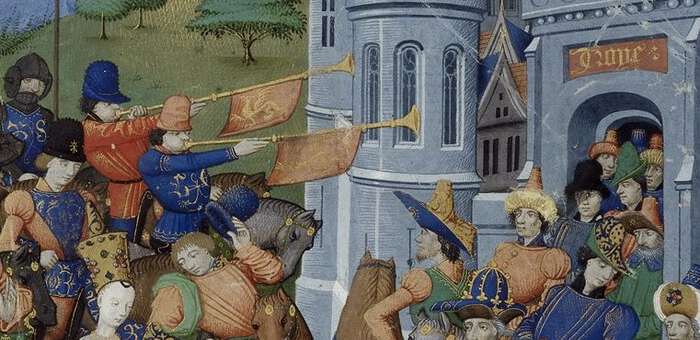
The study of meter in the 20th century has generally been marked by the foregrounding of some types of verse that proved amenable to a particular theoretical approach (e.g. English iambic pentameter in generative metrics, Russian iambic tetrameter in statistical work on verse, Greek hexameter in diachronic reconstruction), to the detriment of others.
Over the past several years the Linguistics and Poetics research group at the University of Oslo has sought to circumvent this kind of bias by exploring various manifestations and uses of poetic language in ancient (Greek) and Medieval (Latin, Germanic) cultural milieus. We have dwelt on the diversity of attested literary cultures (sometimes proliferating within a single national “tradition”) and prioritized an empiricist ethos over the goal of finessing any particular methodology.
The international symposium “Comparative metrics sub specie philologiae” aims to expand our vision of comparative metrics by interrogating and juxtaposing novel, tailor-made, and empirically-driven approaches to cross-culturally diverse uses of poetic meter.

The study of meter in the 20th century has generally been marked by the foregrounding of some types of verse that proved amenable to a particular theoretical approach (e.g. English iambic pentameter in generative metrics, Russian iambic tetrameter in statistical work on verse, Greek hexameter in diachronic reconstruction), to the detriment of others.
Over the past several years the Linguistics and Poetics research group at the University of Oslo has sought to circumvent this kind of bias by exploring various manifestations and uses of poetic language in ancient (Greek) and Medieval (Latin, Germanic) cultural milieus. We have dwelt on the diversity of attested literary cultures (sometimes proliferating within a single national “tradition”) and prioritized an empiricist ethos over the goal of finessing any particular methodology.
The international symposium “Comparative metrics sub specie philologiae” aims to expand our vision of comparative metrics by interrogating and juxtaposing novel, tailor-made, and empirically-driven approaches to cross-culturally diverse uses of poetic meter.

Bureaucracy changes our values and our concepts. Philosopher C. Thi Nguyen (University of Utah) explores questions of why and how in this year’s Exphil lecture.

How can we better understand deep disagreements? Philosopher Hugo Ribeiro Mota gives this year’s Gold Medal Lecture at the Faculty of Humanities.
There will be a ModHap workshop in GM 452 on this upcoming Wednesday, October 7th.
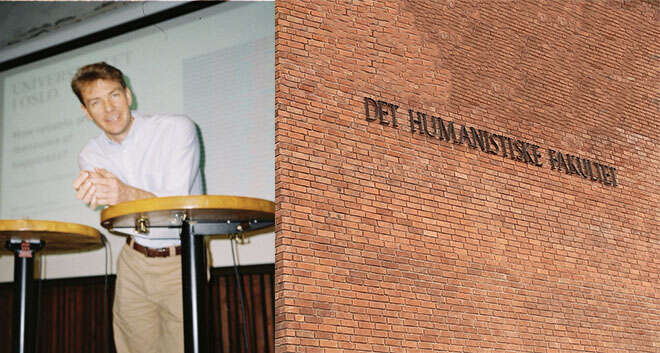
Master Paal Fredrik Skjørten Kvarberg at the Department of Philosophy, Classics, History of Art and Ideas will defend his thesis Public Models of Welfare for the degree of philosophiae doctor (PhD).

The Philosophical Seminar With John Hyman (UCL)
Cosmopolitanism and Ethical Universality. On the Justification of Cicero’s Natural Law
_17_20_51_182000.jpg?alt=listing)
Gabriele Cifani (University of Rome, Tor Vergata)

On the Moral Requirements and Limits of Uncivil Disobedience

Master Biu Rainey at the Department of Philosophy, Classics, History of Art and Ideas will defend her dissertation The word for self is world: The architecture and organization of pragmatic competence for the degree of philosophiae doctor (PhD).

The Philosophical Seminar With Ram Neta
---flaccus.jpg?alt=listing)
Brad Jordan (IFIKK, UiO)

At a time when many of us feel increasingly distracted, fragmented, and overwhelmed by competing demands on our attention, this event asks a fundamental question: What would it take to create a society in which our attention serves our values, rather than the interests of those seeking to capture it?

Master Viktor Carl-Magnus Andersson at the Department of Philosophy, Classics, History of Art and Ideas will defend his dissertation Deep-sea conceptions in postwar Scandinavia 1947-1961 for the degree of philosophiae doctor (PhD).
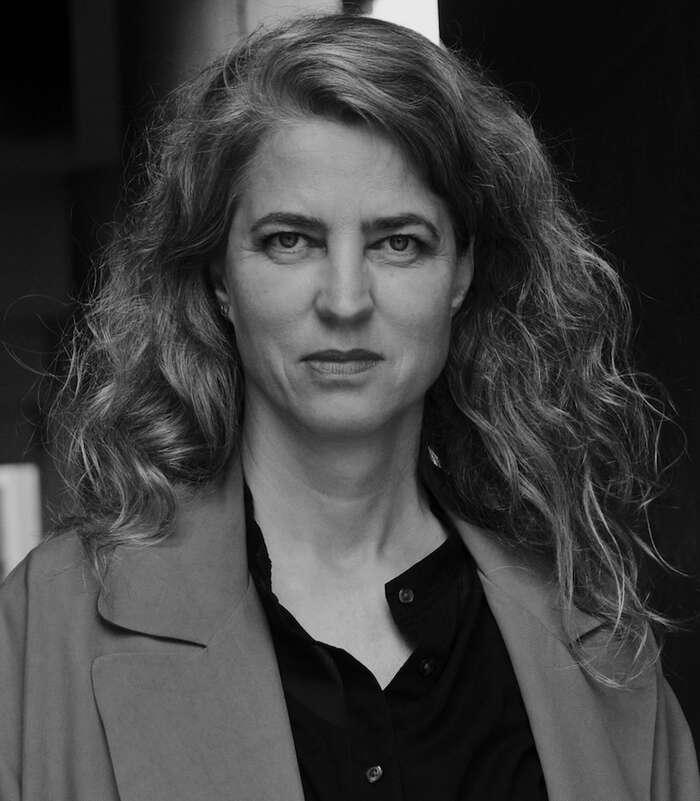
In this lecture, Juliane Rebentisch (Hochscule für bildende Künste Hamburg / Princeton University) will discuss imaginaries of the future in a time of ecological crisis.

Talk by Toshiro Osawa (Gunma univeristy)

ModHap wil be hosting Karen Margrethe Nielsen (Oxford) as a guest at IFIKK for weeks 35 and 36, and she will be holding a lecture entitled 'The Misfortunes of Virtue: Sade and Ancient Ethics’ on August 28 at 1415 in GM 652